Stay Ahead, Stay ONMINE

The Download: a startup has a solution for AI’s groupthink problem

This is today’s edition of The Download, our weekday newsletter that provides a daily dose of what’s going on in the world of technology. LLMs are stuck in a groupthink groove. This startup is trying to get them out. Open up your chatbot of choice—Claude, ChatGPT, Gemini—and type “Give me a random number between 1 and 10.” You’re going to get 7. Almost always.  That won’t work every time—but if it did for you, you may wonder if I have superpowers. I don’t. The truth is that most large language models are stuck in a rut. They are far more predictable and far less creative in their responses than you might expect. That’s fine for tasks like coding or research, but groupthink is a problem when you’re brainstorming or planning your next vacation. The Australian startup Springboards has a solution. It built an LLM called Flint, which has been trained to come up with a wider variety of responses than mainstream LLMs to open-ended questions such as “Where should I go in Europe?” Meet the company pushing chatbots away from the obvious. —Will Douglas Heaven The must-reads I’ve combed the internet to find you today’s most fun/important/scary/fascinating stories about technology. 1 Scientists say they have built a cell from scratch for the first timeBuilt with lab-made DNA, it can feed, grow, and multiply. (CNN)+ It brings us closer to creating synthetic life. (Quanta)+ And is arguably the greatest feat of bioengineering yet. (New Scientist $)+ But also raises concerns over the dangers of synthetic biology. (NYT $)+ Mirror organisms could threaten life on Earth. (MIT Technology Review) 2 OpenAI has proposed giving the Trump administration a 5% stakeTalks over a public ownership deal come amid rising political pressure.(FT $)+ OpenAI also proposed other US AI giants providing a 5% stake. (CNBC)+ That could include Anthropic, Google, and Meta. (Bloomberg $)+ President Trump says he wants the public to have a stake in AI. (BBC) 3 Singapore has seized a $42 million mansion tied to Nvidia chip smugglingIt was seized as part of an investigation into alleged illegal trading. (BBC)+ Days earlier, Supermicro’s Taiwan offices were raided in the probe. (FT $) 4 Anthropic’s Fable 5 is back onlineBut queries posing security risks may be routed to less powerful models. (Axios)+ Anthropic restored access yesterday after the US lifted an export ban. (BBC)+ But the battle over how to tame AI has just begun. (WSJ $)+ Anthropic has launched a new AI science product. (MIT Technology Review) 5 Meta is building its own cloud infrastructure businessIt’s exploring two ways of monetizing AI compute and models. (Bloomberg $)+ One is selling access to models hosted on Meta’s infrastructure. (CNBC)+ The other is selling “raw” computing power. (TechCrunch) 6 PlayStation will stop releasing games on discs in 2028Future PS5 games will be digital-only releases. (Verge)+ The news comes days after reports that GTA VI will have no disc. (BBC)+ It’s put a nail in physical media’s coffin. (Wired $) 7 A low-cost Chinese AI model is catching up with US giants on their home turfWestern customers are drawn to GLM-5.2’s cheap but powerful model. (Reuters $)+ Chinese open-source models are spreading fast. (MIT Technology Review)8 Google has lost its fight against a record €4.1 billion EU antitrust fineIt was charged in 2018 for using Android to ‌block rivals. (CNBC) 9 The UN has launched an “AI for Good” commissionSalesforce CEO Benioff and Rwandan President Kagame will co-chair it. (Axios) 10 People prefer AI impersonators over politiciansThe study’s findings raise alarm bells around potential public deception. (404 Media) Quote of the day “If AI overdelivers, it will impact financial stability. If AI underdelivers, it will impact financial stability.” —Torsten Slok from Apollo Global Management shares common concerns about AI at the European Central Bank’s annual conference, Reuters reports. One More Thing America was winning the race to find Martian life. Then China jumped in.In July 2024, after more than three years on Mars, the Perseverance rover came across a peculiar rocky outcrop. Instead of the usual crystals or sedimentary layers, this one had spots. Those specks were the best hint yet of alien life.   NASA began a new mission to bring the rocks back to Earth to study. But now, just over a year and a half later, the project is on life support. As a result, those oh-so-promising rocks may be stuck out there forever.  This also means that, in the race to find evidence of alien life, America has effectively ceded its pole position to its greatest geopolitical rival: China. Beijing is now moving full steam ahead with its own version of NASA’s mission.  Here’s how the search for Martian life has become a contest between two superpowers. —Robin George Andrews


This is today’s edition of The Download, our weekday newsletter that provides a daily dose of what’s going on in the world of technology.

LLMs are stuck in a groupthink groove. This startup is trying to get them out.

Open up your chatbot of choice—Claude, ChatGPT, Gemini—and type “Give me a random number between 1 and 10.” You’re going to get 7. Almost always. 

That won’t work every time—but if it did for you, you may wonder if I have superpowers. I don’t.

The truth is that most large language models are stuck in a rut. They are far more predictable and far less creative in their responses than you might expect. That’s fine for tasks like coding or research, but groupthink is a problem when you’re brainstorming or planning your next vacation.

The Australian startup Springboards has a solution. It built an LLM called Flint, which has been trained to come up with a wider variety of responses than mainstream LLMs to open-ended questions such as “Where should I go in Europe?”

Meet the company pushing chatbots away from the obvious.

—Will Douglas Heaven

The must-reads

I’ve combed the internet to find you today’s most fun/important/scary/fascinating stories about technology.

1 Scientists say they have built a cell from scratch for the first time
Built with lab-made DNA, it can feed, grow, and multiply. (CNN)
+ It brings us closer to creating synthetic life. (Quanta)
+ And is arguably the greatest feat of bioengineering yet. (New Scientist $)
+ But also raises concerns over the dangers of synthetic biology. (NYT $)
+ Mirror organisms could threaten life on Earth. (MIT Technology Review)

2 OpenAI has proposed giving the Trump administration a 5% stake
Talks over a public ownership deal come amid rising political pressure.(FT $)
+ OpenAI also proposed other US AI giants providing a 5% stake. (CNBC)
+ That could include Anthropic, Google, and Meta. (Bloomberg $)
+ President Trump says he wants the public to have a stake in AI. (BBC)

3 Singapore has seized a $42 million mansion tied to Nvidia chip smuggling
It was seized as part of an investigation into alleged illegal trading. (BBC)
+ Days earlier, Supermicro’s Taiwan offices were raided in the probe. (FT $)

4 Anthropic’s Fable 5 is back online
But queries posing security risks may be routed to less powerful models. (Axios)
+ Anthropic restored access yesterday after the US lifted an export ban. (BBC)
+ But the battle over how to tame AI has just begun. (WSJ $)
+ Anthropic has launched a new AI science product. (MIT Technology Review)

5 Meta is building its own cloud infrastructure business
It’s exploring two ways of monetizing AI compute and models. (Bloomberg $)
+ One is selling access to models hosted on Meta’s infrastructure. (CNBC)
+ The other is selling “raw” computing power. (TechCrunch)

6 PlayStation will stop releasing games on discs in 2028
Future PS5 games will be digital-only releases. (Verge)
+ The news comes days after reports that GTA VI will have no disc. (BBC)
+ It’s put a nail in physical media’s coffin. (Wired $)

7 A low-cost Chinese AI model is catching up with US giants on their home turf
Western customers are drawn to GLM-5.2’s cheap but powerful model. (Reuters $)
+ Chinese open-source models are spreading fast. (MIT Technology Review)

8 Google has lost its fight against a record €4.1 billion EU antitrust fine
It was charged in 2018 for using Android to ‌block rivals. (CNBC)

9 The UN has launched an “AI for Good” commission
Salesforce CEO Benioff and Rwandan President Kagame will co-chair it. (Axios)

10 People prefer AI impersonators over politicians
The study’s findings raise alarm bells around potential public deception. (404 Media)

Quote of the day

“If AI overdelivers, it will impact financial stability. If AI underdelivers, it will impact financial stability.”

—Torsten Slok from Apollo Global Management shares common concerns about AI at the European Central Bank’s annual conference, Reuters reports.

One More Thing


America was winning the race to find Martian life. Then China jumped in.

In July 2024, after more than three years on Mars, the Perseverance rover came across a peculiar rocky outcrop. Instead of the usual crystals or sedimentary layers, this one had spots. Those specks were the best hint yet of alien life.  

NASA began a new mission to bring the rocks back to Earth to study. But now, just over a year and a half later, the project is on life support. As a result, those oh-so-promising rocks may be stuck out there forever. 

This also means that, in the race to find evidence of alien life, America has effectively ceded its pole position to its greatest geopolitical rival: China. Beijing is now moving full steam ahead with its own version of NASA’s mission. 

Here’s how the search for Martian life has become a contest between two superpowers.

—Robin George Andrews

Shape
Shape
Stay Ahead

Explore More Insights

Stay ahead with more perspectives on cutting-edge power, infrastructure, energy,  bitcoin and AI solutions. Explore these articles to uncover strategies and insights shaping the future of industries.

Shape

Kyndryl: AI success hinges on workforce readiness

Nearly 80% of respondents said the pace of AI adoption is likely to outstrip their organization’s ability to adapt its workforce, governance structures, and operating model. As Kyndryl notes in the report, most leaders believe addressing those challenges “will prove more arduous than those involving code and compute.” Organizations are

Read More »

Netgear brings AI-driven network management to SMEs and MSPs

AI-powered operations Contextual insights to help identify issues faster Proactive recommendations for troubleshooting and optimization AI-assisted workflows designed to reduce manual effort Support for more predictive network operations Unified visibility and network intelligence Centralized visibility into network performance Monitoring of device health, connectivity, and user experience Actionable intelligence derived from

Read More »

Aggressive federal PQE timeline prompts warnings for enterprises

“The U.S. government’s EOs will likely spur accelerated intervention from all major governments and regional political blocs,” the firm said. “CISOs should be prepared for regulations to conflict and contain sovereignty requirements, which will complicate compliance.” Gartner recommends that companies build a PQC inventory and remediation program in 2026 and

Read More »

Presidential order addresses quantum computing gaps

By comparison, in AI, there are a number of benchmarks comparing AI models on everything from how well they do at math, to their ability to generate images, to whether they can find bugs in computer code. Benchmarks are important so that people can do fair comparisons of quantum systems,

Read More »

U.S. Department of Energy Meets President Trump’s Goal, Delivers Third Advanced Reactor Criticality

WASHINGTON—As part of the U.S. Department of Energy (DOE) Nuclear Energy Launch Pad initiative, Deployable Energy’s demonstration reactor, Unity, successfully completed a zero-power fueled criticality demonstration at Idaho National Laboratory. Unity, which achieved criticality late yesterday, is the third DOE-authorized advanced reactor to go critical by the July 4th deadline set by President Trump in his May 2025 executive order. This criticality marks DOE’s fulfillment of a precedent-setting directive to reignite nuclear energy innovation in the United States. Earlier this month, Antares Nuclear’s Mark-0 and Valar Atomics’ Ward 250 reactors achieved criticality under DOE’s Reactor Pilot Program, making the United States the first country in history to achieve criticality in three unique advanced microreactor designs in a single month. “Last week, I had the opportunity to see the Unity demonstration reactor firsthand and meet with the talented teams from Deployable Energy, INL and DOE whose work made this historic moment possible on the eve of our nation’s 250th anniversary,” Secretary of Energy Chris Wright said. “America’s nuclear renaissance is underway because of President Trump’s bold vision and ambitious goals. Yesterday, we accomplished a significant milestone on a timeline many thought was unachievable. Advanced nuclear technologies like Unity will help power the next generation of American industry, strengthen our energy security, and ensure the United States remains the world’s nuclear innovation leader.” Deployable Energy completed the Unity criticality experiment under the Nuclear Energy Launch Pad initiative, managed by the National Reactor Innovation Center at Idaho National Laboratory. The next evolution of the Reactor Pilot Program, Nuclear Energy Launch Pad leverages DOE authorization to expeditiously certify and construct first-of-a-kind advanced nuclear technologies for demonstration. “We are proud to be a part of this historic achievement and I want to express Deployable Energy’s gratitude to the administration for setting an audacious goal to

Read More »

Energy Secretary Secures Mid-Atlantic Grid Ahead of Period of Hot Weather

WASHINGTON—The U.S. Department of Energy (DOE) today issued two emergency orders to mitigate blackout risks in the Mid-Atlantic ahead of the region’s predicted record-breaking peak loads brought on by the forecasted hot weather conditions. The first order directs PJM Interconnection, LLC (PJM) to dispatch specified units and to order their operation as needed to maintain reliability. The second order authorizes PJM, in collaboration with its Transmission Owners and Electric Distribution Companies, to direct backup generation resources to operate as a last resort before declaring an Energy Emergency Alert (EEA) 3 or during an EEA 3. The orders were issued pursuant to applications from PJM submitted on June 27 and 29, 2026. “Maintaining affordable, reliable, and secure power in the PJM service territory is non-negotiable,” said U.S. Secretary of Energy Chris Wright. “The previous administration’s energy subtraction policies weakened the grid, leaving Americans more vulnerable during events like this. Thanks to President Trump’s leadership, we are reversing those failures and using every available tool ensuring Americans in the Mid-Atlantic have continued access to affordable, reliable, and secure energy to power and cool their homes.” DOE estimates more than 35 GW of unused backup generation remains available nationwide. On day one, President Trump declared a national energy emergency after the Biden administration’s energy subtraction agenda left behind a grid increasingly vulnerable to blackouts. According to the North American Electric Reliability Corporation’s (NERC) 2026 Summer Reliability Assessment, the peak electricity demand in PJM occurs during the summer season. It further notes that “if extreme high temperatures are experienced, PJM anticipates the need for demand-response resources to help reduce load.” Power outages cost the American people $44 billion per year, according to data from DOE’s National Laboratories. These orders will mitigate the possibility of power outages in the Mid-Atlantic and highlight the commonsense policies of the Trump Administration to ensure Americans have access to

Read More »

Equinor to invest in additional Troll development to boost European gas supply

Equinor Energy AS and partners will invest more than 4 billion krone ($400 million) in a new subsea development to increase gas production from Troll field in the North Sea. The Troll West Increased gas recovery North (TWIN) expansion—the third step of Troll Phase 3, which produces gas from the Troll West reservoir—could come online as early as 2028, said Gunnar Nakken, Equinor’s senior vice-president for projects and subsea Norway. TWIN is expected to contribute around 11 billion standard cu m of gas. “By simplifying, increasing standardization and reusing existing infrastructure and equipment, we are reducing costs and enabling faster production,” he said. Equinor aims to produce 1.3 million b/d from the Norwegian Continental Shelf (NCS) in 2035 to meet a portion of Europe’s energy needs. Troll field contains about 40% of NCS total gas reserves, with gas from Troll meeting around 10% of Europe’s gas needs. The TWIN project consists of two wells in a template and a pipeline connected to existing subsea infrastructure. The umbilical and MEG line will be extended to the new development. The second step of Troll Phase 3 is expected to come online this year, continuing production from Troll A platform, 80 km northwest of Bergen, Norway, and the Gassco-operated Kollsnes processing plant towards 2030, Equinor said. Equinor is operator of the project with 30.55% interest. Partners are Petoro AS (55.93%), A/S Norske Shell (8.19%), TotalEnergies EP Norge AS (3.69%), and ConocoPhillips Skandinavia AS (1.64%).

Read More »

Zululand Energy Terminal invites EPC expressions of interest

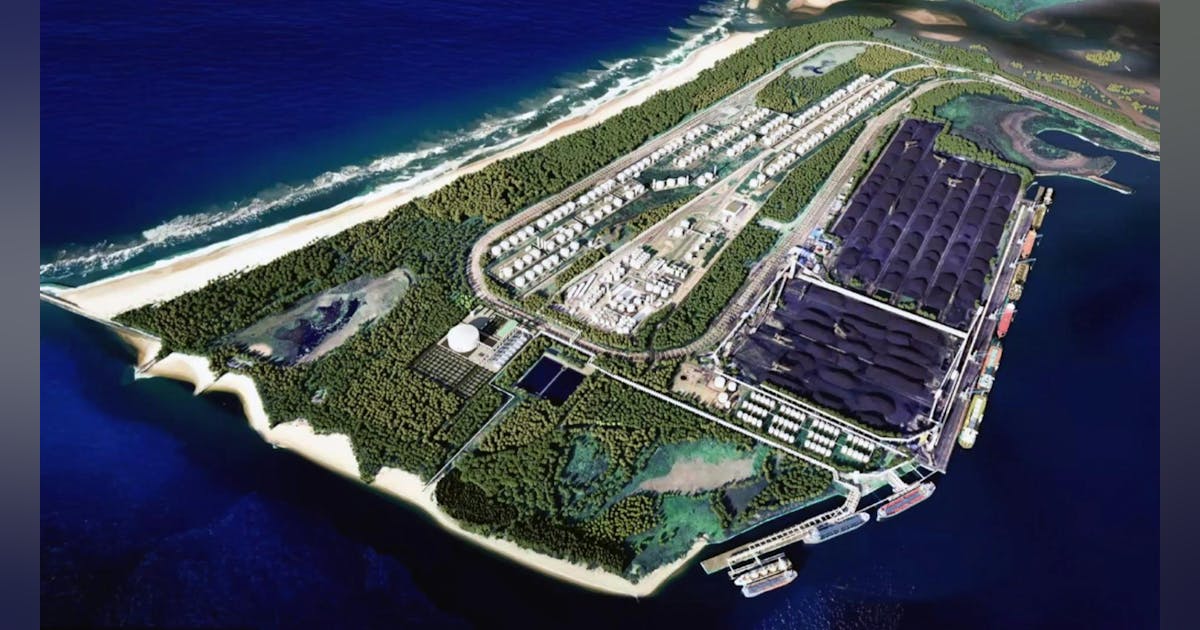
The proposed 7.5-million tonne/year (tpy) Zululand Energy Terminal (ZET) at the Port of Richards Bay, South Africa, has invited expressions of interest (EOI) from engineering, procurement and construction (EPC) contractors for development of planned LNG regasification infrastructure. Imported natural gas is expected to supply both industry and power generation. Phase 1 of the project will use a 170,000-cu m floating storage unit attached to 3 million tpy of onshore regasification capacity. Phase 2 will add 220,000 cu m of onshore storage (potentially replacing the FSU) and 4.5 million tpy of regasification.  ZET hopes to complete detailed engineering during 2027 to reach final investment decision in 2028 and start operations in 2030. Reuters reported last week that ExxonMobil Corp. had signed a preliminary deal to supply LNG to ZET. Developed as a joint between Vopak Terminal Durban and Transnet Pipelines, ZET project is expected to be South Africa’s first LNG terminal. The consortium will design, develop, construct, finance, operate, and maintain the terminal in the South Dunes Precinct at the Port of Richards Bay over a 25-year concession. EPC execution will be subject to ZET’s localization and economic development objectives. Successful contractors will be expected to support local supplier participation, skills development, and the use of local labor. Qualifying parties will be included in the project’s vendor database and may be shortlisted for subsequent phases as potential preferred contractors or subcontractors. The EOI submission window closes July 9, 2026. Interested contractors are invited to access the full EOI documentation here. South African utility Eskom and ZET earlier this month signed a head of agreement (HOA) establishing the framework for a long-term strategic partnership to support South Africa’s gas-to-power program, underpinning a planned 3-Gw power plant near the terminal in KwaZulu-Natal. Vopak Terminal Durban is owned by Royal Vopak and Reatile Group

Read More »

Petrobras greenlights renewables plant for RPBC refinery

REDUC’s fist soybean oil-based SAF sale Announcement of FID on the RPBC renewables plant followed Petrobras’ June 17 confirmation that its 239,000-b/d Duque de Caxias (REDUC) refinery in the Baixada Fluminense area of Rio de Janeiro had completed first production and sale of a first 3,800-cu m batch of SAF made from soybean oil certified under the CORSIA low Land Use Change (ILUC) risk standard, which verifies sustainability criteria and a lower risk of impact on new land areas. Produced via co-processing and featuring 1% renewable content, the SAF batch marked “commercialization of the world’s first SAF made from certified low-ILUC-risk soy [to demonstrate] Petrobras’s commitment to sustainability, the energy transition, and the development of products aligned with market and societal demands [for lower-carbon solutions],” said Angélica Laureano, Petrobras’ director of logistics, sales, and markets. In October 2025, the REDUC refinery secured Brazil’s first international approval to advance commercial-scale production of SAF via the hydroprocessed esters and fatty acids (HEFA) co-processing route complying with ISCC System GmbH’s International Sustainability Carbon Certification (ISCC) standards, validating that SAF produced at the site meets the highest international sustainability and lifecycle carbon emission standards. Developed under ICAO’s CORSIA, the ISCC CORSIA certification was a prerequisite for commercial-scale SAF production following rigorous assessment of the production’s lifecycle carbon emissions and traceability. Equipped to produce as much as 10,000 b/d of SAF using a blend of conventional petroleum and up to 1.2% renewable feedstock, REDUC’s integration of bio-based oils—such as vegetable oil—into existing refining infrastructure via the HEFA co-processing method allows the refinery to produce SAF alongside conventional jet fuel with minimal investment, Petrobras previously said.

Read More »

Equinor to expand Troll with TWIN subsea development

Equinor Energy AS and partners will invest about NOK 4 billion ($410 million) in the new Troll West increased gas recovery north (TWIN) subsea development in Troll field in the North Sea. The TWIN project consists of two wells in a template and a pipeline connected to existing subsea infrastructure. The umbilical and monoethylene glycol line will be extended to the new development. The project is expected to contribute about 11 billion std cu m of gas to Troll. It is the third step of Troll Phase 3, which produces gas from the Troll West reservoir. Recoverable reserves from Troll Phase 3, mainly gas, are estimated at 2.2 billion boe. In accordance with the Petroleum Act, the partnership will now send an announcement to the Ministry of Energy concerning the development. An environmental impact assessment has been carried out. Troll, which supplies as much as 10% of Europe’s daily demand for gas, contains about 40% of the total gas reserves on the Norwegian continental shelf and was developed in phases, with gas extraction from Troll Øst in Phase 1 and oil from Troll West in Phase 2. The oil in Troll West is produced from multiple subsea templates tied into Troll B and Troll C via pipelines. Production from the Troll C installation started in 1999. Troll C is also used for production from Fram, Fram H-Nord, and Byrding. Several amended development plans were approved in connection with installing multiple subsea templates on Troll West. Equinor Energy AS is operator of TWIN (30.55%) with partners Petoro AS (55.93%), A/S Norske Shell (8.19%), TotalEnergies EP Norge AS (3.69%), and ConocoPhillips Skandinavia AS (1.64%).

Read More »

What Meta, Oracle moves say about data center economics

Meta, meanwhile, is continuing its spending spree on AI infrastructure, anonymous sources told Bloomberg. The company is purportedly developing plans for new cloud infrastructure business lines that would sell access to AI computing power and models, putting it in competition with other data center giants. One potential scenario would have Meta selling access to models, including its new Muse Spark, hosted on its own AI infrastructure, as well as running the underlying data centers. This model is similar to AWS’ Bedrock offering. Another possibility is Meta selling access to “raw” computing capacity, as do neocloud businesses such as CoreWeave. This move is part of the company’s internal Meta Compute initiative, the sources said. Like Oracle, Meta has been investing hundreds of billions of dollars in data centers and expensive AI chips. And, according to its latest 10-K: “We plan to continue to significantly expand the size of our infrastructure primarily through data centers, subsea and terrestrial fiber optic cable systems, and other projects.”

Read More »

Executive Roundtable: The Rise of Integrated Infrastructure

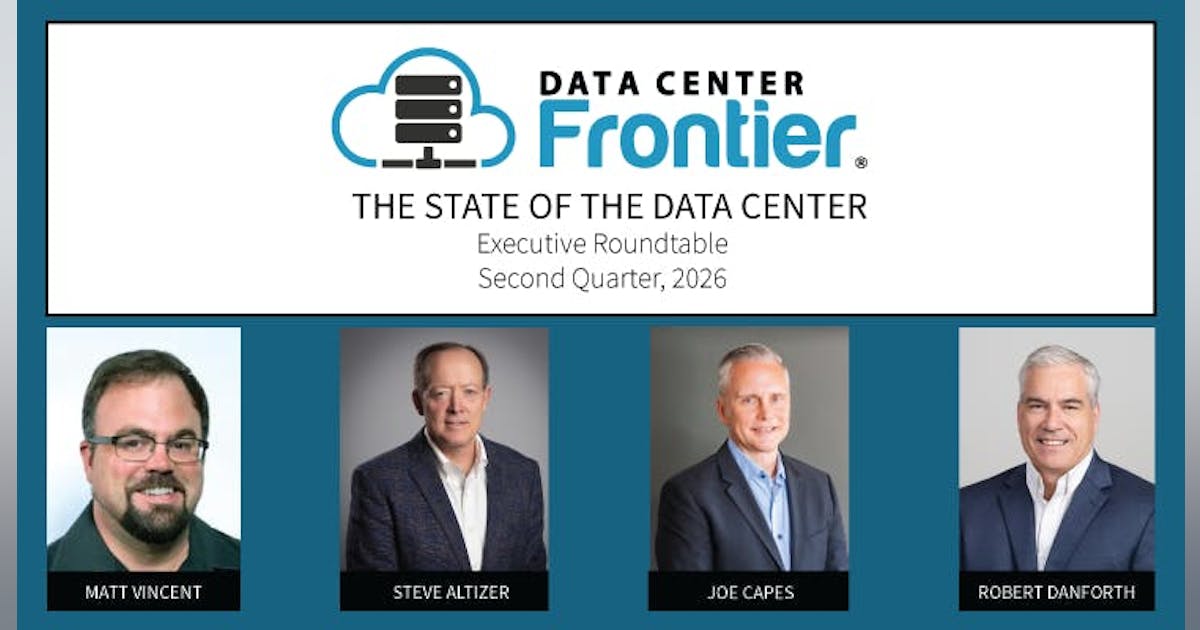
Steve Altizer, Compu Dynamics: Integration has to be foundational. It has to start at the first planning conversation, not after the equipment is selected or once the building is already designed. In previous generations of data center development, mechanical, electrical, IT, and operations teams could often work in parallel and bring the pieces together later. That worked when the load profile was more predictable and the facility had more room to absorb change. Before the introduction of ChatGPT, there was very little change to absorb. AI removes that tolerance. A change in rack density can affect electrical distribution, structural requirements, thermal strategy, commissioning, service access, and the way the site is operated. These are no longer independent decisions. They are all part of one performance system. As AI systems move toward POD-scale platforms, the boundary between IT and facility infrastructure becomes much harder to separate. The challenge is that AI workloads are too varied for a one-size-fits-all approach. Training clusters, inference nodes, enterprise AI environments, and edge sites can all have different requirements for density, cooling architecture, network connectivity, security, site conditions, and serviceability. That is why many companies are adopting a modular approach, while others are embracing hybrid models where turnkey modular AI capacity is integrated into larger campus environments.  At the campus level, that means standardizing the backbone infrastructure that serves the site (utility power feeds, central cooling capacity, and network pathways), while allowing the IT environment and the integrated critical infrastructure components to evolve as workload requirements change. The goal is not modularity for its own sake. The goal is to support the next generation of AI deployments without forcing every hardware change to become a major redesign. AI infrastructure cannot be planned as a collection of disparate systems. It has to be designed as one coordinated

Read More »

Data Center Insights 2026 Brings Industry Leaders Together for a Two-Day Look at the AI Infrastructure Era

The data center industry has never been more visible, more vital, or more challenged. Support for AI and its overall industry impact has pushed digital infrastructure into the public conversation. It has become clear that the sector is confronting unprecedented demands for everything from power to basic infrastructure. That convergence is the focus of Data Center Insights 2026, a two-day virtual event taking place July 15–16, 2026, produced by Endeavor B2B’s Data Center Frontier, Cabling Installation & Maintenance, ISE, Lightwave, and SecurityInfoWatch. Designed for data center owners, operators, engineers, IT leaders, and the people supporting the next generation of data center development, the event offers a concentrated look at the technologies and strategies shaping the future of digital infrastructure. The program arrives at a crucial moment. AI workloads are changing almost every assumption behind data center design. Rack densities are rising, liquid cooling is becoming mainstream, and fiber networks are being rethought for 400G and beyond. Power constraints are now central to site selection. Security is becoming highlighted and operators are being asked to build faster, scale larger, be more resource efficient and maintain resilience in an environment where downtime carries higher consequences than ever. Data Center Insights 2026 is structured to help attendees make sense of this moment. Rather than treating data center infrastructure as a set of separate disciplines, the event brings together experts across cooling, cabling, fiber, power distribution, modular design, AI infrastructure, and operational strategy. The result is a practical, cross-functional program built around the real-world questions now facing the industry. What will I learn at this event? The event opens with “Expert Roundup: The State of the Data Center Industry,” featuring perspectives from Steven Carlini of Schneider Electric.This session sets the stage by examining the forces driving change across the data center landscape in 2026.

Read More »

Executive Roundtable: Scaling Beyond the Prototype Phase

Steve Altizer, Compu Dynamics: The defining challenge is keeping pace with the rate of change in the IT environment. It takes time to design, permit, build, and commission a data center. AI hardware operates on a completely different timeline. New GPU families are being introduced every 12 to 18 months, and from one generation to the next, rack power densities can double or even triple. At prototype scale, you can design around a single cluster or a specific density profile. At production scale, that approach becomes a real liability. The facility has to support today’s deployment while remaining adaptable for the next compute profile. We are not just talking about adding more power. We are preparing for major architectural shifts, including the move toward DC power delivery or cooling systems that may rely on two-phase liquid to remove heat at scale. That is what becomes materially harder. You are no longer solving for a single, static deployment. You are solving for a moving target inside a live operating environment. This is where strategic modularity proves its value. It helps decouple the lifecycle of the building from the lifecycle of the IT hardware. Instead of treating the data center as one monolithic design, modularity creates a more agile framework that can absorb new power and cooling architectures without requiring a full facility retrofit every time the IT roadmap shifts. At Compu Dynamics Modular, we are seeing this play out in real time. The value of a turnkey modular approach is not simply speed. It is the agility owners need to keep pace with ever-evolving rack densities, power delivery requirements, and cooling architectures.

Read More »

Q2 Executive Roundtable Recap

Matt Vincent is Editor in Chief of Data Center Frontier, where he leads editorial strategy and coverage focused on the infrastructure powering cloud computing, artificial intelligence, and the digital economy. A veteran B2B technology journalist with more than two decades of experience, Vincent specializes in the intersection of data centers, power, cooling, and emerging AI-era infrastructure. Since assuming the EIC role in 2023, he has helped guide Data Center Frontier’s coverage of the industry’s transition into the gigawatt-scale AI era, with a focus on hyperscale development, behind-the-meter power strategies, liquid cooling architectures, and the evolving energy demands of high-density compute, while working closely with the Digital Infrastructure Group at Endeavor Business Media to expand the brand’s analytical and multimedia footprint. Vincent also hosts The Data Center Frontier Show podcast, where he interviews industry leaders across hyperscale, colocation, utilities, and the data center supply chain to examine the technologies and business models reshaping digital infrastructure. Since its inception he serves as Head of Content for the Data Center Frontier Trends Summit. Before becoming Editor in Chief, he served in multiple senior editorial roles across Endeavor Business Media’s digital infrastructure portfolio, with coverage spanning data centers and hyperscale infrastructure, structured cabling and networking, telecom and datacom, IP physical security, and wireless and Pro AV markets. He began his career in 2005 within PennWell’s Advanced Technology Division and later held senior editorial positions supporting brands such as Cabling Installation & Maintenance, Lightwave Online, Broadband Technology Report, and Smart Buildings Technology. Vincent is a frequent moderator, interviewer, and keynote speaker at industry events including the HPC Forum, where he delivers forward-looking analysis on how AI and high-performance computing are reshaping digital infrastructure. He graduated with honors from Indiana University Bloomington with a B.A. in English Literature and Creative Writing and lives in southern New Hampshire with

Read More »

Emergence Water and Nimbus: Water Joins Power as AI Infrastructure’s Next Critical Constraint

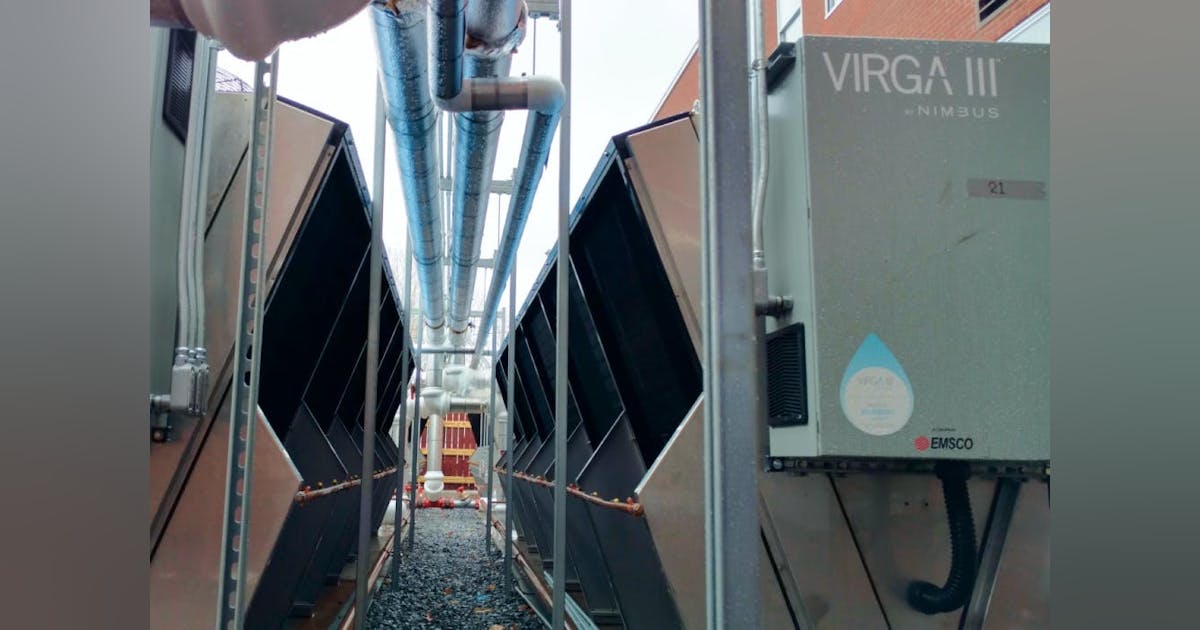
For much of the past decade, the conversation surrounding AI infrastructure has been dominated by one resource above all others: power. Utilities have become strategic partners. Natural gas generation, small modular reactors, microgrids and behind-the-meter power have become central themes across virtually every major data center conference. Developers increasingly speak about securing megawatts years before they discuss servers. But another infrastructure constraint is quietly following the same trajectory: Water. According to executives from Emergence Water and Nimbus Advanced Process Cooling Systems, water is rapidly evolving beyond its traditional role as a sustainability metric and becoming one of the primary determinants of where AI campuses can be built, how they are cooled, and how efficiently they will operate over the coming decade. Speaking with Data Center Frontier Editor in Chief Matt Vincent on the latest DCF Show podcast, Emergence Water Chief Product Officer Leif Percifield and Nimbus Technical Director Vamsi Mokkapati described an industry where water has effectively joined power and fiber as foundational infrastructure for AI development. “From a community perspective, water is absolutely the number one priority about where and why a data center gets built,” Percifield said. “From the developer, it’s pretty binary. They either have water available to them—or they don’t.” Water Is Becoming a Site Selection Constraint The shift reflects the changing realities of AI infrastructure. Traditional enterprise data centers often viewed water primarily through sustainability reporting or Power Usage Effectiveness (PUE) discussions. AI facilities operating at unprecedented rack densities have fundamentally altered that equation. Liquid cooling, hybrid cooling architectures and increasingly sophisticated thermal management strategies all place new emphasis on reliable long-term water availability. Equally important, communities are beginning to scrutinize water usage with the same intensity previously reserved for electrical demand. Percifield says those conversations are increasingly determining whether projects move forward at all.

Read More »

Microsoft will invest $80B in AI data centers in fiscal 2025

And Microsoft isn’t the only one that is ramping up its investments into AI-enabled data centers. Rival cloud service providers are all investing in either upgrading or opening new data centers to capture a larger chunk of business from developers and users of large language models (LLMs).  In a report published in October 2024, Bloomberg Intelligence estimated that demand for generative AI would push Microsoft, AWS, Google, Oracle, Meta, and Apple would between them devote $200 billion to capex in 2025, up from $110 billion in 2023. Microsoft is one of the biggest spenders, followed closely by Google and AWS, Bloomberg Intelligence said. Its estimate of Microsoft’s capital spending on AI, at $62.4 billion for calendar 2025, is lower than Smith’s claim that the company will invest $80 billion in the fiscal year to June 30, 2025. Both figures, though, are way higher than Microsoft’s 2020 capital expenditure of “just” $17.6 billion. The majority of the increased spending is tied to cloud services and the expansion of AI infrastructure needed to provide compute capacity for OpenAI workloads. Separately, last October Amazon CEO Andy Jassy said his company planned total capex spend of $75 billion in 2024 and even more in 2025, with much of it going to AWS, its cloud computing division.

Read More »

John Deere unveils more autonomous farm machines to address skill labor shortage

Join our daily and weekly newsletters for the latest updates and exclusive content on industry-leading AI coverage. Learn More Self-driving tractors might be the path to self-driving cars. John Deere has revealed a new line of autonomous machines and tech across agriculture, construction and commercial landscaping. The Moline, Illinois-based John Deere has been in business for 187 years, yet it’s been a regular as a non-tech company showing off technology at the big tech trade show in Las Vegas and is back at CES 2025 with more autonomous tractors and other vehicles. This is not something we usually cover, but John Deere has a lot of data that is interesting in the big picture of tech. The message from the company is that there aren’t enough skilled farm laborers to do the work that its customers need. It’s been a challenge for most of the last two decades, said Jahmy Hindman, CTO at John Deere, in a briefing. Much of the tech will come this fall and after that. He noted that the average farmer in the U.S. is over 58 and works 12 to 18 hours a day to grow food for us. And he said the American Farm Bureau Federation estimates there are roughly 2.4 million farm jobs that need to be filled annually; and the agricultural work force continues to shrink. (This is my hint to the anti-immigration crowd). John Deere’s autonomous 9RX Tractor. Farmers can oversee it using an app. While each of these industries experiences their own set of challenges, a commonality across all is skilled labor availability. In construction, about 80% percent of contractors struggle to find skilled labor. And in commercial landscaping, 86% of landscaping business owners can’t find labor to fill open positions, he said. “They have to figure out how to do

Read More »

2025 playbook for enterprise AI success, from agents to evals

Join our daily and weekly newsletters for the latest updates and exclusive content on industry-leading AI coverage. Learn More 2025 is poised to be a pivotal year for enterprise AI. The past year has seen rapid innovation, and this year will see the same. This has made it more critical than ever to revisit your AI strategy to stay competitive and create value for your customers. From scaling AI agents to optimizing costs, here are the five critical areas enterprises should prioritize for their AI strategy this year. 1. Agents: the next generation of automation AI agents are no longer theoretical. In 2025, they’re indispensable tools for enterprises looking to streamline operations and enhance customer interactions. Unlike traditional software, agents powered by large language models (LLMs) can make nuanced decisions, navigate complex multi-step tasks, and integrate seamlessly with tools and APIs. At the start of 2024, agents were not ready for prime time, making frustrating mistakes like hallucinating URLs. They started getting better as frontier large language models themselves improved. “Let me put it this way,” said Sam Witteveen, cofounder of Red Dragon, a company that develops agents for companies, and that recently reviewed the 48 agents it built last year. “Interestingly, the ones that we built at the start of the year, a lot of those worked way better at the end of the year just because the models got better.” Witteveen shared this in the video podcast we filmed to discuss these five big trends in detail. Models are getting better and hallucinating less, and they’re also being trained to do agentic tasks. Another feature that the model providers are researching is a way to use the LLM as a judge, and as models get cheaper (something we’ll cover below), companies can use three or more models to

Read More »

OpenAI’s red teaming innovations define new essentials for security leaders in the AI era

Join our daily and weekly newsletters for the latest updates and exclusive content on industry-leading AI coverage. Learn More OpenAI has taken a more aggressive approach to red teaming than its AI competitors, demonstrating its security teams’ advanced capabilities in two areas: multi-step reinforcement and external red teaming. OpenAI recently released two papers that set a new competitive standard for improving the quality, reliability and safety of AI models in these two techniques and more. The first paper, “OpenAI’s Approach to External Red Teaming for AI Models and Systems,” reports that specialized teams outside the company have proven effective in uncovering vulnerabilities that might otherwise have made it into a released model because in-house testing techniques may have missed them. In the second paper, “Diverse and Effective Red Teaming with Auto-Generated Rewards and Multi-Step Reinforcement Learning,” OpenAI introduces an automated framework that relies on iterative reinforcement learning to generate a broad spectrum of novel, wide-ranging attacks. Going all-in on red teaming pays practical, competitive dividends It’s encouraging to see competitive intensity in red teaming growing among AI companies. When Anthropic released its AI red team guidelines in June of last year, it joined AI providers including Google, Microsoft, Nvidia, OpenAI, and even the U.S.’s National Institute of Standards and Technology (NIST), which all had released red teaming frameworks. Investing heavily in red teaming yields tangible benefits for security leaders in any organization. OpenAI’s paper on external red teaming provides a detailed analysis of how the company strives to create specialized external teams that include cybersecurity and subject matter experts. The goal is to see if knowledgeable external teams can defeat models’ security perimeters and find gaps in their security, biases and controls that prompt-based testing couldn’t find. What makes OpenAI’s recent papers noteworthy is how well they define using human-in-the-middle

Read More »