Stay Ahead, Stay ONMINE

The shock of seeing your body used in deepfake porn 

When Jennifer got a job doing research for a nonprofit in 2023, she ran her new professional headshot through a facial recognition program. She wanted to see if the tech would pull up the porn videos she’d made more than 10 years before, when she was in her early 20s. It did in fact return some of that content, and also something alarming that she’d never seen before: one of her old videos, but with someone else’s face on her body. “At first, I thought it was just a different person,” says Jennifer, who is being identified by a pseudonym to protect her privacy.  But then she recognized a distinctly garish background from a video she’d shot around 2013, and she realized: “Somebody used me in a deepfake.” Eerily, the facial recognition tech had identified her because the image still contained some of Jennifer’s features—her cheekbones, her brow, the shape of her chin. “It’s like I’m wearing somebody else’s face like a mask,” she says.  “It’s like I’m wearing somebody else’s face like a mask.” Conversations about sexualized deepfakes—which fall under the umbrella of nonconsensual intimate imagery, or NCII—most often center on the people whose faces are featured doing something they didn’t really do or on bodies that aren’t really theirs. These are often popular celebrities, though over the past few years more people (mostly women and sometimes youths) have been targeted, sparking alarm, fear, and even legislation. But these discussions and societal responses usually are not concerned with the bodies the faces are attached to in these images and videos. As Jennifer, now 37 and a psychotherapist working in New York City, says: “There’s never any discussion about Whose body is this?”  For years, the answer has generally been adult content creators. Deepfakes in fact earned their name back in November 2017, when someone with the Reddit username “deepfakes” uploaded videos showing faces of stars like Scarlett Johansson and Gal Gadot pasted onto porn actors’ bodies. The nonconsensual use of their bodies “happens all the time” in deepfakes, says Corey Silverstein, an attorney specializing in the adult industry.  But more recently, as generative AI has improved, and as “nudify” apps have begun to proliferate, the issue has grown far more complicated—and, arguably, more dangerous for creators’ futures.  Porn actors’ bodies aren’t necessarily being taken directly from sexual images and videos anymore, or at least not in an identifiable way. Instead, they are inevitably being used as training data to inform how new AI-generated bodies look, move, and perform. This threatens the livelihood and rights of porn actors as their work is used to train AI nudes that in turn could take away their business. And that’s not all: Advancements in AI have also made it possible for people to wholly re-create these performers’ likenesses without their consent, and the AI copycats may do things the performers wouldn’t do in real life. This could mean their digital doubles are participating in certain sex acts that they haven’t agreed to do, or even that they’re perpetrating scams against fans.  Adult content creators are already marginalized by a society that largely fails to protect their safety and rights, and these developments put them in an even more vulnerable position. After Jennifer found the deepfake featuring her body, she posted on social media about the psychological effects: “I’ve never seen anyone ask whether that might be traumatic for the person whose body was used without consent too. IT IS!” Several other creators I spoke with shared the mental toll that comes with knowing their bodies have been used nonconsensually, as well as the fear that they’ll suffer financially as other people pirate their work. Silverstein says he hears from adult actors every day who “are concerned that their content is being exploited via AI, and they’re trying to figure out how to protect it.”  One law professor and expert in violence against women calls these creators the “forgotten victims” of NCII deepfakes. And several of the people I spoke with worry that as the US develops a legal framework to combat nonconsensual sexual content online, adult actors are only at risk of further injury; instead of helping them, the crackdown on deepfakes may provide a loophole through which their content and careers could be stripped from the internet altogether. How deepfakes cause “embodied harms” During his preteen years in the 1970s, Spike Irons, now a porn actor and president of the adult content platform XChatFans, was “in love” with Farrah Fawcett. Though Fawcett did not pose nude, Jones managed to get his hands on what looked like pictures of her naked. “People were cutting out faces and pasting them on bodies,” Irons says. “Deepfakes, before AI, had been going around for quite a while. They just weren’t as prolific.” The early public internet was rife with websites capitalizing on the idea that you could use technology to “see” celebrities naked. “People would just use Microsoft Paint,” says Silverstein, the attorney. It was a simple way to mash up celebrities’ faces with porn.  People later used software like Adobe After Effects or FakeApp, which was designed to swap two individuals’ faces in images or videos. None of these programs required serious expertise to alter content, so there was a low barrier to entry. That, plus the wealth of porn performers’ videos online, helped make face-swap deepfakes that used real bodies prevalent by the 2010s. When, later in the decade, deepfakes of Gal Gadot and Emma Watson caused something of a broader panic, their faces were allegedly swapped onto the bodies of the porn actors Pepper XO and Mary Moody, respectively. But it wasn’t just high-profile actors like them whose bodies were being used. Jennifer was “a very minor performer,” she says. “If it happened to me, I feel like it could happen to anybody who’s shot porn.” Since he started his practice in 2006, Silverstein says, “numerous clients” have reached out to report “This is my body on so-and-so.”  Both people whose faces appear in NCII deepfakes and those whose bodies are used this way can feel serious distress. Experts call this type of damage “embodied harms,” says Anne Craanen, who researches gender-based violence at the UK’s Institute for Strategic Dialogue, an organization that analyzes extremist content, disinformation, and online threats.  The term reflects the fact that even though the content exists in the virtual realm, it can cause physiological effects, including body dysmorphia. The face-swapped entity occupies the uncanny valley, distorting self-perception. After discovering their faces in sexual deepfakes, many people feel silenced, experts told me; they may “self-censor,” as Craanen puts it, and step back from public-facing life. Allison Mahoney, an attorney who works with abuse survivors, says that people whose faces appear in NCII can experience depression, anxiety, and suicidal ideation: “I’ve had multiple clients tell me that they don’t sleep at night, that they’re losing their hair.”  Independent creators aren’t just “having sex on camera.” For someone to rip off their work “for their own entertainment or financial gain fucking sucks.” Though the impact on people whose bodies are used hasn’t been discussed or studied as often, Jennifer says that “it’s just a really terrible feeling, knowing that you are part of somebody else’s abuse.” She sees it as akin to “a new form of sexual violence.” The uncertainty that comes with not being aware of what your body is doing online can be highly unsettling. Like Jennifer, many adult actors don’t really know what’s out there. But some devoted followers know the actors’ bodies well—often recognizing tattoos, scars, or birthmarks—and “very quickly they bring [deepfakes] to the adult performer’s attention,” says Silverstein. Or performers will stumble upon the content by chance; some 20 years ago, for instance, the first such client to tell Silverstein her body was being used in a deepfake happened to be searching Nicole Kidman online when she found that one of the results showed Kidman’s face on her porn. “She was devastated, obviously, because they took her body,” he says, “and they were monetizing it.”  Otherwise, this imagery may be found by an organization like Takedown Piracy, one of several copyright enforcement companies serving adult content creators. US copyright violations can be challenging to prove if someone’s body lacks distinguishing features, says Reba Rocket, Takedown Piracy’s chief operating and marketing officer. But Rocket says her team has added digital fingerprinting technology to clients’ material to help flag and remove problematic videos, often finding them before clients realize they’re online.  By capturing “tens of thousands of tiny little visual data points” from videos, digital fingerprinting creates unique corresponding files that can be used to identify them, Rocket says—kind of like an invisible watermark. The prints remain even if pirates alter the videos or replace performers’ faces. Takedown Piracy has digitally fingerprinted more than half a billion videos and the organization has gotten 130 million copyrighted videos taken down from Google alone (though, of those videos, Rocket hasn’t tracked how many of these specifically include someone else’s face on a performer’s body).  Besides copyright, a range of legal tools can be used to try and combat NCII, says Eric Goldman, a law professor at Santa Clara University. For example, victims can claim invasion of privacy. But using these tools isn’t particularly straightforward, and they may not even apply when it comes to someone’s body. If there aren’t, for instance, unique markers indicating that a body in a deepfake belongs to the person who says it does, US law “doesn’t really treat [this content] as invasion of privacy,” Goldman says, “because we don’t know who to attribute it to.” In a 2018 study that reviewed “judicial resolution” of cases involving NCII, Goldman found that one successful way plaintiffs were able to win cases was to assert “intentional affliction of emotional distress.” But again, that hinges on the ability to clearly identify the person in the content. Relevant statutes, he adds, might also require “intent to harm the individual,” which may be hard to show for people whose bodies alone are featured. “AI girls will do whatever you want” In the last few years, Silverstein says, it’s become less and less common to see the bodies of real adult content creators in deepfakes, at least in a way that makes them clearly identifiable.  Sometimes the bodies have been manipulated using AI or simpler editing tools. This can be as basic as erasing a birthmark or changing the size of a body part—minor edits that make it impossible to identify someone’s image beyond a reasonable doubt, so even porn actors who can tell that an altered image used their body as a base won’t get very far in the legal realm. “A lot of people are like, That looks like my body,” says Silverstein, but when he asks them how, they’ll reply, It just does.  At the same time, other users are now creating NCII with wholly AI-generated bodies. In “nudify” apps, anyone with a minimal grasp of technology can upload a photo of someone’s clothed body and have it replaced with a fake naked one. “So [much] of this content being created is just someone’s face on an AI body,” Silverstein says. Such apps have drawn a ton of attention recently, from Grok “nudifying” minors to Meta running ads for—and then suing—the nudify app Crushmate. But there’s been relatively little attention paid to the content being used to train them. They almost certainly draw on the more than 10,000 terabytes of online porn, and performers have virtually zero recourse.  One reason is that creators aren’t able to demonstrate with any certainty that their content is being used to train AI models like those used by nudify apps. “These things are all a black box,” says Hany Farid, a professor at the University of California, Berkeley, who specializes in digital forensics. But “given the ubiquity” of adult content, he adds, it’s a “reasonable assumption” that online porn is being used in AI training.  “It’s just not at all difficult to come up with pornographic data sets on the internet,” says Stephen Casper, a computer science PhD student at MIT who researches deepfakes. What’s more, he says, plenty of shadowy online communities provide “user guides” on how to use this data to train AI, and in particular programs that generate nudes.  It’s not certain whether this activity falls within the US legal definition of “fair use”—an issue that’s currently being litigated in several lawsuits from other types of content creators—but Casper argues that even if it does, it’s ethically murky for porn created by consenting adults 10 years ago to wind up in those training data sets. When people “have their stuff used in a way that doesn’t respect or reflect reasonable expectations that they had at that time about what they were creating and how it would be used,” he says, there’s “a legitimate sense in which it’s kind of … nonconsensual.”  Adult performers who started working years ago couldn’t possibly have consented to AI anything; Jennifer calls AI-related risks “retroactively placed.” Contracts that porn actors signed before AI, adds Silverstein, might provide that “the publisher could do anything with the content using technology that now exists or here and after will be discovered.” That felt more innocuous when producers were talking about the shift from VHS to DVD, because that didn’t change the content itself, just the way it was conveyed. It’s a far different prospect for someone to use your content to train a program to create new content … content that could replace your work altogether.  Of course, this all affects creators’ bottom line—not unlike the way Google’s AI overviews affect revenue for online publishers who’ve stopped getting clicks when people are content with just reading AI-generated summaries. Performers’ “concern is … it’s another way to pirate [their] content,” says Rocket.  After all, independent creators aren’t just “having sex on camera,” as the adult content creator Allie Eve Knox says. They’re paying for filming equipment and location rentals, and then spending hours editing and marketing. For someone to then rip off and distort that content “for their own entertainment or financial gain,” she says, “fucking sucks.”  KIM HOECKELE Tanya Tate, a longtime adult content creator, tells me about another highly unsettling AI-created situation: She was recently chatting with a fan on Mynx, a sexting app, when he asked her if she knew him. She told him no, and “his eyes just started watering,” Tate says. He was upset because he thought she did know him. Turns out he’d sent $20,000 to a scammer who’d used an AI-generated deepfake of Tate to seduce him.  Several men, Tate subsequently learned, had been scammed by an AI version of her, and some of them began blaming her for their losses and posting false statements about her online. When she reported one particularly aggressive harasser to the police, they told her he was exercising his “freedom of speech,” she says. Rocket, too, is familiar with situations where AI is used to take advantage of fans. “The actual content creator will get nasty emails from these people who’ve been scammed,” she says. Other porn actors say they fear that their likenesses have been used without consent to do other things they wouldn’t do. One, Octavia Red, tells me she doesn’t do anal scenes, “but I’m sure there’s tons of deepfake anal videos of me that I didn’t consent to.” That could cost her, she fears, if viewers choose to watch those videos instead of subscribing to her websites. And it could cause fans to develop false expectations about what kind of porn she’ll create. “I saw one AI creator saying, ‘Well, AI girls will do whatever you want. They don’t say no,’” says Rocket. “That horrifies me … especially if they’re training those AI models on real people. I don’t think they understand the damage to mental health or reputation that that can create. And once it’s on the internet, it’s there forever.”  Efforts to “scrub adult content from the internet” As AI technology improves, it’s increasingly difficult for people to discern any type of real video from the best AI-generated ones on their own. In one 2025 study, UC Berkeley’s Farid found that participants correctly identified AI-generated voices about 60% of the time (not much better than random chance), while advances like false heartbeats make AI-generated humans tougher than ever to spot. Nevertheless, most lawyers and legal experts I spoke with said copyright laws are still adult performers’ best bet in the US legal system, at least for getting their face-swapped content taken down. For his clients, Silverstein says, he tries to figure out the content’s origins and then issue takedown requests under the Digital Millennium Copyright Act, a 1998 law that adapted copyright law for the internet era. “Even recently, I had a performer who has an insanely well-known tattoo,” he says, and with a DMCA subpoena he managed to identify the poster of the content, who voluntarily removed it.  But this way of working is becoming increasingly rare. These days it’s nearly “impossible,” Silverstein says, to determine who produced a deepfake, because many platforms that host pirated content operate facelessly. They’re also often based in places that “don’t really care about US law when it comes to copyrights,” says Rocket—places like Russia, the Seychelles, and the Netherlands.  While governments in the EU, the UK, and Australia have said they will ban or restrict access to nudify apps, it’s not an easily executed proposition. As Craanen notes, when app stores remove these services, they often simply reappear under different names, providing the same services. And social platforms where people share NCII deepfakes, argues Rocket, are slacking in getting them removed. “It’s endless, and it’s ridiculous, because places like Twitter and Facebook have the same technology we do,” Rocket says. “They can identify something as an infringement instantly, but they choose not to.” (Apple spokesperson Adam Dema emailed, “’nudification’ apps are against our guidelines” in the app store, and it has “proactively rejected many of these apps and removed many others,” flagging a reporting portal for users. A Google spokesperson emailed, “Google Play does not allow apps that contain sexual content,” noting it takes “proactive steps to detect and remove apps with harmful content” and has suspended hundreds of apps for violating its policy. Meta spokesperson shared a blog post about actions it’s taken against nudify apps, but did not respond to follow-up questions about copyrighted material. X did not respond to a request for comment.) As porn performers are forced to navigate AI-related threats, the only current federal law to address deepfakes may not help them much—and could even make matters worse. The Take It Down Act, which became US law last year, criminalizes publishing NCII and requires websites to remove it within 48 hours. But, as Farid notes, people could weaponize the measure by reporting porn that was made legally and with consent and claiming that it’s NCII. This could result in the content’s removal, which would hurt the performers who made it. Santa Clara’s Goldman points to Project 2025, the Heritage Foundation’s policy blueprint for the second Trump administration, which aims to wipe porn from the web. The Take It Down Act, he argues, “allows for the coordinated effort to scrub adult content from the internet.”  US lawmakers have a history of hurting sex workers in their attempts to regulate explicit content online. State-level age verification laws are an example; visitors can pretty easily get around these measures, but they can still result in reduced revenue for adult performers (because of lower traffic to those sites and the high price of age-checking services they have to purchase).  “They’re always doing something to fuck with the porn industry, but not in a way that actually helps sex workers,” says Jennifer. “If they do something, they’re taking away your income again—as opposed to something like giving you more rights to your image, [which] would be tremendously helpful.”  But as generative AI plays an increasingly large role in NCII deepfakes, the types of images to which adult performers have rights moves deeper into a gray area. Can actors lay claim to AI images likely trained on their bodies? How about AI-generated videos that impersonate them, like the one that tricked Tanya Tate’s fan? The biggest challenge will be creating “legitimate, effective laws that will absolutely protect content creators from abusing their likeness to train and create AI,” Rocket says. “Absent that, we’re just going to have to keep pulling content down from the internet that’s fake.” In the meantime, a few porn actors tell me, they’re trying to take advantage of copyright laws that weren’t really made for them; they’ve signed with platforms that host their AI-generated duplicates, with whom fans pay to chat, in part so they’ll have contracts that protect ownership of their AI likenesses. When I spoke with the actor Kiki Daire in September 2025 for a story on adult creators’ “AI twins,” she said she “own[ed] her AI” because she’d signed a contract with Spicey AI, a site that hosted AI duplicates of adult performers. If another company or person created her AI-generated likeness, she added, “I have a leg to stand on, as far as being able to shut that down.”   Even this, though, is not a sure thing; Spicey AI, for instance, shut down several months after I spoke with Daire, so it’s unlikely that her contract would hold. And when I spoke in October with Rachael Cavalli, another adult actor who had signed with an AI duplicate site in hopes it’d help protect her AI image, she admitted, “I don’t have time to sit around and look for companies that have used my image or turned something into a video that I didn’t actually do … it’s a lot of work.” In other words, having rights to your AI image on paper doesn’t make it easier to track down all the potentially infinite breaches of those rights online. If she’d known what she knows about technology today, Jennifer says she doesn’t think she would have done porn. The risks have increased too much, and too unpredictably. She now does in-person sex work; it’s “not necessarily safer,” she says, “but it’s a different risk profile that I feel more equipped to manage.”  Plus, she figures AI is unlikely to replace in-person sex workers the way it could porn actors: “I don’t think there’s going to be stripper robots.”  Jessica Klein is a Philadelphia-based freelance journalist covering intimate partner violence, cryptocurrency, and other topics.



When Jennifer got a job doing research for a nonprofit in 2023, she ran her new professional headshot through a facial recognition program. She wanted to see if the tech would pull up the porn videos she’d made more than 10 years before, when she was in her early 20s. It did in fact return some of that content, and also something alarming that she’d never seen before: one of her old videos, but with someone else’s face on her body.

“At first, I thought it was just a different person,” says Jennifer, who is being identified by a pseudonym to protect her privacy. 

But then she recognized a distinctly garish background from a video she’d shot around 2013, and she realized: “Somebody used me in a deepfake.”

Eerily, the facial recognition tech had identified her because the image still contained some of Jennifer’s features—her cheekbones, her brow, the shape of her chin. “It’s like I’m wearing somebody else’s face like a mask,” she says. 

“It’s like I’m wearing somebody else’s face like a mask.”

Conversations about sexualized deepfakes—which fall under the umbrella of nonconsensual intimate imagery, or NCII—most often center on the people whose faces are featured doing something they didn’t really do or on bodies that aren’t really theirs. These are often popular celebrities, though over the past few years more people (mostly women and sometimes youths) have been targeted, sparking alarm, fear, and even legislation. But these discussions and societal responses usually are not concerned with the bodies the faces are attached to in these images and videos.

As Jennifer, now 37 and a psychotherapist working in New York City, says: “There’s never any discussion about Whose body is this?” 

For years, the answer has generally been adult content creators. Deepfakes in fact earned their name back in November 2017, when someone with the Reddit username “deepfakes” uploaded videos showing faces of stars like Scarlett Johansson and Gal Gadot pasted onto porn actors’ bodies. The nonconsensual use of their bodies “happens all the time” in deepfakes, says Corey Silverstein, an attorney specializing in the adult industry. 

But more recently, as generative AI has improved, and as “nudify” apps have begun to proliferate, the issue has grown far more complicated—and, arguably, more dangerous for creators’ futures. 

Porn actors’ bodies aren’t necessarily being taken directly from sexual images and videos anymore, or at least not in an identifiable way. Instead, they are inevitably being used as training data to inform how new AI-generated bodies look, move, and perform. This threatens the livelihood and rights of porn actors as their work is used to train AI nudes that in turn could take away their business. And that’s not all: Advancements in AI have also made it possible for people to wholly re-create these performers’ likenesses without their consent, and the AI copycats may do things the performers wouldn’t do in real life. This could mean their digital doubles are participating in certain sex acts that they haven’t agreed to do, or even that they’re perpetrating scams against fans. 

Adult content creators are already marginalized by a society that largely fails to protect their safety and rights, and these developments put them in an even more vulnerable position. After Jennifer found the deepfake featuring her body, she posted on social media about the psychological effects: “I’ve never seen anyone ask whether that might be traumatic for the person whose body was used without consent too. IT IS!” Several other creators I spoke with shared the mental toll that comes with knowing their bodies have been used nonconsensually, as well as the fear that they’ll suffer financially as other people pirate their work. Silverstein says he hears from adult actors every day who “are concerned that their content is being exploited via AI, and they’re trying to figure out how to protect it.” 

One law professor and expert in violence against women calls these creators the “forgotten victims” of NCII deepfakes. And several of the people I spoke with worry that as the US develops a legal framework to combat nonconsensual sexual content online, adult actors are only at risk of further injury; instead of helping them, the crackdown on deepfakes may provide a loophole through which their content and careers could be stripped from the internet altogether.

How deepfakes cause “embodied harms”

During his preteen years in the 1970s, Spike Irons, now a porn actor and president of the adult content platform XChatFans, was “in love” with Farrah Fawcett. Though Fawcett did not pose nude, Jones managed to get his hands on what looked like pictures of her naked. “People were cutting out faces and pasting them on bodies,” Irons says. “Deepfakes, before AI, had been going around for quite a while. They just weren’t as prolific.”

The early public internet was rife with websites capitalizing on the idea that you could use technology to “see” celebrities naked. “People would just use Microsoft Paint,” says Silverstein, the attorney. It was a simple way to mash up celebrities’ faces with porn. 

People later used software like Adobe After Effects or FakeApp, which was designed to swap two individuals’ faces in images or videos. None of these programs required serious expertise to alter content, so there was a low barrier to entry. That, plus the wealth of porn performers’ videos online, helped make face-swap deepfakes that used real bodies prevalent by the 2010s. When, later in the decade, deepfakes of Gal Gadot and Emma Watson caused something of a broader panic, their faces were allegedly swapped onto the bodies of the porn actors Pepper XO and Mary Moody, respectively.

But it wasn’t just high-profile actors like them whose bodies were being used. Jennifer was “a very minor performer,” she says. “If it happened to me, I feel like it could happen to anybody who’s shot porn.” Since he started his practice in 2006, Silverstein says, “numerous clients” have reached out to report “This is my body on so-and-so.” 

Both people whose faces appear in NCII deepfakes and those whose bodies are used this way can feel serious distress. Experts call this type of damage “embodied harms,” says Anne Craanen, who researches gender-based violence at the UK’s Institute for Strategic Dialogue, an organization that analyzes extremist content, disinformation, and online threats. 

The term reflects the fact that even though the content exists in the virtual realm, it can cause physiological effects, including body dysmorphia. The face-swapped entity occupies the uncanny valley, distorting self-perception. After discovering their faces in sexual deepfakes, many people feel silenced, experts told me; they may “self-censor,” as Craanen puts it, and step back from public-facing life. Allison Mahoney, an attorney who works with abuse survivors, says that people whose faces appear in NCII can experience depression, anxiety, and suicidal ideation: “I’ve had multiple clients tell me that they don’t sleep at night, that they’re losing their hair.” 

Independent creators aren’t just “having sex on camera.” For someone to rip off their work “for their own entertainment or financial gain fucking sucks.”

Though the impact on people whose bodies are used hasn’t been discussed or studied as often, Jennifer says that “it’s just a really terrible feeling, knowing that you are part of somebody else’s abuse.” She sees it as akin to “a new form of sexual violence.”

The uncertainty that comes with not being aware of what your body is doing online can be highly unsettling. Like Jennifer, many adult actors don’t really know what’s out there. But some devoted followers know the actors’ bodies well—often recognizing tattoos, scars, or birthmarks—and “very quickly they bring [deepfakes] to the adult performer’s attention,” says Silverstein. Or performers will stumble upon the content by chance; some 20 years ago, for instance, the first such client to tell Silverstein her body was being used in a deepfake happened to be searching Nicole Kidman online when she found that one of the results showed Kidman’s face on her porn. “She was devastated, obviously, because they took her body,” he says, “and they were monetizing it.” 

Otherwise, this imagery may be found by an organization like Takedown Piracy, one of several copyright enforcement companies serving adult content creators. US copyright violations can be challenging to prove if someone’s body lacks distinguishing features, says Reba Rocket, Takedown Piracy’s chief operating and marketing officer. But Rocket says her team has added digital fingerprinting technology to clients’ material to help flag and remove problematic videos, often finding them before clients realize they’re online. 

By capturing “tens of thousands of tiny little visual data points” from videos, digital fingerprinting creates unique corresponding files that can be used to identify them, Rocket says—kind of like an invisible watermark. The prints remain even if pirates alter the videos or replace performers’ faces. Takedown Piracy has digitally fingerprinted more than half a billion videos and the organization has gotten 130 million copyrighted videos taken down from Google alone (though, of those videos, Rocket hasn’t tracked how many of these specifically include someone else’s face on a performer’s body). 

Besides copyright, a range of legal tools can be used to try and combat NCII, says Eric Goldman, a law professor at Santa Clara University. For example, victims can claim invasion of privacy. But using these tools isn’t particularly straightforward, and they may not even apply when it comes to someone’s body. If there aren’t, for instance, unique markers indicating that a body in a deepfake belongs to the person who says it does, US law “doesn’t really treat [this content] as invasion of privacy,” Goldman says, “because we don’t know who to attribute it to.”

In a 2018 study that reviewed “judicial resolution” of cases involving NCII, Goldman found that one successful way plaintiffs were able to win cases was to assert “intentional affliction of emotional distress.” But again, that hinges on the ability to clearly identify the person in the content. Relevant statutes, he adds, might also require “intent to harm the individual,” which may be hard to show for people whose bodies alone are featured.

“AI girls will do whatever you want”

In the last few years, Silverstein says, it’s become less and less common to see the bodies of real adult content creators in deepfakes, at least in a way that makes them clearly identifiable. 

Sometimes the bodies have been manipulated using AI or simpler editing tools. This can be as basic as erasing a birthmark or changing the size of a body part—minor edits that make it impossible to identify someone’s image beyond a reasonable doubt, so even porn actors who can tell that an altered image used their body as a base won’t get very far in the legal realm. “A lot of people are like, That looks like my body,” says Silverstein, but when he asks them how, they’ll reply, It just does. 

At the same time, other users are now creating NCII with wholly AI-generated bodies. In “nudify” apps, anyone with a minimal grasp of technology can upload a photo of someone’s clothed body and have it replaced with a fake naked one. “So [much] of this content being created is just someone’s face on an AI body,” Silverstein says.

Such apps have drawn a ton of attention recently, from Grok “nudifying” minors to Meta running ads for—and then suing—the nudify app Crushmate. But there’s been relatively little attention paid to the content being used to train them. They almost certainly draw on the more than 10,000 terabytes of online porn, and performers have virtually zero recourse. 

One reason is that creators aren’t able to demonstrate with any certainty that their content is being used to train AI models like those used by nudify apps. “These things are all a black box,” says Hany Farid, a professor at the University of California, Berkeley, who specializes in digital forensics. But “given the ubiquity” of adult content, he adds, it’s a “reasonable assumption” that online porn is being used in AI training. 

“It’s just not at all difficult to come up with pornographic data sets on the internet,” says Stephen Casper, a computer science PhD student at MIT who researches deepfakes. What’s more, he says, plenty of shadowy online communities provide “user guides” on how to use this data to train AI, and in particular programs that generate nudes. 

It’s not certain whether this activity falls within the US legal definition of “fair use”—an issue that’s currently being litigated in several lawsuits from other types of content creators—but Casper argues that even if it does, it’s ethically murky for porn created by consenting adults 10 years ago to wind up in those training data sets. When people “have their stuff used in a way that doesn’t respect or reflect reasonable expectations that they had at that time about what they were creating and how it would be used,” he says, there’s “a legitimate sense in which it’s kind of … nonconsensual.” 

Adult performers who started working years ago couldn’t possibly have consented to AI anything; Jennifer calls AI-related risks “retroactively placed.” Contracts that porn actors signed before AI, adds Silverstein, might provide that “the publisher could do anything with the content using technology that now exists or here and after will be discovered.” That felt more innocuous when producers were talking about the shift from VHS to DVD, because that didn’t change the content itself, just the way it was conveyed. It’s a far different prospect for someone to use your content to train a program to create new content … content that could replace your work altogether. 

Of course, this all affects creators’ bottom line—not unlike the way Google’s AI overviews affect revenue for online publishers who’ve stopped getting clicks when people are content with just reading AI-generated summaries. Performers’ “concern is … it’s another way to pirate [their] content,” says Rocket. 

After all, independent creators aren’t just “having sex on camera,” as the adult content creator Allie Eve Knox says. They’re paying for filming equipment and location rentals, and then spending hours editing and marketing. For someone to then rip off and distort that content “for their own entertainment or financial gain,” she says, “fucking sucks.” 

KIM HOECKELE

Tanya Tate, a longtime adult content creator, tells me about another highly unsettling AI-created situation: She was recently chatting with a fan on Mynx, a sexting app, when he asked her if she knew him. She told him no, and “his eyes just started watering,” Tate says. He was upset because he thought she did know him. Turns out he’d sent $20,000 to a scammer who’d used an AI-generated deepfake of Tate to seduce him. 

Several men, Tate subsequently learned, had been scammed by an AI version of her, and some of them began blaming her for their losses and posting false statements about her online. When she reported one particularly aggressive harasser to the police, they told her he was exercising his “freedom of speech,” she says. Rocket, too, is familiar with situations where AI is used to take advantage of fans. “The actual content creator will get nasty emails from these people who’ve been scammed,” she says.

Other porn actors say they fear that their likenesses have been used without consent to do other things they wouldn’t do. One, Octavia Red, tells me she doesn’t do anal scenes, “but I’m sure there’s tons of deepfake anal videos of me that I didn’t consent to.” That could cost her, she fears, if viewers choose to watch those videos instead of subscribing to her websites. And it could cause fans to develop false expectations about what kind of porn she’ll create.

“I saw one AI creator saying, ‘Well, AI girls will do whatever you want. They don’t say no,’” says Rocket. “That horrifies me … especially if they’re training those AI models on real people. I don’t think they understand the damage to mental health or reputation that that can create. And once it’s on the internet, it’s there forever.” 

Efforts to “scrub adult content from the internet”

As AI technology improves, it’s increasingly difficult for people to discern any type of real video from the best AI-generated ones on their own. In one 2025 study, UC Berkeley’s Farid found that participants correctly identified AI-generated voices about 60% of the time (not much better than random chance), while advances like false heartbeats make AI-generated humans tougher than ever to spot.

Nevertheless, most lawyers and legal experts I spoke with said copyright laws are still adult performers’ best bet in the US legal system, at least for getting their face-swapped content taken down. For his clients, Silverstein says, he tries to figure out the content’s origins and then issue takedown requests under the Digital Millennium Copyright Act, a 1998 law that adapted copyright law for the internet era. “Even recently, I had a performer who has an insanely well-known tattoo,” he says, and with a DMCA subpoena he managed to identify the poster of the content, who voluntarily removed it. 

But this way of working is becoming increasingly rare.

These days it’s nearly “impossible,” Silverstein says, to determine who produced a deepfake, because many platforms that host pirated content operate facelessly. They’re also often based in places that “don’t really care about US law when it comes to copyrights,” says Rocket—places like Russia, the Seychelles, and the Netherlands. 

While governments in the EU, the UK, and Australia have said they will ban or restrict access to nudify apps, it’s not an easily executed proposition. As Craanen notes, when app stores remove these services, they often simply reappear under different names, providing the same services. And social platforms where people share NCII deepfakes, argues Rocket, are slacking in getting them removed. “It’s endless, and it’s ridiculous, because places like Twitter and Facebook have the same technology we do,” Rocket says. “They can identify something as an infringement instantly, but they choose not to.”

(Apple spokesperson Adam Dema emailed, “’nudification’ apps are against our guidelines” in the app store, and it has “proactively rejected many of these apps and removed many others,” flagging a reporting portal for users. A Google spokesperson emailed, “Google Play does not allow apps that contain sexual content,” noting it takes “proactive steps to detect and remove apps with harmful content” and has suspended hundreds of apps for violating its policy. Meta spokesperson shared a blog post about actions it’s taken against nudify apps, but did not respond to follow-up questions about copyrighted material. X did not respond to a request for comment.)

As porn performers are forced to navigate AI-related threats, the only current federal law to address deepfakes may not help them much—and could even make matters worse. The Take It Down Act, which became US law last year, criminalizes publishing NCII and requires websites to remove it within 48 hours. But, as Farid notes, people could weaponize the measure by reporting porn that was made legally and with consent and claiming that it’s NCII. This could result in the content’s removal, which would hurt the performers who made it. Santa Clara’s Goldman points to Project 2025, the Heritage Foundation’s policy blueprint for the second Trump administration, which aims to wipe porn from the web. The Take It Down Act, he argues, “allows for the coordinated effort to scrub adult content from the internet.” 

US lawmakers have a history of hurting sex workers in their attempts to regulate explicit content online. State-level age verification laws are an example; visitors can pretty easily get around these measures, but they can still result in reduced revenue for adult performers (because of lower traffic to those sites and the high price of age-checking services they have to purchase). 

“They’re always doing something to fuck with the porn industry, but not in a way that actually helps sex workers,” says Jennifer. “If they do something, they’re taking away your income again—as opposed to something like giving you more rights to your image, [which] would be tremendously helpful.” 

But as generative AI plays an increasingly large role in NCII deepfakes, the types of images to which adult performers have rights moves deeper into a gray area. Can actors lay claim to AI images likely trained on their bodies? How about AI-generated videos that impersonate them, like the one that tricked Tanya Tate’s fan?

The biggest challenge will be creating “legitimate, effective laws that will absolutely protect content creators from abusing their likeness to train and create AI,” Rocket says. “Absent that, we’re just going to have to keep pulling content down from the internet that’s fake.”

In the meantime, a few porn actors tell me, they’re trying to take advantage of copyright laws that weren’t really made for them; they’ve signed with platforms that host their AI-generated duplicates, with whom fans pay to chat, in part so they’ll have contracts that protect ownership of their AI likenesses. When I spoke with the actor Kiki Daire in September 2025 for a story on adult creators’ “AI twins,” she said she “own[ed] her AI” because she’d signed a contract with Spicey AI, a site that hosted AI duplicates of adult performers. If another company or person created her AI-generated likeness, she added, “I have a leg to stand on, as far as being able to shut that down.”  

Even this, though, is not a sure thing; Spicey AI, for instance, shut down several months after I spoke with Daire, so it’s unlikely that her contract would hold. And when I spoke in October with Rachael Cavalli, another adult actor who had signed with an AI duplicate site in hopes it’d help protect her AI image, she admitted, “I don’t have time to sit around and look for companies that have used my image or turned something into a video that I didn’t actually do … it’s a lot of work.” In other words, having rights to your AI image on paper doesn’t make it easier to track down all the potentially infinite breaches of those rights online.

If she’d known what she knows about technology today, Jennifer says she doesn’t think she would have done porn. The risks have increased too much, and too unpredictably. She now does in-person sex work; it’s “not necessarily safer,” she says, “but it’s a different risk profile that I feel more equipped to manage.” 

Plus, she figures AI is unlikely to replace in-person sex workers the way it could porn actors: “I don’t think there’s going to be stripper robots.” 

Jessica Klein is a Philadelphia-based freelance journalist covering intimate partner violence, cryptocurrency, and other topics.

Shape
Shape
Stay Ahead

Explore More Insights

Stay ahead with more perspectives on cutting-edge power, infrastructure, energy,  bitcoin and AI solutions. Explore these articles to uncover strategies and insights shaping the future of industries.

Shape

APA to beef up exploration spending in 2027

@import url(‘https://fonts.googleapis.com/css2?family=Inter:wght@100..900&display=swap’); .ebm-page__main h1, .ebm-page__main h2, .ebm-page__main h3, .ebm-page__main h4, .ebm-page__main h5, .ebm-page__main h6 { font-family: Inter; } body { line-height: 150%; letter-spacing: 0.025em; } button, .ebm-button-wrapper { font-family: Inter; } .label-style { text-transform: uppercase; color: var(–color-grey); font-weight: 600; font-size: 0.75rem; } .caption-style { font-size: 0.75rem; color: color-mix(in srgb, currentColor 60%, transparent); } Executives at APA Corp., Houston, plan to bump the company’s 2027 capital spending to $2.5 billion from an expected $2.1 billion and will dedicate the majority of that increase to exploration work and the development of the GranMorgu project in which it is a 40% partner. Speaking to analysts and investors after APA reported third-quarter profits of $698 million on revenues of more than $2.8 billion, chief executice officer John Christmann said the allocation of $250 million to exploration and another $250 million to developing GranMorgu will return APA to its targeted range of having 10-15% of annual upstream capital go to such work. The plans comprise: Two exploration wells in Suriname’s GranMorgu offshore development with TotalEnergies, which also owns 40% of that project and is the operator. Christmann said the wells will look to extend GranMorgu’s production plateau “or even support a second development.” A winter program in Alaska that includes an exploration well and an appraisal test of the company’s Sockeye discovery. The spudding of APA’s well in the OFF-6 block of which it owns 60%, with Eni holding the remainder. Tracey Henderson, APA’s executive vice-president of exploration, said the block reminds her team of conditions offshore Namibia and that its work with Eni will essentially be a “petroleum systems test.” Addressing the potential of GranMorgu—which APA and TotalEnergies teams have estimated has nearly 760 million bbl of reserves—and the goal of starting production in mid-2028, Christmann said 4 wells are being planned over the

Read More »

Energy Department Announces Fall 2026 SBIR/STTR Phase I Topics, Unlocking $200 Million for American Innovation

WASHINGTON—The U.S. Department of Energy (DOE) today announced the Fall 2026 Small Business Innovation Research (SBIR) and Small Business Technology Transfer (STTR) Phase I Topics, unlocking more than $200 million in federal funding to support American small businesses developing innovative technologies that strengthen U.S. energy and national security. The Phase I topics span grid innovation, nuclear detonation detection, cybersecurity, and other areas with strong commercial potential.  The Fall 2026 release marks a significant milestone for DOE’s restructured SBIR and STTR programs, now managed by DOE’s Office of Technology Commercialization (OTC). Through DOE’s Partnership Intermediary, ConnectWerx, the programs are streamlining management and delivery, reducing application burdens, and expanding access to funding opportunities for American small businesses.    The restructuring advances the Trump Administration’s priorities to strengthen American energy and national security, support U.S. small businesses, and accelerate the commercialization of technologies critical to maintaining U.S. technological leadership. By prioritizing projects with strong technical and commercial potential, DOE is helping move American innovation from the laboratory to the marketplace.  “Under President Trump’s leadership, we’ve fundamentally redesigned the SBIR/STTR programs from the ground up to make them more accessible, more dynamic, and much more productive,” said Anthony Pugliese, DOE Chief Commercialization Officer and Director of the Office of Technology Commercialization. “These changes will help us attract more American entrepreneurs and startups, maximize the impact of every federal dollar, and ultimately turn promising innovations into real-world solutions that strengthen American competitiveness.”  Phase I now serves as the entry point to the full SBIR/STTR funding pathway. Companies begin by submitting a pitch for a Phase I award to demonstrate the technical feasibility of their proposed innovations, with opportunities to secure follow-on funding in subsequent phases. Go/no-go decisions between phases assess technical progress and commercial potential before advancing to the next stage, ensuring federal resources are focused

Read More »

QatarEnergy continues Maydan Mahzam field redevelopment

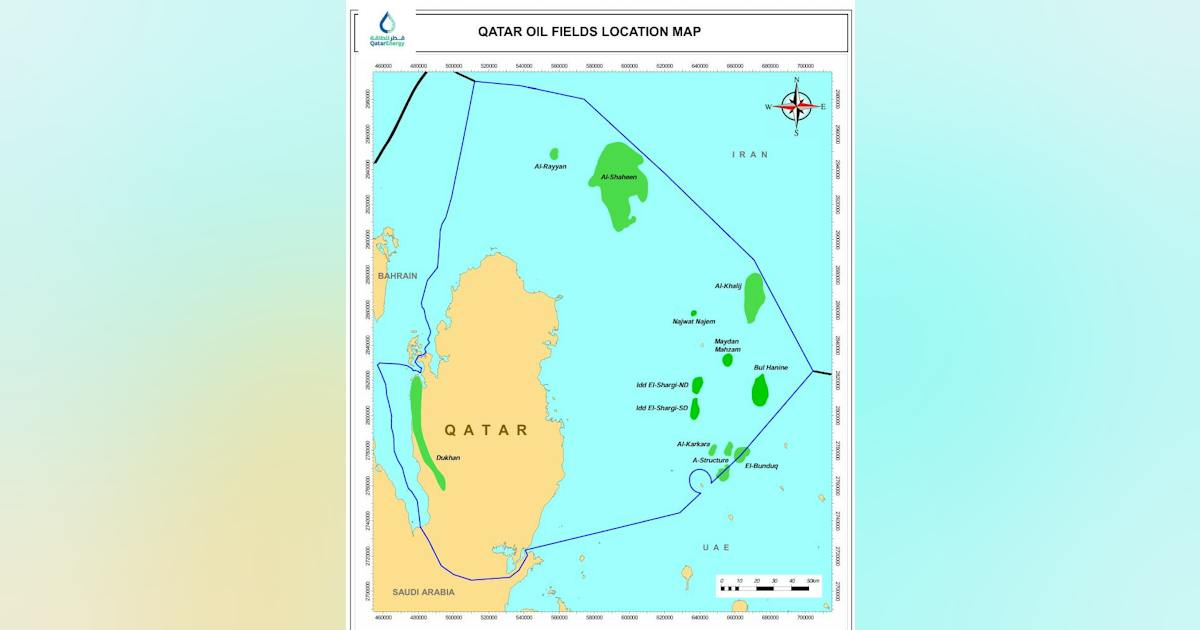
@import url(‘https://fonts.googleapis.com/css2?family=Inter:wght@100..900&display=swap’); .ebm-page__main h1, .ebm-page__main h2, .ebm-page__main h3, .ebm-page__main h4, .ebm-page__main h5, .ebm-page__main h6 { font-family: Inter; } body { line-height: 150%; letter-spacing: 0.025em; } button, .ebm-button-wrapper { font-family: Inter; } .label-style { text-transform: uppercase; color: var(–color-grey); font-weight: 600; font-size: 0.75rem; } .caption-style { font-size: 0.75rem; color: color-mix(in srgb, currentColor 60%, transparent); } QatarEnergy contractor PTSC Mechanical and Construction Ltd. Co. (PTSC M&C) has let a letter of award (LOA) to Aker Solutions for design work related to the redevelopment of Maydan Mahzam oil field offshore Qatar. The field lies, which started production in November 1965, lies about 100 km northeast of the Qatari coastline and 28 km southeast of Halul Island in water depths of about 40 m. QatarEnergy has been redeveloping the field to extend its operational life.  Aker Solutions will provide detailed design services for several offshore installations under PTSC M&C’s project scope, including three major topsides, four jackets, and brownfield tie-in. The work will be executed by Aker Solutions’ engineering teams in Kuala Lumpur, Malaysia, and Mumbai, India.

Read More »

US sanctions network supporting Iranian oil shipments

The US Department of the Treasury imposed new sanctions on Nov. 4 against an India-based maritime network accused of facilitating Iranian oil shipments through fraudulent vessel registrations and certifications, as Washington continued efforts to restrict Tehran’s petroleum revenues. The sanctions target Suniel Kumar Sharma, his wife Jaspreet Preeti Shahid, two other Indian nationals, and nine associated entities. According to the  Treasury, the network established unauthorized ship registries and maritime classification services that enabled sanctioned tankers transporting Iranian petroleum to operate under false flags. Treasury said some of the vessels supported by the network operated on behalf of Iran’s military and its proxies. Among the designated companies are India-based Oceaniek Technologies India and Singapore-based Eswatini Maritime Affairs and International Ship Registry Pte. Ltd. Treasury said the network provided false vessel registrations to several sanctioned tankers, including LATTAFA, BINARY STAR, and VERA. The action, taken under Executive Order 13902 as part of the administration’s Operation Economic Outcast campaign, also included a new Office of Foreign Assets Control (OFAC) advisory warning maritime operators about sanctions risks associated with falsely flagged vessels. The designations block assets of the sanctioned parties held in the US or under the control of US persons and generally prohibit US persons from conducting transactions involving their property. The measures could further complicate transportation and compliance arrangements for Iranian oil shipments, although their immediate impact on export volumes remains uncertain.

Read More »

Matador eyes 5%+ production growth next year

Tom Elsener, one of Matador’s executive vice-presidents, said wells near the property recently leased from the Bureau of Land Management were key contributors to the company’s topping its third-quarter expectations. That has executives eager to expand their work and 2 of the net 21-23 wells they expect to turn to sales this quarter are on federal land. Looking into 2027, chief financial officer Chris Calvert told analysts that the Matador team has positioned itself to be capital-efficient—its 2026 guidance for total capex is now around $1.7 billion, up from a midpoint of $1.675 billion 3 months ago—by having the option to invest either in its newly acquired assets or in its legacy properties. “We do see ourselves as being a potential relative grower. And we think we could prosecute a plan that not only allows us to be a relative grower but we could still achieve debt repayments,” Calvert said. “We could still grow our reserve base and then we could still potentially grow our acreage position through our brick-by-brick program.” Matador’s third-quarter activities brought in $1.16 billion in revenue and generated $195 million in net income. The latter figure was down slightly from the same period in 2025 primarily due to more than $227 million of losses from derivatives. Operating profits rose to $354 million from $306 million. Shares of Matador (Ticker: MTDR) fell about 7% to $50.37 on Nov. 4, when oil prices fell just as steeply on the heels of the midterm election results. Over the past 6 months, the stock is down about 20%, which has cut the company’s market capitalization to about $6.2 billion.

Read More »

Ovintiv shuffles some fourth-quarter spending to Permian basin

The leaders of Ovintiv Inc., Denver, are diverting $50 million in fourth-quarter capital spending to the operator’s Permian basin operations from the Montney to account for an Alberta gas plant being offline. President and chief executive officer Brendan McCracken and his team told analysts and investors on Nov. 4 that the adjustment to fourth-quarter spending plans should help oil and condensate production in the Permian basin average 125,000 and 130,000 b/d this quarter, in line with the third-quarter’s 127,000 b/d. The $50 million amounts to about 9% of Ovintiv’s planned capex this quarter and will let the company further manage the unplanned outage of CSV Midstream Solutions’ Albright sour gas plant in northern Alberta, which went offline in late July. Greg Givens, Ovintiv’s chief operating officer, said the CSV team has told Ovintiv that Albright should be up and running again before yearend and that Ovintiv has been able to manage the plant’s outage so that the company is only losing out on 3,000 boe/d. “If we think about that [capex] shift, that is really just us leaning into the flexibility of our portfolio,” Givens said on a conference call discussing Ovintiv’s third-quarter results. “The team has been doing a great job operating year to date. Our drilling performance was a little ahead of schedule so it just allowed us to accelerate some completion activity there.”

Read More »

Agentic AI boom expected to reshape CPU market

These activities include planning tasks, scheduling subtasks, calling external tools, managing interactions between multiple agents and evaluating results. Agents also rely on conventional computing resources to execute Python code, search databases, crawl websites and process information, according to TrendForce. As a result, the CPU is enjoying a new lease on life and becoming a more significant component of AI infrastructure rather than simply serving as a supporting processor for GPUs, according to TrendForce. TrendForce notes that traditional AI data centers have typically deployed approximately one CPU for every four to eight GPUs, reflecting the industry’s emphasis on accelerating computationally intensive AI workloads.

Read More »

DCF Poll: Does the Data Center Industry Need a Political Reset?

Matt Vincent is Editor in Chief of Data Center Frontier, where he leads editorial strategy and coverage focused on the infrastructure powering cloud computing, artificial intelligence, and the digital economy. A veteran B2B technology journalist with more than two decades of experience, Vincent specializes in the intersection of data centers, power, cooling, and emerging AI-era infrastructure. Since assuming the EIC role in 2023, he has helped guide Data Center Frontier’s coverage of the industry’s transition into the gigawatt-scale AI era, with a focus on hyperscale development, behind-the-meter power strategies, liquid cooling architectures, and the evolving energy demands of high-density compute, while working closely with the Digital Infrastructure Group at Endeavor Business Media to expand the brand’s analytical and multimedia footprint. Vincent also hosts The Data Center Frontier Show podcast, where he interviews industry leaders across hyperscale, colocation, utilities, and the data center supply chain to examine the technologies and business models reshaping digital infrastructure. Since its inception he serves as Head of Content for the Data Center Frontier Trends Summit. Before becoming Editor in Chief, he served in multiple senior editorial roles across Endeavor Business Media’s digital infrastructure portfolio, with coverage spanning data centers and hyperscale infrastructure, structured cabling and networking, telecom and datacom, IP physical security, and wireless and Pro AV markets. He began his career in 2005 within PennWell’s Advanced Technology Division and later held senior editorial positions supporting brands such as Cabling Installation & Maintenance, Lightwave Online, Broadband Technology Report, and Smart Buildings Technology. Vincent is a frequent moderator, interviewer, and keynote speaker at industry events including the HPC Forum, where he delivers forward-looking analysis on how AI and high-performance computing are reshaping digital infrastructure. He graduated with honors from Indiana University Bloomington with a B.A. in English Literature and Creative Writing and lives in southern New Hampshire with

Read More »

Arista posts record growth as AI networking supercycle accelerates

One of the core answers to that threat is the company’s Autonomous Virtual Assistant (AVA), which lets administrators ask it questions about network conditions and receive explanations, recommendations, and assistance diagnosing problems. “AVA is incredibly powerful. It seamlessly navigates networking and security infrastructure from campus to WAN, to data center, to cloud, continuously monitoring and troubleshooting, isolating root causes without manual labor-intensive tasks,” said Ken Duda, Arista co-founder, president, CTO & director. “The bad news, of course, is the massive challenge AI poses for us and our customers by discovering and exploiting security vulnerabilities. This threat landscape demands secure and robust networking. Over the past few months, we’ve been collaborating with Anthropic, Google, OpenAI, and many others to integrate new AI-enabled security capabilities from frontier models into our existing software security pipeline,” Duda said.

Read More »

AEP, Google Advance $4 Billion Fuel-Cell Project to Power Cheyenne Data Centers

A Power Commitment That Began Two Years Earlier Although Google’s participation was publicly identified in October 2026, the procurement strategy underlying the Cheyenne project dates to November 2024, when Bloom Energy announced an agreement with AEP covering up to 1 gigawatt of solid oxide fuel-cell equipment. As Data Center Frontier reported at the time, the agreement included an initial commitment to purchase 100 MW, with options for an additional 900 MW. The arrangement was intended to help AEP serve large commercial and industrial customers facing growing electricity requirements without waiting for the completion of conventional grid infrastructure upgrades. The relationship advanced in January 2026, when AEP disclosed in a regulatory filing that an unregulated subsidiary had committed approximately $2.65 billion to purchase a substantial portion of the fuel-cell capacity covered by its earlier option. The company also reported a 20-year agreement to sell the planned facility’s entire electricity output to an unidentified investment-grade customer, now confirmed as Google. The equipment purchase formed part of the project’s development history, rather than representing a separate $2.65 billion investment in addition to the $4 billion project announced in October. The scale of the investment is significant, but so is the transaction structure. Rather than requiring Google to own and operate the generation equipment directly, the arrangement places development and ownership responsibilities with an established energy company while providing the hyperscaler long-term access to the facility’s electricity output. For AEP, it also represents an opportunity to deploy capital in support of large-load customers beyond its traditional regulated utility territory. At approximately $4 billion for 702 MW, the project represents roughly $5.7 million per megawatt of planned generating capacity. That figure offers a measure of the investment’s capital intensity, although it is not directly comparable with the construction cost of a conventional gas-fired power plant

Read More »

DCF Show: Can AI Unlock Data Centers’ Stranded Megawatts?

The data center industry’s race for power has become a contest against time. Developers are pursuing new generating capacity, transmission upgrades, utility interconnections, and increasingly elaborate behind-the-meter strategies to satisfy an AI infrastructure market whose demand keeps outrunning delivery schedules. Yet another possibility is emerging alongside the construction boom: Some of the power needed to expand AI computing may already be available inside operational facilities, committed to customers but not consistently consumed. That is the proposition behind Hammerhead AI, a Redwood City, California-based company developing software to coordinate electrical infrastructure, cooling systems, and computing workloads. Rather than treating a data center’s power allocation as a fixed ceiling that can only be raised through construction, Hammerhead argues that more compute can be accommodated by managing existing resources dynamically. In a new episode of the Data Center Frontier Show, Hammerhead AI founder and CEO Rahul Kar discussed the company’s approach with DCF Editor-in-Chief Matt Vincent, examining how reinforcement learning and workload orchestration could convert otherwise idle electrical capacity into revenue-producing AI infrastructure. The idea arrives at a consequential moment for the colocation market. DCF’s analysis of CBRE’s first-half 2026 data center market report found North American primary-market vacancy at just 1.4%, even as new construction reached record levels. Power commitments, delivery timelines, and access to ready infrastructure continue to determine where and when additional compute can be deployed. Hammerhead’s central argument is that the industry should examine how much of its already allocated capacity can be made productive before assuming that every increment of computing demand requires another increment of physical infrastructure. The commercial opportunity is substantial. Whether it can be realized without undermining the reliability expectations of mission-critical facilities is the harder question. A Power Shortage, or a Utilization Problem? Kar begins with a distinction between the electricity infrastructure available to

Read More »

Data Center Jobs: Engineering, Construction, Commissioning, Sales, Field Service and Facility Tech Jobs Available in Major Data Center Hotspots

Each month Data Center Frontier, in partnership with Pkaza, posts some of the hottest data center career opportunities in the market. Here’s a look at some of the latest data center jobs posted on the Data Center Frontier jobs board, powered by Pkaza Critical Facilities Recruiting. Looking for Data Center Candidates? Check out Pkaza’s Active Candidate / Featured Candidate Hotlist  Lead Mechanical Engineer – Data Center Design Dallas, TX / Remote This position is also available in: Denver, CO; Indianapolis, IN; Cedar Rapids, IA; Austin, TX; White Plains, NY; New York, NY; Richmond, VA; Ashburn, VA; Charlotte, NC; Atlanta, GA; Phoenix, AZ; Salt Lake City, UT; Kansas City, MO; Chicago, IL; Los Angeles, CA; Seattle, WA or San Jose, CA. Our client is a leading engineering design and commissioning company that is a subject matter expert in the data center space. They will provide design coordination and construction administration, consulting and management support for the data center / mission critical facilities space with the mindset to provide reliability, energy efficiency, and sustainable design expertise when providing these consulting services for enterprise, colocation and hyperscale companies. This career-growth minded opportunity offers exciting projects with leading-edge technology and innovation as well as competitive salaries and benefits. Electrical Commissioning Agent – Data Centers Phoenix, AZ (limited travel) Non-traveling CxA positions available in: Indianapolis, IN; Cedar Rapids, IA; Atlanta, GA and Columbus, OH. Traveling CxA based near any major airport, otherwise traveling to: New York, NY; White Plains, NY; Montvale, NJ; Richmond, VA; Boydton, VA; York, SC; Charlotte, NC; Salt Lake City, UT; Kansas City, MO; Chesterton, IN or Chicago, IL. *** Also looking for a lead EE and ME CxA agents and CxA PMs *** This opportunity is with a leading EPC company of data center design / build / commissioning solutions. This company provides a

Read More »

Microsoft will invest $80B in AI data centers in fiscal 2025

And Microsoft isn’t the only one that is ramping up its investments into AI-enabled data centers. Rival cloud service providers are all investing in either upgrading or opening new data centers to capture a larger chunk of business from developers and users of large language models (LLMs).  In a report published in October 2024, Bloomberg Intelligence estimated that demand for generative AI would push Microsoft, AWS, Google, Oracle, Meta, and Apple would between them devote $200 billion to capex in 2025, up from $110 billion in 2023. Microsoft is one of the biggest spenders, followed closely by Google and AWS, Bloomberg Intelligence said. Its estimate of Microsoft’s capital spending on AI, at $62.4 billion for calendar 2025, is lower than Smith’s claim that the company will invest $80 billion in the fiscal year to June 30, 2025. Both figures, though, are way higher than Microsoft’s 2020 capital expenditure of “just” $17.6 billion. The majority of the increased spending is tied to cloud services and the expansion of AI infrastructure needed to provide compute capacity for OpenAI workloads. Separately, last October Amazon CEO Andy Jassy said his company planned total capex spend of $75 billion in 2024 and even more in 2025, with much of it going to AWS, its cloud computing division.

Read More »

John Deere unveils more autonomous farm machines to address skill labor shortage

Join our daily and weekly newsletters for the latest updates and exclusive content on industry-leading AI coverage. Learn More Self-driving tractors might be the path to self-driving cars. John Deere has revealed a new line of autonomous machines and tech across agriculture, construction and commercial landscaping. The Moline, Illinois-based John Deere has been in business for 187 years, yet it’s been a regular as a non-tech company showing off technology at the big tech trade show in Las Vegas and is back at CES 2025 with more autonomous tractors and other vehicles. This is not something we usually cover, but John Deere has a lot of data that is interesting in the big picture of tech. The message from the company is that there aren’t enough skilled farm laborers to do the work that its customers need. It’s been a challenge for most of the last two decades, said Jahmy Hindman, CTO at John Deere, in a briefing. Much of the tech will come this fall and after that. He noted that the average farmer in the U.S. is over 58 and works 12 to 18 hours a day to grow food for us. And he said the American Farm Bureau Federation estimates there are roughly 2.4 million farm jobs that need to be filled annually; and the agricultural work force continues to shrink. (This is my hint to the anti-immigration crowd). John Deere’s autonomous 9RX Tractor. Farmers can oversee it using an app. While each of these industries experiences their own set of challenges, a commonality across all is skilled labor availability. In construction, about 80% percent of contractors struggle to find skilled labor. And in commercial landscaping, 86% of landscaping business owners can’t find labor to fill open positions, he said. “They have to figure out how to do

Read More »

2025 playbook for enterprise AI success, from agents to evals

Join our daily and weekly newsletters for the latest updates and exclusive content on industry-leading AI coverage. Learn More 2025 is poised to be a pivotal year for enterprise AI. The past year has seen rapid innovation, and this year will see the same. This has made it more critical than ever to revisit your AI strategy to stay competitive and create value for your customers. From scaling AI agents to optimizing costs, here are the five critical areas enterprises should prioritize for their AI strategy this year. 1. Agents: the next generation of automation AI agents are no longer theoretical. In 2025, they’re indispensable tools for enterprises looking to streamline operations and enhance customer interactions. Unlike traditional software, agents powered by large language models (LLMs) can make nuanced decisions, navigate complex multi-step tasks, and integrate seamlessly with tools and APIs. At the start of 2024, agents were not ready for prime time, making frustrating mistakes like hallucinating URLs. They started getting better as frontier large language models themselves improved. “Let me put it this way,” said Sam Witteveen, cofounder of Red Dragon, a company that develops agents for companies, and that recently reviewed the 48 agents it built last year. “Interestingly, the ones that we built at the start of the year, a lot of those worked way better at the end of the year just because the models got better.” Witteveen shared this in the video podcast we filmed to discuss these five big trends in detail. Models are getting better and hallucinating less, and they’re also being trained to do agentic tasks. Another feature that the model providers are researching is a way to use the LLM as a judge, and as models get cheaper (something we’ll cover below), companies can use three or more models to

Read More »

OpenAI’s red teaming innovations define new essentials for security leaders in the AI era

Join our daily and weekly newsletters for the latest updates and exclusive content on industry-leading AI coverage. Learn More OpenAI has taken a more aggressive approach to red teaming than its AI competitors, demonstrating its security teams’ advanced capabilities in two areas: multi-step reinforcement and external red teaming. OpenAI recently released two papers that set a new competitive standard for improving the quality, reliability and safety of AI models in these two techniques and more. The first paper, “OpenAI’s Approach to External Red Teaming for AI Models and Systems,” reports that specialized teams outside the company have proven effective in uncovering vulnerabilities that might otherwise have made it into a released model because in-house testing techniques may have missed them. In the second paper, “Diverse and Effective Red Teaming with Auto-Generated Rewards and Multi-Step Reinforcement Learning,” OpenAI introduces an automated framework that relies on iterative reinforcement learning to generate a broad spectrum of novel, wide-ranging attacks. Going all-in on red teaming pays practical, competitive dividends It’s encouraging to see competitive intensity in red teaming growing among AI companies. When Anthropic released its AI red team guidelines in June of last year, it joined AI providers including Google, Microsoft, Nvidia, OpenAI, and even the U.S.’s National Institute of Standards and Technology (NIST), which all had released red teaming frameworks. Investing heavily in red teaming yields tangible benefits for security leaders in any organization. OpenAI’s paper on external red teaming provides a detailed analysis of how the company strives to create specialized external teams that include cybersecurity and subject matter experts. The goal is to see if knowledgeable external teams can defeat models’ security perimeters and find gaps in their security, biases and controls that prompt-based testing couldn’t find. What makes OpenAI’s recent papers noteworthy is how well they define using human-in-the-middle

Read More »