For an industry increasingly accustomed to measuring its growth prospects in gigawatts, the most consequential development in American data center infrastructure this November may have come not from a hyperscaler, a semiconductor manufacturer or an electric utility, but from the floor of the U.S. Senate.
On Nov. 19, the Senate passed the Bipartisan American Affordability and Jobs Act of 2026, better known as BAAJA, by a vote of 62-33. The sweeping legislative package seeks to accelerate the development of American energy and transmission infrastructure through changes to federal permitting, environmental review, judicial proceedings and electricity regulation. The legislation now faces consideration in the House.
For the data center industry, the appeal of permitting reform is readily apparent. As DCF has reported, transmission infrastructure is emerging as a defining constraint on AI data center development, with the timelines required to construct new electrical infrastructure increasingly at odds with the deployment schedules envisioned by AI infrastructure investors and developers.
But a closer reading of the Senate-passed legislation reveals something more consequential than an attempt to accelerate the construction of power plants and transmission lines. BAAJA is also an attempt to establish the economic and regulatory terms under which America’s rapidly expanding computational infrastructure will interact with the nation’s electricity system and the communities that host it.
Here are five provisions that warrant particularly close attention from data center developers, operators, investors and technology suppliers.
1. BAAJA is no longer just about hyperscale data centers
One of the more significant changes between the legislation introduced on Sept. 30 and the version passed by the Senate concerns the size of the data centers subject to its ratepayer protection provisions.
The original legislation established a 20-megawatt threshold for its retail ratepayer protections, as outlined in an October analysis by attorneys at Foley Hoag. That threshold is absent from the Senate-passed version of Section 2107, which instead defines covered computational facilities primarily by their function. Computing equipment supporting an otherwise unrelated commercial or industrial operation is excluded.
The change potentially brings a much broader segment of the industry into the scope of these provisions, including regional colocation facilities, emerging AI infrastructure providers and smaller inference-oriented developments.
For new data center interconnections following enactment, the legislation would protect other utility customers against the incremental costs of serving those facilities. Utilities would require financial assurances or contributions ahead of necessary infrastructure investments, while service agreements would provide for continued cost recovery even if a data center customer ceases purchasing electricity before those investments have been recovered.
The implications extend beyond electricity pricing. A hyperscaler with an investment-grade balance sheet may be considerably better positioned to accommodate such requirements than an independent developer pursuing a speculative campus or an emerging neocloud seeking to finance its next phase of expansion.
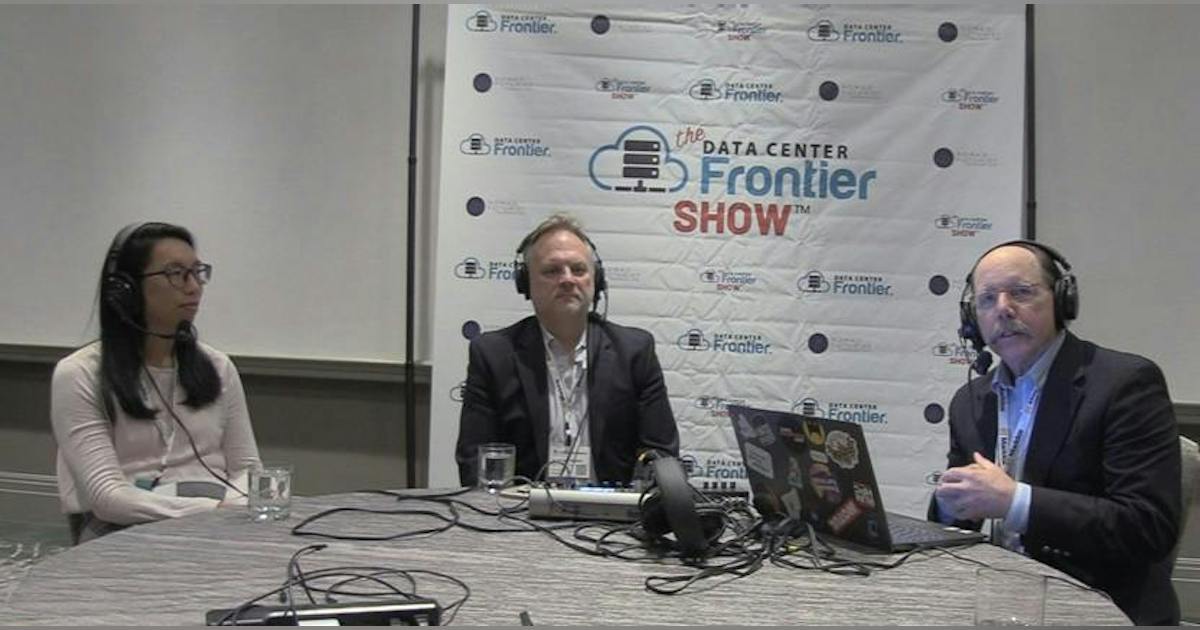
As Metlen’s Lillian Kasa discussed in a recent interview on the DCF Show, the distinction between announced infrastructure capacity and capacity that can actually be delivered is becoming increasingly important to the industry’s investment calculus.
BAAJA could add another dimension to that distinction: the ability of a developer or its customers to financially stand behind the electrical infrastructure their projects require.
2. Data centers could find themselves bidding against one another for electricity
Perhaps the most striking language in Section 2107 concerns how states could allocate access to electricity among competing data center projects.
The legislation explicitly recognizes state authority to use competitive solicitations or open seasons to award electric service opportunities according to the financial benefits projects would provide to other ratepayers, measured on a net present value basis, rather than simply according to the order in which applications were received.
States could also establish distinct retail electricity customer classifications for data centers, offer them less favorable service terms or priorities than traditional industrial and manufacturing customers, and condition electric service on commitments to secure additional generation or accept restrictions on grid withdrawals.
These provisions would not establish a mandatory national bidding system for data center power. They instead affirm existing state authority and provide a framework that individual jurisdictions could elect to employ.
At the federal level, BAAJA would also direct the Federal Energy Regulatory Commission (FERC) to revise its transmission pricing policy so that eligible data center loads bear both a share of existing transmission costs and an assessment of the additional costs attributable to serving them.
A Nov. 2 analysis by power sector consultancy Grid Strategies estimated that transmission pricing reforms under the earlier version of BAAJA could generate $55 billion in payments from data centers over a decade, including $35 billion beyond what the industry might otherwise pay under existing policy. The estimate predates Senate passage and should be understood as a modeled outcome rather than a definitive assessment of the final legislation.
For developers competing for scarce electrical capacity in established and emerging data center markets, the implications could be substantial. Securing land and an early position in a utility’s service queue may prove less advantageous in jurisdictions that elect to prioritize projects according to their broader economic contribution to the electricity system.
Competition for power could increasingly become competition over the quality of the financial proposition a developer brings to the grid.
3. BAAJA could turn data center power infrastructure into a revenue-generating asset
While much of the attention surrounding BAAJA has centered on what data centers might be required to pay for electricity, another provision addresses how certain distributed energy resources might earn revenue by participating in electricity markets.
Section 2108 seeks to remove barriers to wholesale market participation for aggregated behind-the-meter resources, including qualifying battery storage systems, fuel cells and generators. Individual resources would need to fall within a capacity range of 5 kW to 5 MW, respond to dispatch requests within 15 minutes and satisfy applicable metering and telemetry requirements. Aggregations would require a combined capacity of at least 100 kW.
The provision builds on the framework established by FERC Order 2222, which sought to enable distributed energy resource aggregations to participate in organized wholesale electricity markets.
It is important to distinguish this opportunity from a blanket authorization for hyperscale data center power plants to sell electricity into the grid. Eligibility would depend on the configuration of individual resources, market participation requirements and applicable interconnection, reliability and environmental restrictions.
Nevertheless, the provision arrives at an intriguing moment in the evolution of data center electrical architecture. The industry’s embrace of onsite generation, battery storage and microgrids is coinciding with growing interest in the ability of AI computing infrastructure to respond dynamically to electricity system conditions.
Section 2107’s separate provision for preferential transmission pricing for eligible customers accepting non-firm service reinforces that direction of travel.
As DCF examined in its recent feature on the evolving economics of AI infrastructure, power procurement decisions are becoming inseparable from decisions about facility architecture, operational flexibility and long-term capital efficiency.
Under the right circumstances, electrical assets traditionally designed around the singular objective of uptime could also acquire an economic value outside the walls of the data center. That possibility could influence how operators evaluate investments in storage, UPS systems, microgrid controls and workload orchestration, provided that participation in energy markets does not compromise mission-critical operations.
4. The federal government would start counting data center electricity consumption separately
For all the attention devoted to forecasts of AI electricity demand, the federal government’s principal annual survey of electric utilities does not currently report data centers as a distinct end-use sector.
Section 2114 of BAAJA would change that by directing the U.S. Energy Information Administration (EIA) to revise its Form EIA-861 annual electricity industry survey to separately capture information on computational facilities.
The significance of the provision becomes apparent when considering how electricity demand projections are currently constructed. Estimates of future data center consumption frequently draw on utility load forecasts, developer announcements, semiconductor deployment projections and assumptions concerning the utilization and efficiency of AI infrastructure. Differences in methodology can produce substantially different estimates of the industry’s trajectory.
More consistent reporting could provide policymakers, utilities and infrastructure investors with a firmer empirical basis for evaluating that trajectory. It could also help distinguish data center electricity consumption from the broader commercial and industrial demand categories in which it has historically been reported.
The legislation does not establish a publicly accessible, facility-by-facility inventory of data center electricity consumption, nor does it directly impose a reporting obligation on every individual operator. The granularity and usefulness of the resulting information will depend on how EIA implements the provision.
But in an industry increasingly characterized by announced megawatts, contracted megawatts and energized megawatts, better federal reporting could help establish a more credible measure of how much electricity America’s computational infrastructure is actually using.
5. Washington wants to teach local communities how data centers work
Perhaps the most unexpected provision in the Senate-passed legislation concerns neither electricity pricing nor energy infrastructure permitting.
Section 2117 would require the Department of Energy to establish a Data Center Community Assistance Program within 180 days of enactment, providing state, local and tribal governments with access to technical expertise as they evaluate proposed data center developments.
The scope of the program is remarkably broad. It encompasses electricity demand, required grid investments, water consumption, cooling alternatives, onsite generation, backup power, employment, tax revenues and the public incentives associated with individual projects.
DOE would also be required to publish a plain-English Data Center Community Toolkit explaining fundamental industry concepts, including the distinction between megawatts and megawatt-hours, power usage effectiveness (PUE), water usage effectiveness (WUE), cooling technologies and utility rate structures.
Local governments could request independent technical evaluations of developers’ projections and underlying assumptions, although the provision of project information by developers would be voluntary. DOE would not be empowered under the program to approve or reject individual data center projects, or to recommend such decisions to local authorities.
The provision is especially noteworthy in light of the increasingly organized opposition to data center development examined in DCF’s recent feature, The Data Center Backlash Has a Playbook.
Municipal officials and planning boards confronted with proposals for large-scale computational infrastructure are frequently being asked to evaluate complex engineering and economic questions that fall well outside their traditional areas of expertise. Meanwhile, developers accustomed to conducting sophisticated commercial negotiations are finding that the technical and financial assumptions underlying their projects are becoming matters of intense public scrutiny.
BAAJA’s proposed community assistance program represents a federal acknowledgment of that information asymmetry.
For the industry, its emergence could raise the standard of technical disclosure expected during local development negotiations. It could also provide an opportunity for developers with credible resource-use projections, transparent infrastructure agreements and demonstrable economic benefits to differentiate their projects.
The end of business as usual for data center power procurement
For much of its history, the data center industry operated within a relatively conventional framework of real estate development, utility service agreements and economic development incentives. The unprecedented electricity requirements of AI infrastructure are forcing a reconsideration of that framework.
BAAJA’s broader permitting provisions remain contentious. Supporters argue that lengthy approval processes impede the development of energy infrastructure necessary to meet rising demand and contain electricity costs. Environmental organizations and other critics have expressed concern that changes to federal environmental protections and judicial review could come at the expense of communities and natural resources.
The legislation must still clear the House, and further revisions remain possible. Even if enacted, BAAJA would not eliminate electricity supply constraints, guarantee faster data center deployments or resolve the increasingly difficult question of community acceptance.
But the five provisions examined here point toward a new bargain between the data center industry and the country hosting its expansion: greater opportunity to build energy infrastructure, accompanied by greater financial responsibility, incentives for operational flexibility and heightened public accountability.
For data center developers, the question increasingly may not simply be whether they can secure the power they need, but what they are prepared to contribute in return.