The Hidden Constraints of Delivery
If power gets the headlines, supply chain and logistics often decide the schedule.
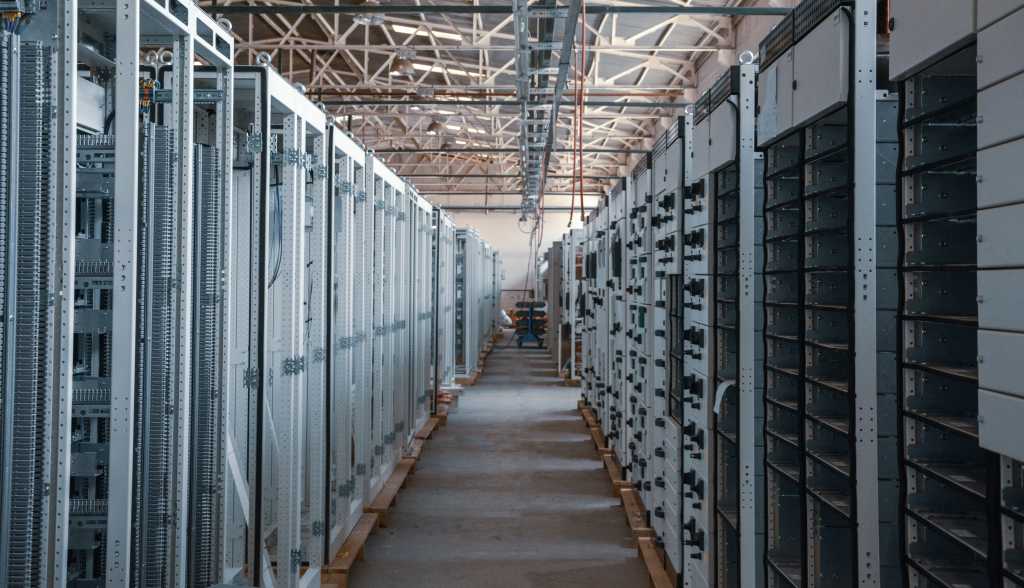
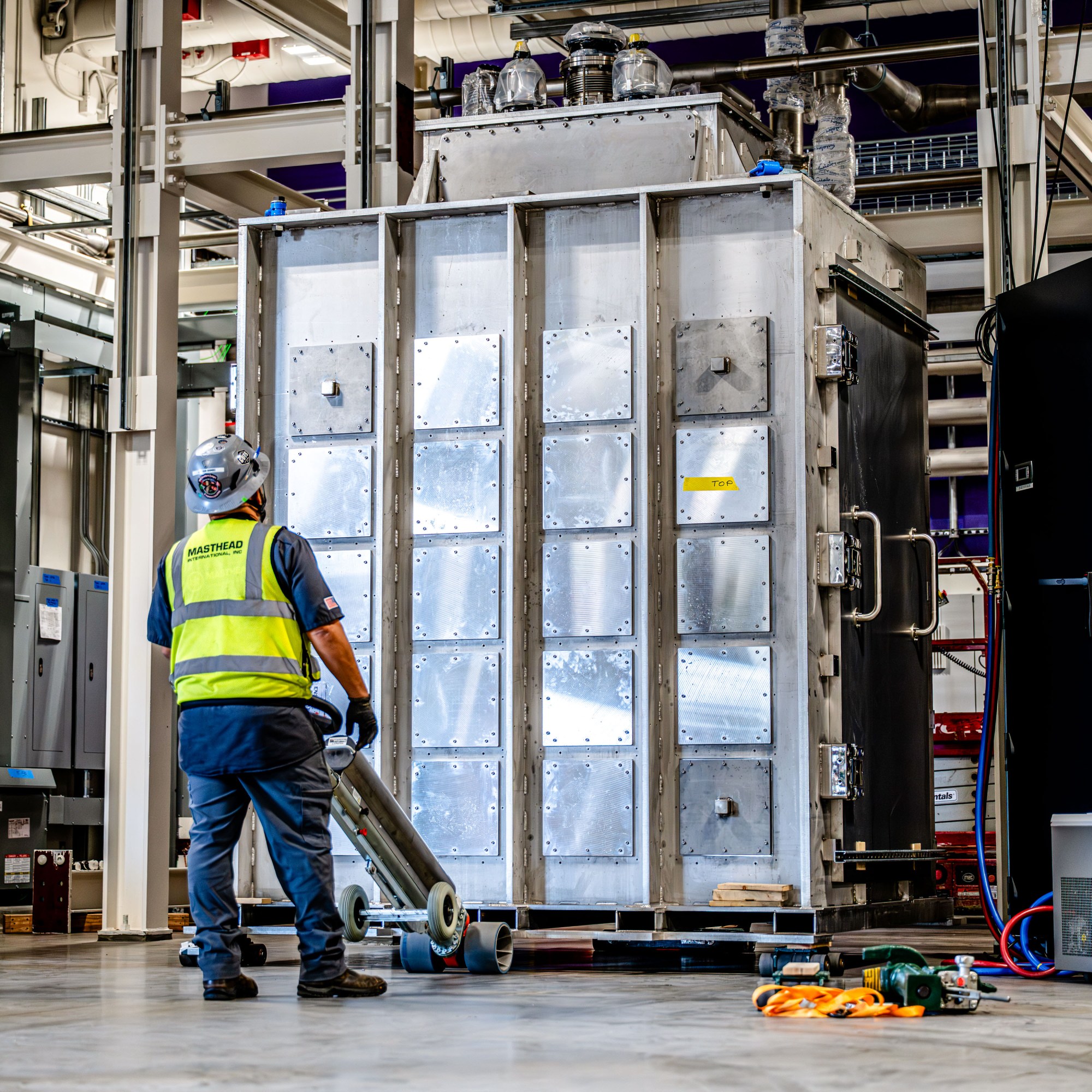
Kleyman notes that a seemingly small missing component can delay a multibillion-dollar facility. A busway, switchgear component, cooling element, or logistics failure can ripple through construction sequencing, commissioning, customer handoff, and revenue recognition.
“The weakest link may not be the most expensive component,” he says.
That reality receives sustained attention across the Summit agenda.
Day One’s “Beyond the Dashboard: Active Exception Management for Hyperscale AI” features CargoSense CEO Rich Kilmer in a live case study examining how organizations are moving beyond passive shipment visibility toward active exception management. For hyperscale AI projects, supply chain disruption is not simply about delayed shipments. It can affect site readiness, construction sequencing, commissioning windows, and the ability to bring capacity online as planned.
Day Two’s “The Hidden Constraint: Supply Chains in the Age of AI Infrastructure” continues the discussion, examining how global supply chains are becoming a defining constraint and differentiator in AI data center delivery.
The execution lens sharpens again on Day Three with “The Last 90 Days: Solving the Final Infrastructure Bottlenecks Before Go-Live.”
This session focuses on the phase where projects can be won or lost: generator delivery, electrical integration, controls validation, startup sequencing, fuel systems, utility coordination, commissioning, and operational readiness. Even projects that have secured power, capital, customers, and equipment can face costly delays if the final stretch is not executed with precision.
In the AI infrastructure era, the last 90 days may determine whether a project becomes energized capacity—or another delayed announcement.
Capital Meets Execution Reality
The Summit also examines whether capital is moving in step with what can actually be built.
Day Two’s investment panel, “AI Infrastructure Investment: Bubble, Breakthrough, or Both?” will assess how investors are underwriting risk in an environment where demand is enormous but execution constraints are equally real.
Capital is still pouring into AI infrastructure. But the assumptions behind that capital are being tested by power availability, supply chain limits, interconnection timing, community opposition, and the ability to deliver projects on schedule.
The core question is not whether AI demand exists.
It is whether capital is flowing toward projects that can actually become operational infrastructure.
That question connects directly back to Kleyman’s announced-megawatts-versus-energized-megawatts framework. The market is beginning to distinguish between theoretical capacity and executable capacity, and that distinction will matter increasingly to developers, investors, customers, and communities alike.
The New Social Contract
The 2026 Summit concludes with one of the most important conversations now facing the industry: earning the social license to grow.
As AI infrastructure scales, data center development is becoming more visible, more contested, and more politically complex. Power consumption, water use, land development, grid impact, noise, tax policy, and local economic benefit are all becoming central to community discussions.
Kleyman identifies community engagement as one of the most disruptive forces the industry has encountered over the past 12 to 18 months.
The issue, he says, is not always that communities oppose data centers outright. Often, the message is more nuanced: communities may not oppose the infrastructure itself, but they object to how it is being planned, communicated, powered, or integrated locally.
That distinction is critical.
The Summit’s closing keynote, “Earning the Social License: Stewardship, Sustainability, and the Future of Data Center Growth,” brings together Buddy Rizer of Loudoun County Economic Development, Tara Risser of Cologix, Nabeel Mahmood and Phillip Koblence of Nomad Futurist, Stan Blackwell of Dominion Energy, and Misty Allen of Vantage Data Centers.
The discussion reframes social license as an outcome of execution, not messaging.
Communities increasingly judge developers by what they deliver: how transparently they engage, how responsibly they use resources, how projects are designed and built, whether workforce and economic benefits are real, and whether infrastructure growth aligns with local priorities.
That makes social license not a public relations issue, but a core development discipline.
It is also the natural endpoint for the conference.
The Summit begins with execution.
It ends with accountability.
A Conference for the Moment the Industry Is Actually In
Taken as a whole, the 2026 Data Center Frontier Trends Summit is not simply a conference about AI demand.
It is a conference about whether the digital infrastructure industry can meet that demand responsibly, credibly, and at scale.
The agenda reflects the reality that AI infrastructure now sits at the intersection of energy development, real estate, manufacturing, construction, finance, cooling technology, utility planning, supply chain orchestration, operations, and public trust.
That convergence is what makes this moment so difficult—and so important.
As Kleyman puts it, the industry is moving from announcements to accountability. The next phase will not be defined by who can describe the largest future campus, the highest-density rack, or the biggest theoretical pipeline. It will be defined by who can align power, capital, utilities, supply chains, construction, cooling, operations, and community trust into something real.
The 2026 Data Center Frontier Trends Summit is designed around that reality.
And this year, those conversations are not about someday.
They are about what happens next.