Alberta represents the biggest point of contention in Canada’s data center strategy. The province is aggressively pursuing data center development with its Artificial Intelligence Data Center Strategy. It has abundant natural gas, large land parcels, a deregulated power market, experienced energy developers and political leaders actively courting AI infrastructure. That makes it attractive to data center operators that care most about speed to power. Alberta has also promoted “bring your own generation” models, where data center developers pair facilities with dedicated generation rather than relying entirely on the public grid. But Alberta’s electricity system is much more carbon-intensive than Québec, British Columbia, Manitoba or Ontario. The same feature that makes it attractive for development, potential large AI build-outs powered primarily by natural gas, would undercut Canada’s claim that its data centers can run on some of the cleanest power in the world.
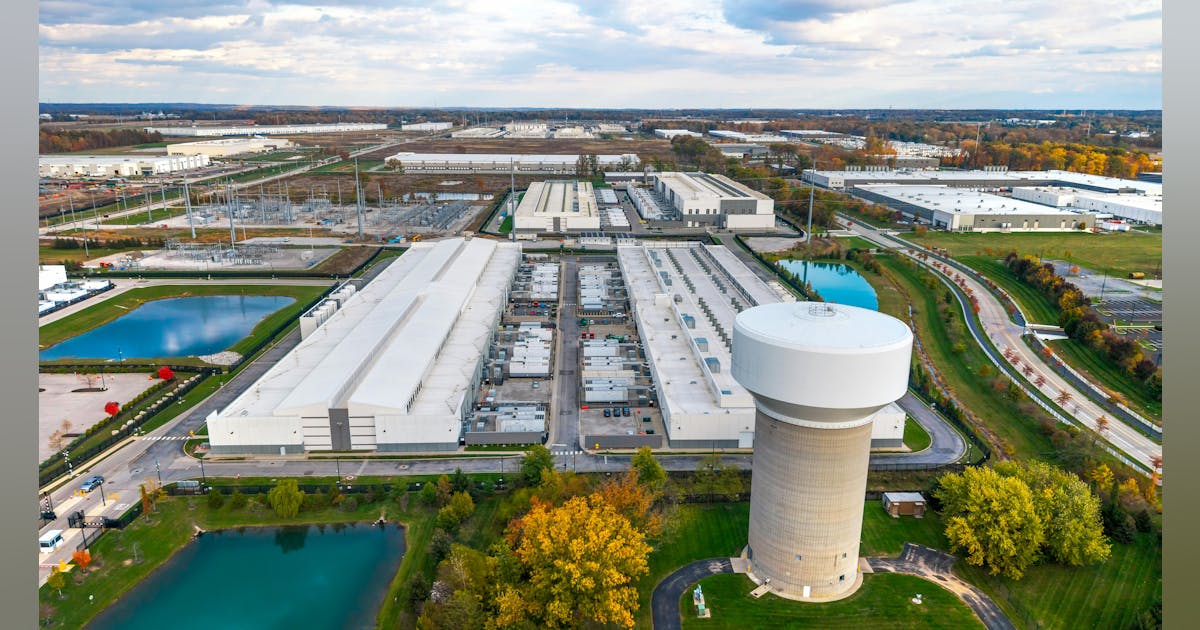
Saskatchewan illustrates another version of the opportunity. Bell Canada’s planned 300-megawatt AI data center in the Rural Municipality of Sherwood near Regina is a major signal that large-scale AI infrastructure can move beyond the traditional Toronto-Montreal-Calgary corridor. The project combines domestic telecom infrastructure, sovereign compute ambitions, hyperscale tenants, fiber partnerships, Indigenous procurement participation and closed-loop cooling. It also shows why power availability is now the deciding factor in site selection. At 300 megawatts, a single facility becomes a grid-planning event, not merely a real estate development.
British Columbia, meanwhile, is trying to prioritize power among competing industrial demands. Data centers are arriving at the same time as mining, LNG, manufacturing, forestry, hydrogen and electrification projects. The province has moved toward limiting and screening certain high-load uses, including data centers and cryptocurrency mining, so that scarce clean electricity is allocated to projects with the strongest public benefit.
This seems to be a preview of the future for these industrial scale projects in Canada, Not every data center proposal will be treated equally. Projects that bring jobs, Canadian ownership, Indigenous participation, waste heat reuse, grid investment, efficient cooling and low-carbon power will have a stronger case than projects that merely ask for a large block of electricity.
Transmission and Nuclear: The Long Game
As we see so often, transmission is the least glamorous but most important part of the plan. Canada’s power system is fragmented by provincial boundaries. Hydroelectric strength in Québec, Manitoba and British Columbia does not automatically solve load growth in Alberta, Saskatchewan, Ontario or the Maritimes. Interties can allow provinces to share surplus energy, balance variable renewables, reduce duplication and improve reliability. The government is now pushing a more coordinated intertie strategy, including projects such as Alberta-British Columbia, Alberta-Saskatchewan, Saskatchewan-Manitoba and Atlantic Canada connections. The Saskatchewan-Manitoba concept is especially important because it could move large amounts of low-carbon power across the Prairies, where data center growth and industrial electrification would otherwise lean heavily on gas.
Nuclear is another pillar for the technology development. Canada is presenting itself as a “Tier One” nuclear nation, with uranium resources, CANDU experience (a Canadian designed heavy water pressurized reactor design in use worldwide), a skilled workforce, nuclear regulators and active small modular reactor development. Ontario’s Darlington SMR program is a first-mover project, and the federal government has now set out a broader nuclear strategy that contemplates up to ten new large reactors, with two under construction by 2035 and more in planning by 2040. As always, especially with the AI market, the timing is critical. AI data center developers want power in two to five years. Large reactors are more likely to shape the 2035-and-beyond market. SMRs may arrive earlier, but their commercial and financing models are still being proven.
The Problem of Competing Timelines
As we have seen, the mismatch between data center timelines and power-sector timelines is the heart of the problem. AI infrastructure can be planned, financed and built faster than major generation and transmission assets. Canada’s plan will succeed only if electricity planning becomes anticipatory rather than reactive. Waiting until data center interconnection queues explode is too late. The next generation of data centers may need to function as dispatchable digital infrastructure, reducing load when the grid is stressed and ramping up when clean power is abundant.
This very top-down approach being proposed by the Canadian government is likely to run into some long existing roadblocks. Provinces control much of the electricity system. Developers will go where power is available, not necessarily where it is cleanest. Unless federal incentives, procurement rules and provincial connection policies reward low-emissions power, Canada risks building a two-track AI infrastructure market: clean but capacity-constrained provinces on one side, faster but higher-emitting gas-backed provinces on the other.
If the needs of the rate payers, the AI developers, industry, and the political infrastructure cannot be aligned, the country will face a familiar Canadian problem: vast potential slowed by jurisdictional fragmentation, permitting delays, underbuilt transmission, and political disputes over who pays. The next generation of data centers will be built where power is available, clean enough, affordable enough and fast enough.
Canada’s new strategy is a recognition that the AI race will be won not only in laboratories and chip fabs, but also on transmission corridors, hydro reservoirs, nuclear sites, gas plants, storage projects and utility flexibility. The announcements and governmental directions announced over the last few months are a good start, but they are just that, a starting point. In the AI era, compute is power. Canada’s challenge is to build both.