Sustainability Becomes an Infrastructure Requirement
Sustainability has long been central to the Nordic data center proposition. Hydropower, nuclear generation, wind resources and relatively cool ambient temperatures provide advantages for operators pursuing lower-carbon operations and efficient facility design. However, the growing concentration of AI infrastructure investment is changing the terms of that discussion.
Rather than evaluating sustainability primarily through electricity sourcing or annualized power usage effectiveness, developers increasingly face questions about their contribution to regional energy systems, electricity supply, environmental protection and local economic development.
One area where the Nordics offer a particularly developed model is waste-heat reuse. District heating networks are widespread across northern Europe, creating opportunities to recover thermal energy from data centers and distribute it to homes, businesses and other facilities. The approach has a long history in the region, including the Danish and Swedish projects explored by Rich Miller in Data Center Frontier’s earlier coverage of using server heat to warm nearby homes.
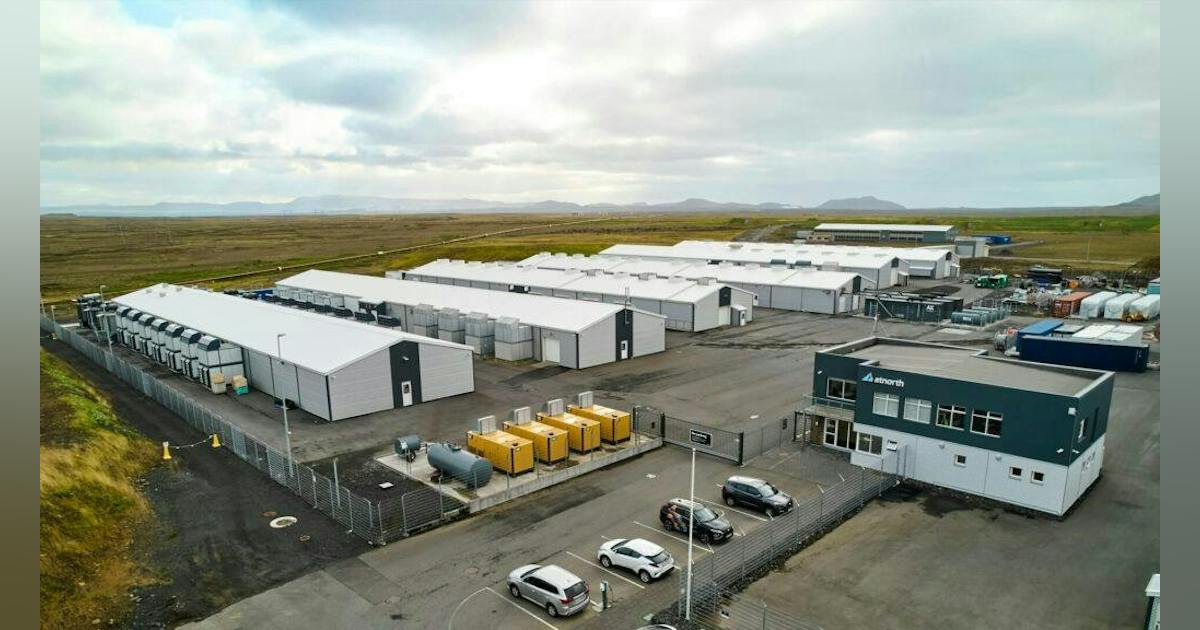
In Espoo, Finland, atNorth has begun supplying recovered heat from its FIN02 data center to a neighboring retail property operated by Kesko. The system became operational in November 2025, providing a tangible example of data center thermal energy being put to productive use.
In Helsinki, AI infrastructure developer OnZero has reached an agreement with municipal energy company Helen to connect a planned AI data center to the district heating network. The project is designed to supply as much as 525,000 MWh of recovered heat annually once operational, with service targeted for 2027.
Denmark offers another variation on the approach. atNorth and Selected Group are advancing a project in Ølgod that would use surplus heat from atNorth’s DEN02 campus to support greenhouse food production. In October, Selected Group reported approval of the local development plan. The first phase involves two 10-hectare greenhouses, with the initial growing season targeted for 2028.
Such projects are not interchangeable. Some are operating and delivering recovered heat today; others remain dependent on construction, financing and infrastructure completion. Their collective significance lies in demonstrating how data center operators can become participants in broader systems of energy use, rather than functioning exclusively as electricity consumers.
Iceland provides another dimension of the Nordic sustainability story. In April, Verne and Nscale completed the first 7.5 MW phase of an AI computing deployment in Iceland, incorporating liquid-cooled NVIDIA GPU infrastructure. The deployment demonstrates how renewable-powered Nordic facilities are adapting to the thermal demands of contemporary AI systems.
But the environmental advantages of the region do not eliminate questions about development impacts. In Finland, Google’s expansion plans have attracted scrutiny over reported forest removal associated with prospective data center sites. The Finnish Licensing and Supervision Agency has requested documentation concerning project permits and environmental assessments. Google has denied that its forestry activities violated applicable law.
As reported in October, the matter remains under regulatory review. The episode illustrates a wider challenge for the industry: Low-carbon electricity procurement does not, by itself, resolve concerns involving land use, biodiversity, water resources or the cumulative effects of large-scale development.
For Nordic operators, demonstrating measurable environmental and community benefits may become increasingly important to maintaining the region’s historically favorable development climate.