
Stay Ahead, Stay ONMINE

Beyond Announced Megawatts: Metlen’s Lillian Kasa on Delivering AI Infrastructure

For an industry racing to build infrastructure at unprecedented scale, the most consequential question may no longer be how many megawatts can be announced. It is how many can actually be delivered—and which projects deserve the investment required to get there. As hyperscalers, neoclouds, and data center developers assemble increasingly ambitious capacity pipelines, the distinction […]

For an industry racing to build infrastructure at unprecedented scale, the most consequential question may no longer be how many megawatts can be announced. It is how many can actually be delivered—and which projects deserve the investment required to get there. As hyperscalers, neoclouds, and data center developers assemble increasingly ambitious capacity pipelines, the distinction between potential and execution has become central to the economics of AI infrastructure. Announcements routinely involve hundreds of megawatts or gigawatts. But behind those numbers lie unresolved questions about power availability, equipment procurement, customer commitments, construction schedules, and financing.

For Lillian Kasa, Head of Energy and Data Center Infrastructure Origination for North America at Metlen, these are not simply obstacles to be overcome in pursuit of speed. They are the fundamental questions that determine whether an infrastructure opportunity is worth developing in the first place. In a new episode of the Data Center Frontier Show, Kasa joined DCF Editor in Chief Matt Vincent to examine how developers can distinguish viable projects from speculative pipelines, allocate capital under uncertainty, and build commercial structures capable of supporting the next generation of AI computing infrastructure.

The conversation follows Kasa’s participation at September’s Data Centre West conference in Calgary, where she moderated a panel on Solving for Power. As DCF reported in its Data Centre West 2026 conference analysis, the industry is increasingly discovering that power availability and delivery certainty—not simply land or market demand—determine which projects can proceed. Kasa brings an additional perspective to that conversation: years spent in offshore oil and gas exploration, where capital-intensive investment decisions must routinely be made with incomplete information. Her argument is that AI infrastructure development can benefit from much the same discipline.

The Difference Between Announcing Power and Delivering It

“When I hear an announcement involving hundreds of megawatts or gigawatts, I really want to understand where those megawatts are, when they’ll be available, and what’s actually been secured,” Kasa told Vincent.

An announcement, she explained, can represent widely different stages of development. It might involve an identified site, an interconnection application, or a generation project still years from commercial operation. There is nothing inherently wrong with announcing early-stage opportunities. Every infrastructure project begins somewhere. But the distinction between identifying potential capacity and demonstrating deliverability is becoming increasingly important. Indeed, that distinction was also at the center of DCF’s recent Trends Summit analysis, From Announcements to Delivery: What Separates Real AI Data Center Projects From the Rest, which examined the widening gap between ambitious development pipelines and projects with credible paths to construction.

A credible project requires land control, a workable pathway to power, permitting, infrastructure equipment, a clear customer requirement, and the commercial commitments needed to justify substantial investment. More importantly, these elements must converge on one realistic development schedule. “You could have a great site and a viable power solution, but if those timelines don’t line up, you still don’t have a deliverable project,” Kasa said.

That scheduling challenge is particularly acute in AI infrastructure. AI hardware and computing architectures are advancing at extraordinary speed, while the electrical systems supporting them operate on much longer development cycles. Substation upgrades, transmission expansion, and new generation infrastructure can take years to engineer, permit, procure, and construct. As DCF has examined in its reporting on transmission as a defining constraint for AI data centers, these infrastructure timelines are increasingly shaping where and when new computing capacity can be deployed. A developer may secure an attractive parcel of land and identify a technically feasible power solution, only to discover that the electricity cannot be delivered when the customer needs to deploy its computing equipment.

The result is a growing premium on evidence: not simply how much capacity a developer controls or proposes, but how much can realistically be energized within a customer’s required timeframe.

What AI Developers Can Learn From Offshore Exploration

Kasa’s proposed framework comes from an industry accustomed to managing enormous financial commitments amid significant uncertainty. Before joining Metlen, she spent much of her career at Equinor, including work involving offshore oil and gas exploration. Such projects can require substantial investment in seismic analysis, subsurface studies, and drilling before the commercial value of a resource is established. The objective is not to eliminate uncertainty before making a decision. That is rarely possible. Instead, developers progressively invest in the information needed to decide whether the next commitment is justified.

“One of the biggest lessons I took from oil and gas exploration is that you’re almost always making decisions without having all of the information at hand,” Kasa said.

Applied to AI infrastructure, that means treating development opportunities as a portfolio rather than assuming every promising project must ultimately proceed to construction. A company might begin with numerous prospective sites, investing relatively modest amounts in land control, geotechnical studies, and power feasibility assessments. As additional information becomes available, developers can identify which projects merit further investment, which should be deferred, and which no longer make commercial sense.

A site with favorable geography and interested customers might initially look compelling. But further engineering could reveal extensive electrical upgrades, unavailable generation capacity, or infrastructure costs that undermine its economics. In that situation, preserving the option to develop later—or abandoning the opportunity altogether—may be more valuable than forcing the project forward.

“The objective isn’t to advance every project in your portfolio,” Kasa said. “It’s really to identify which ones have the strongest prospects and then really concentrate your resources there.”

Her conclusion challenges a familiar assumption of the AI development boom: a large pipeline is not necessarily a commercially valuable one. It also reflects the systems-oriented perspective Kasa developed through her background in computer science. A data center is not simply a building with a power connection, but an interconnected collection of electrical, mechanical, networking, and computing systems whose individual development paths must ultimately converge. That systems thinking, combined with the investment discipline of offshore exploration, informs her approach to evaluating large-scale AI infrastructure opportunities.

Three Questions Every Infrastructure Investment Must Answer

To evaluate whether an opportunity deserves additional capital, Kasa reduces the development process to three questions: Can we build it? Should we build it? And can we support the investment?

The first concerns technical feasibility. Does the project have a suitable site, an achievable power solution, required permits, access to equipment, and a construction schedule that can meet its commitments? The second concerns commercial viability. Is there a real customer requirement? Do the economics support development? Have the parties established arrangements that make sense for both the customer and the infrastructure provider? The third concerns financing and investment discipline. Are anticipated returns sufficient to justify the capital and risks involved? Are the necessary financial resources and commitments available?

These distinctions matter at a time when enormous sums are flowing into AI-related infrastructure, accompanied by growing scrutiny of the assumptions supporting those investments. DCF has recently examined this convergence of capital, power, and development risk in AI Infrastructure’s Next Phase: Capital, Power and the Right to Build. A technically viable data center is not automatically a commercially attractive one. Likewise, access to financing does not establish that a project deserves to be financed. Kasa emphasized the distinction between “having access to capital” and “having a good reason to spend the capital.”

The danger becomes particularly significant when developers make substantial commitments to long-lead equipment or power infrastructure before validating customer demand and the underlying development schedule. If those assumptions prove incorrect, the result can be expensive infrastructure without a viable near-term customer—a stranded asset. Not every uncertainty must be resolved before spending begins. But Kasa argues that the amount of capital committed should correspond to the strength of the available evidence. Sometimes that means keeping an opportunity alive while unanswered questions are addressed. Other times, it means walking away.

“That’s not necessarily a failure,” she said. “It’s really just good capital discipline.”

The Speed-to-Power Paradox

That philosophy raises an important question for developers competing to deliver capacity quickly: How can projects move forward when customers and infrastructure providers often need commitments from one another before either is willing to assume substantial risk?

Kasa described the familiar development dilemma. Customers want confidence that power and facilities will be available by a specified date. Developers, meanwhile, need sufficient customer commitment to justify investing in land, power procurement, equipment, and construction. If both sides insist on complete certainty before proceeding, little gets built. Her solution is to structure commercial commitments progressively, allowing projects to advance through defined development milestones rather than requiring every party to assume its maximum exposure at the outset.

Early milestones might involve engineering due diligence, site investigation, and confirmation of the power pathway. As specific conditions are satisfied, both parties increase their commitments, eventually reaching the point where major equipment procurement and construction are justified. This approach can preserve development momentum without requiring either side to accept disproportionate exposure at the outset. It also challenges the industry’s tendency to treat acceleration as an unquestioned virtue.

“Speed only creates value if you’re moving towards the right investments,” Kasa said. “Otherwise, you’re just committing capital earlier and potentially taking on more risk.”

The distinction is especially important when project schedules depend on decisions outside either party’s direct control. Developers can manage engineering, procurement, and construction. Customers can define their deployment requirements and make corresponding commercial commitments. But utility interconnections, regulatory decisions, and other approvals introduce risks that cannot be controlled entirely by either side. Commercial agreements therefore need to establish what happens when those assumptions change.

If an approval is delayed, who absorbs the additional carrying costs? If a customer postpones deployment, who is responsible for equipment already ordered? What conditions must be met before either party assumes the next level of financial exposure? These questions are not incidental legal details. They help determine whether a development strategy remains commercially viable as project circumstances evolve. For Kasa, the objective is not to remove every uncertainty but to structure commitments so that projects can advance while risks remain manageable.

Power Architecture: Every Solution Changes the Risk

The same principle extends to the increasingly complex power architectures supporting AI data centers. Grid electricity, onsite generation, renewable energy, battery storage, and flexible computing loads are frequently discussed as alternative or complementary solutions to the industry’s power constraints. But Kasa cautions against beginning with a favored technology. Instead, developers should start with the customer’s requirements: load size, availability date, reliability expectations, cost parameters, and sustainability objectives.

Grid power may offer access to a larger, established electricity system, but sufficient capacity is not always available within the required timeframe. Onsite natural gas generation can provide firm power or bridge delays in grid availability. Yet it introduces another collection of dependencies, including fuel supply, pipeline infrastructure, permitting, equipment procurement, and plant operations. In other words, onsite generation may reduce dependence on utility delivery schedules without eliminating infrastructure risk.

Battery storage offers valuable capabilities for managing short-duration fluctuations and rapidly changing loads, but it does not replace the need for sustained energy supply. Wind and solar generation can support electricity procurement, price hedging, and environmental objectives, although their variable output does not independently provide continuous firm power. And some computing workloads may offer flexibility in when or where processing takes place. These tradeoffs reflect the industry’s broader movement toward integrated energy systems, a transition DCF explored in its Trends Summit feature Power First: AI Data Centers Become Energy Systems.

This is where Alberta’s particular combination of energy resources becomes interesting. With natural gas, grid infrastructure, renewable generation, and storage opportunities, the province offers developers multiple pathways for constructing hybrid power systems. Kasa expects such arrangements to become more common. But she argues that each component must have a clearly defined operational and commercial purpose. The objective is not to assemble technologies simply because they are available. It is to construct a reliable, economically defensible power solution that meets the customer’s actual requirements.

Alberta’s Real Measure of Success

The conversation ultimately returned to Alberta, where abundant energy resources, available land, and an established industrial workforce have helped attract growing interest in hyperscale and AI infrastructure. Those advantages are substantial, but Kasa cautioned that they do not automatically translate into operational data centers. The more important differentiator may be predictability.

Developers need to understand how power can be secured, which approvals are required, how long decisions are likely to take, and what obligations must be satisfied along the way. That does not mean every development should receive approval or that regulators should guarantee outcomes. It means establishing sufficiently clear processes for developers, customers, and investors to evaluate their exposure before committing substantial resources. Uncertainty itself carries a cost, Kasa noted, particularly when it prevents companies from determining when to order equipment or what delivery dates they can credibly promise.

Coordination among governments, utilities, regulators, and developers therefore becomes a critical element of investment certainty. It is also part of the wider challenge facing Alberta’s developing data center ecosystem, as explored in DCF’s recent podcast feature, Alberta’s Gigawatt Play: Why Building Data Centers Means Building an Industry, featuring Data Centre West founder Vlad Oujegov. That discussion examined the broader industrial, workforce, and community requirements of scaling the province’s emerging digital infrastructure market.

Alberta’s progress thus offers a useful test case for the broader North American AI infrastructure industry. “I wouldn’t measure Alberta’s success by how many gigawatts are announced,” Kasa said. “I’d measure it by how many projects actually move into construction, become operational, and attract further investment.”

That last measure is especially revealing. A market begins demonstrating lasting credibility when customers successfully deploy one phase of infrastructure and return to develop another. For all the attention devoted to the extraordinary scale of AI demand, Kasa’s central message is that the industry’s next stage will be determined by its ability to execute—not simply to announce, finance, or accelerate.

“Data centers might be digital businesses, but they’re ultimately dependent on physical infrastructure,” she concluded.

That physical reality ultimately imposes a discipline of its own. The challenge is no longer simply finding opportunities to build AI infrastructure. There are plenty of those. It is determining which opportunities can be delivered, which warrant the risks involved, and which deserve the capital required to turn announced megawatts into operating capacity.

Shape
Shape
Stay Ahead

Explore More Insights

Stay ahead with more perspectives on cutting-edge power, infrastructure, energy,  bitcoin and AI solutions. Explore these articles to uncover strategies and insights shaping the future of industries.

Shape

Microsoft outage: A cascading failure that started with an undetected bug

“If your testing doesn’t adequately reproduce the hardware characteristics, concurrency, traffic patterns, and operational conditions of production, you have inherently accepted the risk that significant defects will escape detection,” Fisher said. “The particularly troubling aspect here is that Microsoft’s production hardware was more capable than its testing hardware, yet that

Read More »

Cloud overspend is an accountability problem not a tooling gap

He added that neither self-service nor automation fixes the issues. “Without redesign, you get responsibility without leverage,” he said. “So, governance, cost management, and security practices, if they remain rooted in sort of pre-cloud thinking, that’s going to create tension between the control mechanisms that we have in place and the

Read More »

Rystad: Market could begin next year with ‘pretty large surplus’

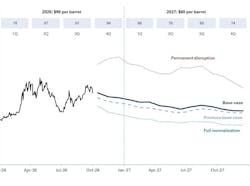
@import url(‘https://fonts.googleapis.com/css2?family=Inter:wght@100..900&display=swap’); .ebm-page__main h1, .ebm-page__main h2, .ebm-page__main h3, .ebm-page__main h4, .ebm-page__main h5, .ebm-page__main h6 { font-family: Inter; } body { line-height: 150%; letter-spacing: 0.025em; } button, .ebm-button-wrapper { font-family: Inter; } .label-style { text-transform: uppercase; color: var(–color-grey); font-weight: 600; font-size: 0.75rem; } .caption-style { font-size: 0.75rem; color: color-mix(in srgb, currentColor 60%, transparent); } Major oil and gas companies are unlikely to increase capital spending budgets in 2027 because the structural supply-and-demand situation around global energy needs hasn’t changed, a senior Rystad analyst said Nov. 10. Speaking on a capex-focused webinar hosted by Offshore, like Oil & Gas Journal a title owned by EndeavorB2B, Matthew Hale said it’s notable that operators didn’t meaningfully change their 2026 spending activity in response to the Iran war and ensuing production and distribution snarls. Hale, a senior vice-president of supply chain research at Rystad, said that speaks to the view that, as disruptive as it has been, the war hasn’t altered the underlying factors of the industry. Rystad Energy Rystad Brent price chart. <!–> –> That, Hale added, could set up the oil-and-gas market to be in a surplus situation similar to its state in early 2026 before the Iran war. “If we do see further normalization in the Middle East, you’re actually really opening up a pretty large surplus into 2027,” he said. A full normalization to the pre-war state of affairs is unlikely, Hale said. The Rystad team sees it as “increasingly implausible” that 2027 will deliver an extreme price swing in either direction (see chart). That is likely to mean that shale operators will be the companies to watch when it comes to a possible production response because their business models are more elastic than those of their peers elsewhere. That latter group includes offshore operators, which Rystad analysts are forecasting will

Read More »

Elevated demand for gas turbines could persist through 2035: Siemens Energy

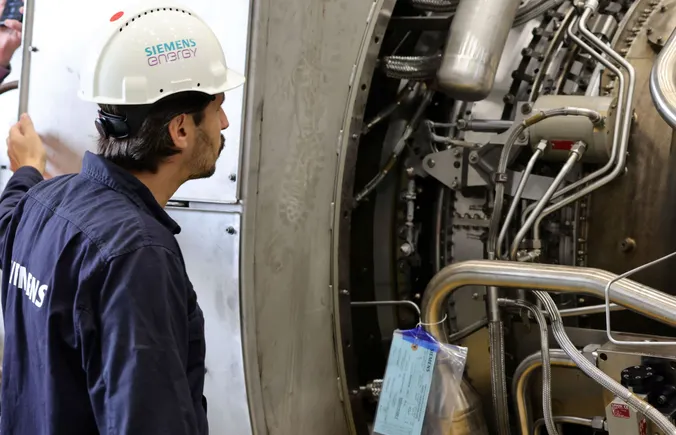
Siemens Energy continues to book new orders at a record pace, with the company’s backlog reaching 164 billion euros (about $180.4 billion) as of the end of the company’s 2026 fiscal year, executives told analysts on a Nov. 11 earnings call. New order intake rose 18.8% over the end of fiscal year 2025, according to the company’s earnings release. The second half of the year also saw sharp increases in wind turbine sales from subsidiary Siemens Gamesa, allowing the company’s offshore-wind-focused arm to break even for the first time in years, according to Siemens Energy President and CEO Christian Bruch. “I do strongly believe in offshore … being a decent-sized market in selected countries of the world, and that is still my underlying assumption — that we can play on the strengths we have in offshore,” Bruch said. Gas turbine orders moderated somewhat in the fourth and final quarter of the fiscal year, but CFO Maria Ferraro attributed the slightly slower pace of orders to “project phasing.” Bruch said he does not believe that the growing data center backlash that manifest in the U.S. midterm elections has impacted demand for turbines or other electrical equipment. U.S. orders rose 70% year over year, with $6.7 billion in new orders booked during the fourth quarter alone, according to a Siemens Energy press release. Globally, data center-related customers account for about 15 billion euros ($16.5 billion) of Siemen’s backlog, Ferraro said. “This translates to less than 10% of the total,” she told analysts. “So data centers are an important factor, and we certainly want to participate, but our growth story is much broader and very well diversified.” 65 GW Total gas turbine order backlog, including 42 GW of new orders placed in FY 2026. 4 billion euros ($4.4 billion) New manufacturing capacity planned

Read More »

IEA: High diesel prices ease demand, supply constraints persist

High diesel prices and elevated refinery output have marginally eased global gasoil and diesel market tightness, but low inventories and continued supply disruptions mean relief is unlikely before the second half of 2027, according to the International Energy Agency’s (IEA) November Oil Market Report. Diesel prices of almost $200/bbl have curbed consumption, while record US refining margins have encouraged refiners to keep crude runs unseasonably strong. The combination has improved the near-term balance, although IEA cautioned that projected inventory builds will be insufficient to offset stock deficits accumulated since the start of the Middle East Gulf conflict. IEA estimates the global gasoil and diesel market recorded a counter-seasonal deficit of 30,000 b/d in third-quarter 2026, marginally narrower than it estimated in its October report. OECD crude throughputs remained above seasonal levels in recent months, boosting diesel output and outpacing marginally stronger-than-expected demand. The agency expects the market to return to a modest surplus of 20,000 b/d in fourth-quarter 2026 as demand tapers off toward yearend. Even so, global gasoil and diesel production is forecast to average 1 million b/d below year-earlier levels over the quarter, despite a seasonal increase. Supply risks sustain diesel tightness According to weekly US Energy Information Administration (EIA) data, October crude runs were well above the seasonal average and 1.1 million b/d above a year earlier, as refiners delayed planned maintenance to take advantage of healthy margins. Despite lighter-than-normal refinery maintenance and a decline in US gasoil and diesel exports to an 8-month low of 1.3 million b/d, down from a summer peak of 1.8 million b/d, combined inventories fell below 100 million bbl for the first time since 2003. The decline was driven by a drop in US industry diesel stocks to 88 million bbl, their lowest level since 2013. Preliminary Kpler data cited by

Read More »

EOG Resources to double Delaware basin gas processing capacity

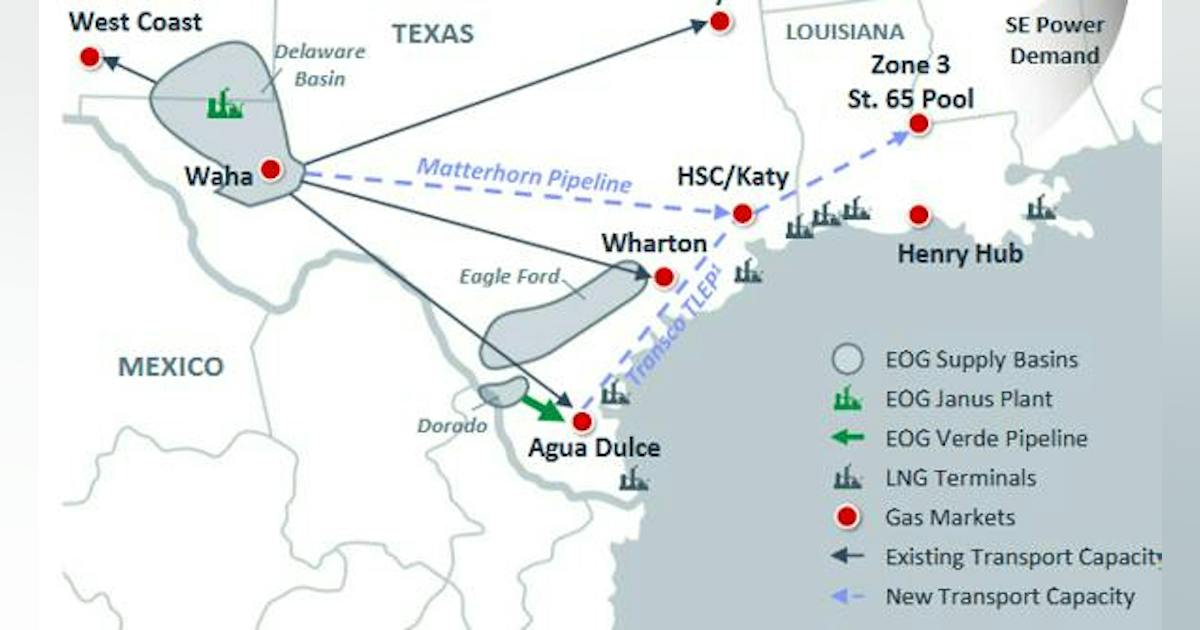
EOG Resources Inc., Houston, has taken final investment decision to proceed with an expansion of its 300-MMcfd Janus natural gas processing plant in the Permian’s Delaware basin. Budgeted at a total cost of $300 million approved during third-quarter 2026, the project will involve installing another 300 MMcfd of processing capability at the plant to bring the site’s overall processing capacity to 600 MMcfd, the company said in its latest quarterly earnings call with investors. “This project will enhance our operational control and diversify our processing options at a time when [gas] processing capacity is tightening as more natural gas production comes online due to improved pipeline takeaway capacity,” said Jeffrey R. Leitzell, EOG Resources’ chief operating officer. “Given the proven performance of the existing [plant], we believe this attractive, high-return investment represents a compelling opportunity to extend the value created by Janus for years to come,” Leitzell said. With current plans to complete the expansion in second-half 2028, Leitzell said EOG Resources expects to spend two-thirds of the dedicated budget—or about $200 million—in 2027 on the project. Commissioned in 2025 and delivering gas to multiple premium US Gulf Coast markets via Matterhorn pipeline, the Janus gas processing plant has operated at a current utilization rate of more than 99% year-to-date, according to EOG Resources’ presentation dated Nov. 6.

Read More »

Batteries included: A practical checklist for storage owners, operators to boost reliability

Listen to the article 8 min This audio is auto-generated. Please let us know if you have feedback. Brian Fellon is senior vice president at Xpansiv, a market platform for energy and environmental commodities. Winter Storm Fern hit Texas in January 2026 with extreme cold and hazardous precipitation. But unlike Winter Storm Uri in 2021, the lights stayed on. The Electric Reliability Council of Texas’ post-event report captured how the grid remained intact without Energy Emergency Alerts, public conservation calls or systemwide outages. Brian Fellon During Fern, ERCOT’s battery energy storage resources were indispensable for covering peak-demand reserves, while all resource types contributed to meeting broader system demand. The critical lesson is that grid performance is highly dependent on coordinating nascent technologies and real-time operations with legacy generation assets. That lesson is now being tested at scale across the country. The U.S. electricity sector is undergoing its most abrupt transformation since deregulation. After nearly two decades of flat demand, load growth is accelerating from data centers, transportation and industrial electrification. The forward demand curve has never been this steep, and ERCOT’s long-range planning assumptions contemplate peak load reaching more than four times today’s record levels. Across the PJM Interconnection footprint, forecasted load growth is raising expectations that tens of gigawatts of new supply may be needed over the coming decade to maintain system reliability. This demand jump is colliding with aging grid infrastructure, constrained transmission, record-long interconnection queues and a shifting policy landscape. These factors are reconfiguring wholesale power markets and revaluing baseload and dispatchable generation, while establishing battery storage as essential grid infrastructure. Batteries are often described as a foundational solution because they respond instantly, start and stop without thermal plants’ mechanical constraints, and uniquely shift energy from off-peak to on-peak periods. In practice, the grid does not simply benefit

Read More »

bp names Lewis to lead downstream business

bp plc has appointed Emma Lewis executive vice-president (EVP), downstream, and a member of the company’s leadership team, effective January 2027. The downstream segment includes refining, terminals and pipelines, mobility and convenience, aviation, and bioenergy. Lewis, a chemical engineer, has more than 25 years’ experience in chemicals, refining, manufacturing, commercial operations, supply chains, and strategy. Most recently, she served as EVP, chemicals, at Shell plc, where she led the company’s global chemicals business, including operating assets, commercial activities, polymers interests, and joint ventures. Before joining Shell, she held a series of operational, manufacturing, commercial, product management, and supply chain roles at ExxonMobil Corp. Richard Harding will continue as interim EVP, downstream, until Lewis joins bp. Harding was appointed to the interim position in July 2026 as part of the restructuring of bp into two business segments, upstream and downstream, replacing a previous three-segment structure.

Read More »

Beyond Announced Megawatts: Metlen’s Lillian Kasa on Delivering AI Infrastructure

For an industry racing to build infrastructure at unprecedented scale, the most consequential question may no longer be how many megawatts can be announced. It is how many can actually be delivered—and which projects deserve the investment required to get there. As hyperscalers, neoclouds, and data center developers assemble increasingly ambitious capacity pipelines, the distinction between potential and execution has become central to the economics of AI infrastructure. Announcements routinely involve hundreds of megawatts or gigawatts. But behind those numbers lie unresolved questions about power availability, equipment procurement, customer commitments, construction schedules, and financing. For Lillian Kasa, Head of Energy and Data Center Infrastructure Origination for North America at Metlen, these are not simply obstacles to be overcome in pursuit of speed. They are the fundamental questions that determine whether an infrastructure opportunity is worth developing in the first place. In a new episode of the Data Center Frontier Show, Kasa joined DCF Editor in Chief Matt Vincent to examine how developers can distinguish viable projects from speculative pipelines, allocate capital under uncertainty, and build commercial structures capable of supporting the next generation of AI computing infrastructure. The conversation follows Kasa’s participation at September’s Data Centre West conference in Calgary, where she moderated a panel on Solving for Power. As DCF reported in its Data Centre West 2026 conference analysis, the industry is increasingly discovering that power availability and delivery certainty—not simply land or market demand—determine which projects can proceed. Kasa brings an additional perspective to that conversation: years spent in offshore oil and gas exploration, where capital-intensive investment decisions must routinely be made with incomplete information. Her argument is that AI infrastructure development can benefit from much the same discipline. The Difference Between Announcing Power and Delivering It “When I hear an announcement involving hundreds of megawatts or gigawatts,

Read More »

Arista expands its routing options to support secure AI inferencing

Arista is unveiling a portfolio of networking devices designed to secure and improve the performance and resiliency of connections serving AI compute and storage infrastructure. Four new Etherlink R4 high-performance routing switches are aimed at large-scale distributed data center, AI back-end, and service provider environments where high route scale, deep packet buffering, and 400G connectivity are required. In addition, the new R4s integrate line-rate encryption into every port via TunnelSec, including MACsec, IPsec, VXLANsec, and hardware-based Segment Routing over IPv6, according to a blog post co-authored by Brendan Gibbs, Arista vice president, product line management, and Tyson Lamoreaux, senior vice president, Cloud/AI. All run Arista’s Extensible Operating System, or EOS. “The initial phase of artificial intelligence (AI) buildouts concentrated compute nodes in massive, centralized clusters, but the need for greater scale has led operators to span training clusters across multiple data centers with AI scale-across solutions. Now, the operational reality of centralized inferencing has emerged as the new frontier requiring a distributed solution,” Gibbs and Lamoreaux wrote. “Training can tolerate being tucked away near remote power grids, while inferencing cannot. As AI transitions from static prompts to real-time interaction, intelligence must be distributed across front-end networks spanning distinct geographies, regional hubs, and enterprise perimeters.”

Read More »

You’ve decided to repatriate cloud workloads. Now what?

Advice for IT Pros Repatriation is the market correcting a decade of poor placement decisions. That’s healthy, but the burden of getting it right falls on network, I&O, and data center teams. If you’re facing a repatriation project, here’s where I would focus. Lock down capacity first. The single biggest mistake I see is treating space and power as a procurement detail to be sorted out after the business case is approved. With vacancy at historic lows in the major markets and most new construction spoken for before it’s finished, that order of operations no longer works. Engage colocation providers and your own facilities team as early as possible, and be prepared to consider secondary markets, smaller footprints spread across multiple sites, or upgrading an existing owned facility. Get firm answers on power per rack, cooling options, cross-connect availability, and delivery dates before committing to a migration timeline. In many markets, the lead time for space and power can be longer than the migration itself. Design the network for a hybrid end state. Repatriation doesn’t end with a clean break from the cloud; it ends with more locations that must work as one. Treat interconnects, cloud on-ramps, WAN, data center fabric, segmentation, and security policy as a single architecture spanning on-prem, colo, and multiple clouds. That means sizing interconnect bandwidth for actual data flows rather than estimates, enforcing consistent policy regardless of where a workload runs, and building in visibility to troubleshoot an application path that spans three environments. If the network is designed as an afterthought, latency and integration problems that already plague many organizations will worsen. Plan AI infrastructure explicitly. If AI inference or fine-tuning is part of the repatriation plan, treat it as a separate project. GPU clusters introduce power density, cooling, and networking requirements that are

Read More »

Data center boom faces challenges beyond water and power

According to a report published by BBC Science Focus, the United States had more than 4,000 data centers by the end of 2025, representing approximately 50 gigawatts of capacity. Meanwhile, U.S. data centers consumed approximately 66 billion liters of water in 2023, highlighting the substantial environmental footprint of the industry. These resource requirements have driven considerable opposition to new developments. A recent NBC News poll cited by the publication found that 69% of respondents would oppose construction of an AI data center in their neighborhoods. This is reflected in the recent elections, where pro-data center candidates lost badly while those who publicly opposed for the construction of data centers did well at the ballot box. Data centers can provide economic benefits to the communities where they operate, including increased property tax revenues, permanent employment and infrastructure improvements. Developers sometimes finance upgrades to electrical substations, roads and emergency services to accommodate their facilities.

Read More »

How TI’s ADC34DSO75 Catches the Nanosecond Power Glitches Behind AI Data Center Downtime

Today’s advanced AI data center can be viewed as a vast, complex and interdependent digital organism in which a virtually infinite number of components must be tracked all the time, in real time. It’s a monitoring job of staggering proportions. At stake is the operation of highly critical workloads and the maintenance of return on investment for high-cost compute equipment. At risk is sub-optimal performance or, in worst-case scenarios, the nightmare of data center downtime. Sponsored Resources: Why traditional telemetry misses nanosecond power-rail events Telemetry has long been relied upon to monitor data center servers, test and measurement equipment, wireless infrastructure and other systems for real-time information about voltage, current, power, temperature and overall system health. But most systems operate at millisecond-level intervals or slower, which is six orders of magnitude longer than the transient events that now occur at the processor power rails and the tools meant to observe them. The requirements and high stakes of today’s AI data centers and workloads have called for a new generation of advanced, nanosecond-level telemetry gear. Texas Instruments has established a leadership position in this sector. The company has developed the first analog-to-digital converter (ADC) to enable 24/7, low-power, event-based remote monitoring at nanosecond resolution. Let’s unpack this statement and examine why TI’s new monitoring technology is so important for the data center industry. What is the TI ADC34DSO75?    We’re talking specifically about TI’s ADC34DSO75, the industry’s highest-performance, 3 gigasamples per second (GSPS) ADC, delivering thousands of times faster performance than current offerings. Launched at the Open Compute Project Global Summit conference in October, the ADC34DSO75 addresses the shortcomings of existing monitoring solutions that can’t detect the nanosecond-level power-rail glitches that cause costly data center downtime. The ADC34DSO75 combines ultra-high-speed sampling with advanced on-chip digital signal processing in a small form factor,

Read More »

Schneider Electric’s AI Factory Strategy Moves Beyond the Modular Data Hall

The race to industrialize AI data center construction is moving beyond prefabricated electrical rooms and modular building components. Increasingly, major infrastructure suppliers are attempting to standardize the power, cooling, controls, and engineering systems surrounding the computing equipment itself, with the goal of delivering highly integrated infrastructure through repeatable manufacturing processes rather than site-specific construction. Schneider Electric’s recent activities provide a revealing example of that transition. Its RapidScale Modular Data Center Reference Design 115, introduced October 21 at NVIDIA GTC Berlin, outlines a modular AI factory architecture engineered for the NVIDIA Vera Rubin platform. Separately, a study conducted with Compass Datacenters documents substantial reductions in selected onsite installation activities through prefabricated white-space modules. Related developments involving power-system certification, onsite generation, and digital-twin technology show how the company is extending its reach across the data center development process. As DCF previously reported in its examination of NVIDIA’s DSX POD initiative, the broader industry is working toward factory-integrated computing environments that can be assembled, tested, and delivered with less dependence on conventional field construction. Schneider’s contribution is particularly interesting because its latest engineering documentation provides a detailed view of how electrical and thermal infrastructure might accommodate a new generation of exceptionally power-dense AI systems. A 227-kW Building Block for Vera Rubin Schneider describes Reference Design 115 as a 10–20 MW, Tier III-targeted modular AI factory architecture developed to ANSI standards. The published example concentrates on one deployment unit containing four scalable units, designed around four NVIDIA Vera Rubin clusters with 1,008 GPUs each. That translates to 4,032 GPUs distributed across 56 AI computing racks, supported by another 32 networking racks. The maximum AI rack power reaches 227 kW, while the documented configurations support approximately 10.4 MW to 11.4 MW of active IT load. The reference design assigns approximately 33,518 square feet to the

Read More »

Microsoft will invest $80B in AI data centers in fiscal 2025

And Microsoft isn’t the only one that is ramping up its investments into AI-enabled data centers. Rival cloud service providers are all investing in either upgrading or opening new data centers to capture a larger chunk of business from developers and users of large language models (LLMs).  In a report published in October 2024, Bloomberg Intelligence estimated that demand for generative AI would push Microsoft, AWS, Google, Oracle, Meta, and Apple would between them devote $200 billion to capex in 2025, up from $110 billion in 2023. Microsoft is one of the biggest spenders, followed closely by Google and AWS, Bloomberg Intelligence said. Its estimate of Microsoft’s capital spending on AI, at $62.4 billion for calendar 2025, is lower than Smith’s claim that the company will invest $80 billion in the fiscal year to June 30, 2025. Both figures, though, are way higher than Microsoft’s 2020 capital expenditure of “just” $17.6 billion. The majority of the increased spending is tied to cloud services and the expansion of AI infrastructure needed to provide compute capacity for OpenAI workloads. Separately, last October Amazon CEO Andy Jassy said his company planned total capex spend of $75 billion in 2024 and even more in 2025, with much of it going to AWS, its cloud computing division.

Read More »

John Deere unveils more autonomous farm machines to address skill labor shortage

Join our daily and weekly newsletters for the latest updates and exclusive content on industry-leading AI coverage. Learn More Self-driving tractors might be the path to self-driving cars. John Deere has revealed a new line of autonomous machines and tech across agriculture, construction and commercial landscaping. The Moline, Illinois-based John Deere has been in business for 187 years, yet it’s been a regular as a non-tech company showing off technology at the big tech trade show in Las Vegas and is back at CES 2025 with more autonomous tractors and other vehicles. This is not something we usually cover, but John Deere has a lot of data that is interesting in the big picture of tech. The message from the company is that there aren’t enough skilled farm laborers to do the work that its customers need. It’s been a challenge for most of the last two decades, said Jahmy Hindman, CTO at John Deere, in a briefing. Much of the tech will come this fall and after that. He noted that the average farmer in the U.S. is over 58 and works 12 to 18 hours a day to grow food for us. And he said the American Farm Bureau Federation estimates there are roughly 2.4 million farm jobs that need to be filled annually; and the agricultural work force continues to shrink. (This is my hint to the anti-immigration crowd). John Deere’s autonomous 9RX Tractor. Farmers can oversee it using an app. While each of these industries experiences their own set of challenges, a commonality across all is skilled labor availability. In construction, about 80% percent of contractors struggle to find skilled labor. And in commercial landscaping, 86% of landscaping business owners can’t find labor to fill open positions, he said. “They have to figure out how to do

Read More »

2025 playbook for enterprise AI success, from agents to evals

Join our daily and weekly newsletters for the latest updates and exclusive content on industry-leading AI coverage. Learn More 2025 is poised to be a pivotal year for enterprise AI. The past year has seen rapid innovation, and this year will see the same. This has made it more critical than ever to revisit your AI strategy to stay competitive and create value for your customers. From scaling AI agents to optimizing costs, here are the five critical areas enterprises should prioritize for their AI strategy this year. 1. Agents: the next generation of automation AI agents are no longer theoretical. In 2025, they’re indispensable tools for enterprises looking to streamline operations and enhance customer interactions. Unlike traditional software, agents powered by large language models (LLMs) can make nuanced decisions, navigate complex multi-step tasks, and integrate seamlessly with tools and APIs. At the start of 2024, agents were not ready for prime time, making frustrating mistakes like hallucinating URLs. They started getting better as frontier large language models themselves improved. “Let me put it this way,” said Sam Witteveen, cofounder of Red Dragon, a company that develops agents for companies, and that recently reviewed the 48 agents it built last year. “Interestingly, the ones that we built at the start of the year, a lot of those worked way better at the end of the year just because the models got better.” Witteveen shared this in the video podcast we filmed to discuss these five big trends in detail. Models are getting better and hallucinating less, and they’re also being trained to do agentic tasks. Another feature that the model providers are researching is a way to use the LLM as a judge, and as models get cheaper (something we’ll cover below), companies can use three or more models to

Read More »

OpenAI’s red teaming innovations define new essentials for security leaders in the AI era

Join our daily and weekly newsletters for the latest updates and exclusive content on industry-leading AI coverage. Learn More OpenAI has taken a more aggressive approach to red teaming than its AI competitors, demonstrating its security teams’ advanced capabilities in two areas: multi-step reinforcement and external red teaming. OpenAI recently released two papers that set a new competitive standard for improving the quality, reliability and safety of AI models in these two techniques and more. The first paper, “OpenAI’s Approach to External Red Teaming for AI Models and Systems,” reports that specialized teams outside the company have proven effective in uncovering vulnerabilities that might otherwise have made it into a released model because in-house testing techniques may have missed them. In the second paper, “Diverse and Effective Red Teaming with Auto-Generated Rewards and Multi-Step Reinforcement Learning,” OpenAI introduces an automated framework that relies on iterative reinforcement learning to generate a broad spectrum of novel, wide-ranging attacks. Going all-in on red teaming pays practical, competitive dividends It’s encouraging to see competitive intensity in red teaming growing among AI companies. When Anthropic released its AI red team guidelines in June of last year, it joined AI providers including Google, Microsoft, Nvidia, OpenAI, and even the U.S.’s National Institute of Standards and Technology (NIST), which all had released red teaming frameworks. Investing heavily in red teaming yields tangible benefits for security leaders in any organization. OpenAI’s paper on external red teaming provides a detailed analysis of how the company strives to create specialized external teams that include cybersecurity and subject matter experts. The goal is to see if knowledgeable external teams can defeat models’ security perimeters and find gaps in their security, biases and controls that prompt-based testing couldn’t find. What makes OpenAI’s recent papers noteworthy is how well they define using human-in-the-middle

Read More »