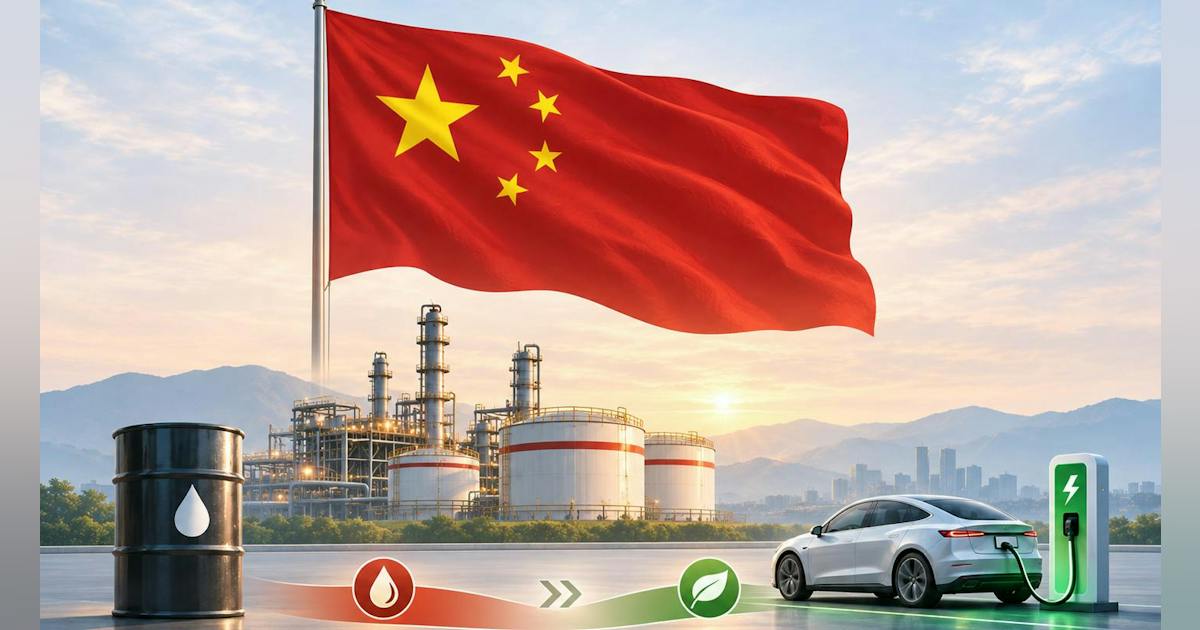
In September, China’s oil demand fell sharply by 1.3 million b/d year-on-year (y-o-y), a 7.1% decline, according to latest data from the International Energy Agency (IEA). This drop is nearly double the decline seen in August and only slightly less than the 1.4-million b/d slump recorded in June following the Iran-related conflict. According to IEA data, the decline in demand has affected virtually all categories of petroleum products. Demand for liquefied petroleum gas (LPG)/ethane, naphtha, gasoline, diesel, and fuel oil each fell by about 200,000-250,000 b/d. In percentage terms, naphtha demand dropped by 11%—nearly twice the 6% decline seen in LPG/ethane, another petrochemical feedstock. This reflects an ongoing shift in the feedstock mix for steam crackers, which are increasingly favoring LPG and ethane over naphtha. Demand for gasoline and diesel, the primary fuels for transportation, both fell by about 5% y-o-y. China’s transition toward the electrification of passenger vehicles and trucks is far exceeding that of any other nations, a trend further accelerated by surging fuel prices, IEA said. Retail prices for gasoline and diesel in China have risen by about 25% y-o-y, according to GlobalPetrolPrices, hovering just below the all-time highs reached in mid-2022. Meanwhile, sluggish economic growth continues to weigh on oil consumption and overall demand. The downturn in China’s real estate market has entered its sixth year without yet hitting bottom, persistently eroding household wealth and undermining economic confidence. In the first 9 months of 2026, real estate investment fell by 20.6% y-o-y—an acceleration from the 19.9% decline recorded between January-August. The latest data for October show that economic momentum in industrial output and retail sales continues to weaken. This prolonged slump has severely dampened public sentiment; since the beginning of 2026, the consumer confidence index has remained near post-pandemic lows. Exports have played a growing role