Stay Ahead, Stay ONMINE

Schneider Electric’s AI Factory Strategy Moves Beyond the Modular Data Hall

The race to industrialize AI data center construction is moving beyond prefabricated electrical rooms and modular building components. Increasingly, major infrastructure suppliers are attempting to standardize the power, cooling, controls, and engineering systems surrounding the computing equipment itself, with the goal of delivering highly integrated infrastructure through repeatable manufacturing processes rather than site-specific construction. Schneider […]

The race to industrialize AI data center construction is moving beyond prefabricated electrical rooms and modular building components. Increasingly, major infrastructure suppliers are attempting to standardize the power, cooling, controls, and engineering systems surrounding the computing equipment itself, with the goal of delivering highly integrated infrastructure through repeatable manufacturing processes rather than site-specific construction.

Schneider Electric’s recent activities provide a revealing example of that transition. Its RapidScale Modular Data Center Reference Design 115, introduced October 21 at NVIDIA GTC Berlin, outlines a modular AI factory architecture engineered for the NVIDIA Vera Rubin platform. Separately, a study conducted with Compass Datacenters documents substantial reductions in selected onsite installation activities through prefabricated white-space modules. Related developments involving power-system certification, onsite generation, and digital-twin technology show how the company is extending its reach across the data center development process.

As DCF previously reported in its examination of NVIDIA’s DSX POD initiative, the broader industry is working toward factory-integrated computing environments that can be assembled, tested, and delivered with less dependence on conventional field construction. Schneider’s contribution is particularly interesting because its latest engineering documentation provides a detailed view of how electrical and thermal infrastructure might accommodate a new generation of exceptionally power-dense AI systems.

A 227-kW Building Block for Vera Rubin

Schneider describes Reference Design 115 as a 10–20 MW, Tier III-targeted modular AI factory architecture developed to ANSI standards. The published example concentrates on one deployment unit containing four scalable units, designed around four NVIDIA Vera Rubin clusters with 1,008 GPUs each.

That translates to 4,032 GPUs distributed across 56 AI computing racks, supported by another 32 networking racks. The maximum AI rack power reaches 227 kW, while the documented configurations support approximately 10.4 MW to 11.4 MW of active IT load. The reference design assigns approximately 33,518 square feet to the deployment unit, divided between IT space and supporting utility infrastructure, with total peak facility power of approximately 13.25 MW.

The architecture combines prefabricated powertrains, liquid-cooling equipment, IT pods, distribution infrastructure, and management software within a standardized engineering framework. Rather than requiring developers to abandon conventional data center buildings, it allows prefabricated equipment packages to be incorporated into a broader construction program, with factory assembly proceeding alongside site development.

That distinction is telling. For developers constructing large campuses in multiple phases, the objective is not necessarily to replace every building with a modular container. It is to make the infrastructure inside those buildings easier to reproduce, coordinate, and commission as computing technologies evolve.

Power Architecture and the Redundancy Question

Reference Design 115 uses four 3.75 MW RapidScale powertrains to serve the IT environment, providing a 3+1 distributed redundant UPS architecture. Each powertrain includes a 5,000-amp QED-2 switchboard, three parallel 1,250 kW Galaxy VXL UPS units, and associated distribution infrastructure. The UPS systems provide five minutes of runtime at rated load.

Electricity is delivered through remote power panels serving the AI racks and distribution equipment supporting the networking systems. Schneider’s NetShelter Open Architecture MGX 1.2 configuration accommodates the high-density AI racks through multiple power feeds and redundant power shelves. Separate 2.5 MW powertrains provide 2N electrical infrastructure for the mechanical systems, with UPS support for critical coolant distribution units and pumps.

An important characteristic is the continued use of 480V AC distribution for AI racks, with 415V distribution for networking equipment. Schneider is developing higher-voltage DC technologies for future AI infrastructure, but Reference Design 115 does not depend on an 800V DC electrical architecture.

The more significant operational question concerns how operators allocate power between computing performance and redundancy.

Schneider’s documentation describes multiple operating states for the Vera Rubin racks. At the Max-P operating point, each AI rack draws approximately 227 kW, emphasizing maximum rack-level computing performance. At Max-Q, power consumption falls to approximately 188 kW per rack, with the objective of improving the number of tokens produced per watt.

In the design’s tabulated Max-P configuration, 42 AI racks operate with approximately 10.4 MW of total IT demand, including networking equipment. The Max-Q configuration supports all 56 AI racks, with approximately 11.4 MW of aggregate IT demand.

The documented Max-P configuration operates with three of the four IT electrical powertrains, while the full 56-rack Max-Q configuration uses all four. That distinction illustrates the trade-off between maximizing installed computing capacity and preserving electrical headroom for maintenance or equipment failures. Operators would need to account for those conditions when selecting operating configurations.

Schneider also describes the possibility of operating more Max-P racks when additional electrical capacity is made available, along with reduced-rack configurations for maintenance or equipment failure.

The design suggests that maximizing the productive use of power infrastructure may become as important as maximizing individual rack performance. However, actual token-output benefits will depend on workload characteristics, operational controls, and the ability to manage the resulting infrastructure constraints.

Liquid Cooling Moves Into the Standardized Design

The thermal architecture illustrates why factory integration is becoming increasingly attractive as AI rack densities rise. Schneider’s design assumes that liquid cooling removes approximately 96% of the heat generated by the liquid-cooled racks, with the balance handled by air-cooling infrastructure.

Motivair liquid-to-liquid coolant distribution units connect the computing equipment to a high-temperature technology cooling loop designed for approximately 108°F supply and 126°F return temperatures. A separate chilled-water system supplies 64°F water to Uniflair fan walls, which manage residual rack heat and other air-cooled equipment.

The higher-temperature liquid-cooling system permits the use of dry coolers for substantial portions of the heat-rejection requirement, with adiabatic assistance when outdoor conditions demand it. Such an approach can reduce dependence on mechanical chilling, although its water requirements will vary with climate and operating conditions.

Schneider models annualized power usage effectiveness (PUE) at approximately 1.1 under the San Francisco and Dallas conditions examined in the reference design. These are engineering projections rather than measured operating results, and actual performance will depend on climate, equipment configuration, and workload.

The design therefore presents a trade-off familiar to operators planning liquid-cooled AI environments: higher-temperature cooling creates opportunities to improve energy efficiency, but water availability, heat-rejection requirements, maintenance, and redundancy remain site-specific considerations.

What Compass’s Installation Study Actually Demonstrates

Where Reference Design 115 describes a proposed infrastructure architecture, Schneider’s work with Compass Datacenters offers evidence from actual prefabricated installations.

The companies first announced their jointly engineered EcoStruxure white-space module in September 2025. Their October 2026 White Paper 238, Prefabricated White Space Module Time Study, examines the installation sequence for integrated IT pods at a Compass hyperscale campus, comparing observed prefabricated installation durations with a functionally equivalent traditional construction sequence.

The module incorporates containment, technology cooling system piping, electrical busway, cable-support infrastructure, and structural components within a prefabricated assembly. In the configuration studied, an approximately 1,000-square-foot pod accommodates up to 42 rack positions with a maximum electrical capacity of 1.2 MW.

That configuration is distinct from the much higher-density Vera Rubin architecture described in Reference Design 115. Its relevance is the installation methodology rather than its ability to accommodate the same computing equipment.

The study reports that selected onsite activities required 15 hours for the prefabricated pod, compared with 75.5 hours for the conventional approach, an approximately 80% reduction in the installation duration being compared. The traditional calculation includes estimated durations for several field installation activities, while the prefabricated installation results were observed at the Compass campus.

The largest savings result from eliminating separate onsite installation phases for technology cooling piping, busway, and cable shelving. Those systems are incorporated into the prefabricated assembly rather than delivered and installed independently by multiple trades.

Compass also documented improvement through repetition, with one earlier installation requiring 18 hours compared with 15 hours for the later deployment examined in the study.

Importantly, the comparison excludes offsite manufacturing activities and does not measure total data center construction or commissioning time. It also excludes certain conventional overhead-support installation work. The results nevertheless provide a useful indication of how moving complex infrastructure integration into the factory can reduce construction-site coordination and simplify installation.

From Factory-Built Power to Digital Infrastructure

The broader significance of Schneider’s approach becomes clearer alongside its other recent developments.

In September, UL Solutions announced that Schneider had achieved the first certification under its UL 2140 program for specified prefabricated power distribution assemblies. The certification evaluates integrated systems that may combine switchboards, UPS units, batteries, and distribution equipment on common skids, introducing a third-party assessment pathway for equipment assembled and interconnected before delivery.

That does not certify the entire RapidScale architecture, but it addresses an important concern for developers adopting factory-integrated electrical infrastructure: how to verify complete assemblies rather than relying exclusively on certifications for individual components.

Schneider is also working to coordinate infrastructure beyond the data hall. Its September collaboration with Wärtsilä and Stanley Consultants proposes a generator-to-chip approach that brings onsite power generation, electrical distribution, automation, and engineering into a more integrated development process. Separately, the company’s software-defined medium-voltage switchgear initiatives are intended to make electrical systems easier to configure and adapt as facilities expand.

Software is becoming another important part of this strategy. In October, Schneider, AVEVA, ETAP, Nscale, and Start Campus disclosed an Immersive Twin pilot using the NVIDIA Omniverse DSX Blueprint at the SINES Data Campus in Portugal. The project connects computing requirements with electrical, cooling, and operational models, allowing proposed changes to be evaluated through simulation before implementation.

The digital-twin pilot is separate from the RapidScale reference design, but it illustrates the company’s broader direction. Standardized infrastructure becomes more useful when its performance can also be modeled, validated, and managed across the facility lifecycle.

Industrializing the Data Center Has Its Own Constraints

For developers, the potential advantages of this approach are substantial. Repeatable engineering can reduce design variation, factory integration can move complicated work away from crowded construction sites, and earlier testing may help identify problems before equipment arrives. The value increases when infrastructure configurations can be reproduced across multiple buildings or campuses.

Schneider says its prefabricated manufacturing capacity has expanded fourfold since 2025, with eight primary manufacturing facilities totaling approximately 1.35 million square feet, supplemented by additional company and partner sites. RapidScale incorporates approximately 90% internally manufactured equipment, giving Schneider greater direct involvement in the supply chain surrounding its modular infrastructure offerings.

Those figures suggest a growing industrial commitment, but manufacturing capacity alone does not establish shorter project delivery schedules. Factory throughput, component availability, transportation logistics, commissioning requirements, and the readiness of electrical and cooling connections still determine how quickly equipment can be brought into service.

Nor has Schneider published a comprehensive project-level capital-cost comparison for Reference Design 115. Developers will need to evaluate the financial benefits of repeatable construction alongside transportation, integration, maintenance, supplier-dependence, and site-specific engineering requirements.

The central development is a changing division of labor in data center construction. As AI infrastructure grows more complex, equipment suppliers are moving toward responsibility for larger portions of the integrated system, while developers and contractors increasingly manage the interfaces between manufactured infrastructure and the physical campus.

Schneider’s latest engineering and manufacturing initiatives illustrate both the opportunity and the unfinished work. The industry has evidence that prefabrication can substantially reduce selected installation activities, along with increasingly detailed architectures for the next generation of AI computing. The larger test will be whether those improvements translate into repeatable, economical, and reliable deployments at the scale now being contemplated for AI infrastructure.


Shape
Shape
Stay Ahead

Explore More Insights

Stay ahead with more perspectives on cutting-edge power, infrastructure, energy,  bitcoin and AI solutions. Explore these articles to uncover strategies and insights shaping the future of industries.

Shape

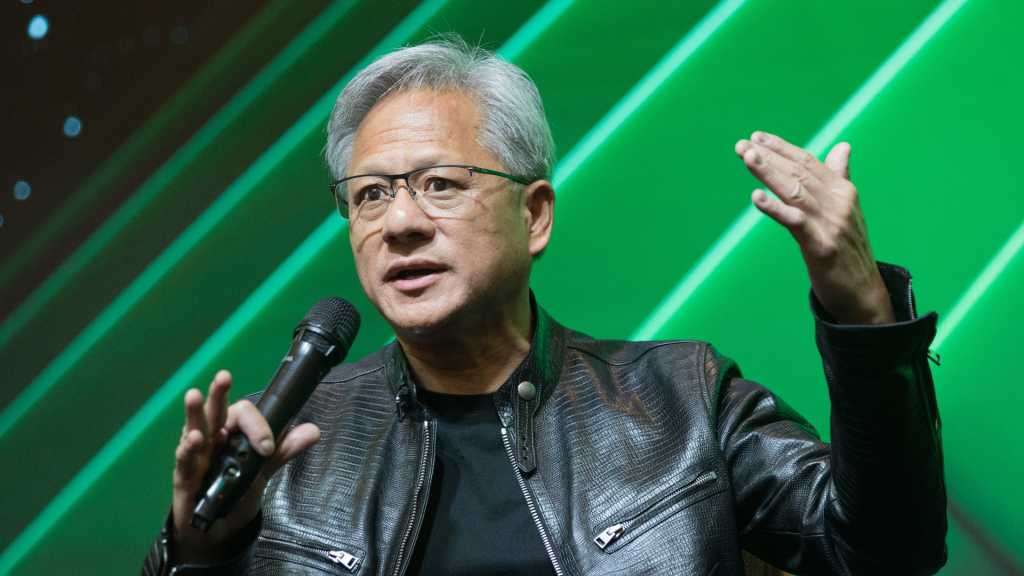
What’s next for Nvidia?

That’s if he wants it. One industry watcher told this reporter that several years ago, he asked several Nvidia vice presidents if they wanted the big chair, because Nvidia had no clear successor to Huang and to a man they said no way. “I can’t and don’t want to do

Read More »

People and Vertical AI: The responsible and trusted framework for energy and water

I have always held a simple conviction — energy and water utilities should not be spectators to the AI transformation of their own industry. They should shape it, together with the partners and technologists building alongside them. That conviction matters because few industries carry the weight that energy and water do. They are the services every other part of modern life is built on — be it homes, hospitals, schools, businesses, data centers and increasingly, the AI economy itself. When they work, they are invisible. When they fail, everything else stops. Their success is measured in three outcomes the public feels directly: affordability, reliability and trust. Rising energy costs, extreme weather, electrification and the growing demand from large loads are putting these outcomes under increasing pressure. At the same time, utilities are being asked to modernize operations, make better use of data and respond faster to changing customer and grid demands. This is changing the conversation around AI. The question is no longer simply what AI can do, but where it can deliver value, how much autonomy it should have and what safeguards must govern its use. At this year’s WE3 Global AI Summit, conversations among energy and utility leaders reflected this shift. As AI moves from individual applications into customer, workforce, business and grid operations, the industry must think beyond capability to the conditions under which AI can be trusted to act. My belief is that the answer lies in People + Vertical AI: an approach that combines industry-specific intelligence with human experience, judgment and accountability. Vertical AI brings the data, domain knowledge and operational context required to work within the realities of energy and water. People establish its purpose, define its boundaries and remain accountable for its outcomes. Four principles should guide this approach. 1. Convergence: Bringing customers

Read More »

People and Vertical AI: The new operating model for energy and utilities

For generations, the energy and utility industry has depended on the judgment of its people.  Across the industry, people are responsible for keeping energy and water running and serving the communities that depend on them. A field crew is there when a community needs power restored. A grid operator carries the responsibility of keeping the network stable and reliable. A customer service representative is often the human connection between a customer and the utility service. An engineer makes decisions that can shape the safety, resilience and reliability of infrastructure for decades.  That expertise remains essential. What has changed is the complexity surrounding it.  Electrification, distributed energy resources, renewable generation, electric vehicles, extreme weather, aging infrastructure, affordability pressures, rising customer expectations and data centers becoming new energy consumers are all connecting decisions that were once managed independently.  The industry has spent decades digitizing those decisions, generating more data along the way. The challenge now is different: how do you make that intelligence work together and make the expertise of the people using it scalable?  This is where AI has to evolve beyond generic intelligence to a Vertical AI approach built around the specific context, complexity and interconnected realities of the energy and utility industry.  The opportunity is not to automate the people who run the industry. It is to give them better context, better intelligence and the ability to extend their judgment across more decisions, more customers and more of the ecosystem than was previously possible.  That is the premise behind People + Vertical AI.  From Human Expertise to Connected Intelligence  People + Vertical AI is not a technology layer placed on top of existing operations. It is an operating model in which Vertical AI works alongside people, connecting information across the enterprise while people provide judgment, accountability and context.  The

Read More »

Energy Secretary Keeps Critical, Coal-Fired Generation Operational Ahead of Winter in the Midwest

WASHINGTON—The U.S. Department of Energy (DOE) issued an emergency order to address critical grid reliability issues in the Midwest. The emergency order directs the Midcontinent Independent System Operator (MISO), in coordination with Consumers Energy Company, to ensure that the coal-fired J.H. Campbell Generating Plant (Campbell Plant) in West Olive, Michigan, is available to operate and meet emergency needs while employing economic dispatch to minimize costs for hardworking American families and businesses. The Campbell Plant was originally slated to shut down on May 31, 2025, 15 years before the end of its scheduled design life.  “President Trump and the Energy Department remain committed to doing everything in our power to stop power outages for American families and businesses,” said U.S. Secretary of Energy Chris Wright. “Ensuring coal plants such as the Campbell Plant are available to operate has prevented blackouts and likely saved lives. Americans deserve access to affordable, reliable, and secure electricity regardless of whether the wind is blowing or the sun is shining.” Thanks to President Trump, coal generating plants across the country are being saved from premature retirement. For example, in 2025, more than 17 gigawatts of coal-fired electricity generation were saved from going offline. During periods of peak electricity demand, many of those plants keep the lights on.  The emergency conditions that led to the issuance of the original order persist. A joint report from the Federal Energy Regulatory Commission (FERC), the North American Electric Reliability Corporation (NERC), and NERC’s Regional Entities highlights how events that occurred during the Winter 2026 Arctic Cold Period, including Winter Storm Fern, demonstrated the need for dispatchable generation capacity from facilities like the Campbell Plant.  This order is in effect from November 15, 2026, through February 12, 2027. 

Read More »

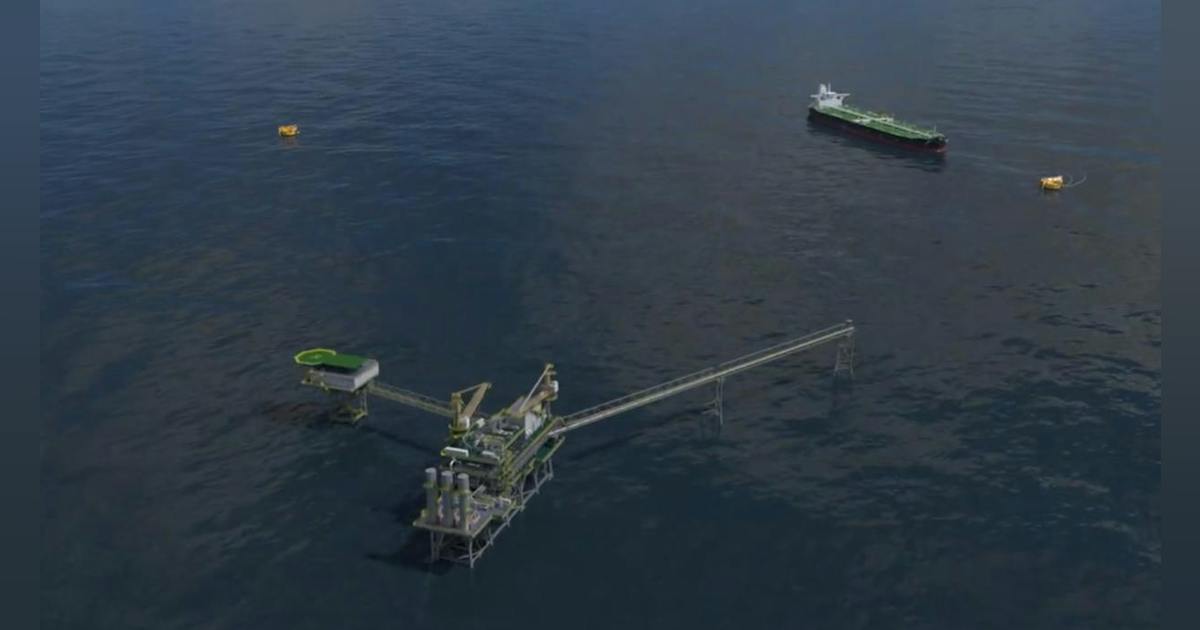
Kosmos lets contract to advance Tiberius project offshore Louisiana

Kosmos Energy Gulf of Mexico Operations LLC, a unit of Kosmos Energy, has let a contract to Subsea 7 SA for work on the Tiberius project in the US Gulf of Mexico. The scope of work covers the fabrication, transportation, and installation of a 14-km steel catenary riser and wet-insulated flowline to the Lucius Spar, along with the installation of an umbilical and subsea controls. The Tiberius project lies in Keathley Canyon lease 964 about 400 km south of New Orleans in about 2,283 m of water.  License partners reached a final investment decision on the Phase 1A development this year, which includes completion of an already drilled well. Long-lead items have been secured, and first oil is expected by the end of third-quarter 2028.  Subsea 7, which values the contract at $50-150 million, expects project management and engineering activities to begin in the coming months, with offshore activities expected to begin in 2028. Kosmos is operator of the Tiberius project with a 33.34% interest following a farmout alongside partner Occidental Petroleum to Navitas Petroleum US LLC earlier this year.

Read More »

ExxonMobil takes FID for Longtail development offshore Guyana

The development, in the southeastern portion of the block, will target non-associated gas and condensate-rich reservoirs. Subject to future investment decisions, market demand, and development of supporting infrastructure, gas from the project could be transported to shore by pipeline. The development will use a floating production, storage, and offloading (FPSO) vessel designed to process 1.2 bcfd of gas and produce as much as 250,000 b/d of condensate. The project is expected to include about 45 subsea production and injection wells. “By developing these gas and condensate resources, we’re unlocking new value for Guyana while delivering advantaged energy to meet growing global demand,” said Dan Ammann, president, ExxonMobil Upstream Company. ExxonMobil currently produces about 900,000 b/d of oil from four developments in the Stabroek block. Its fifth project, Uaru, is expected to start up in fourth-quarter 2026, increasing total block production capacity to more than 1 million b/d. Earlier this year, the operator and co-venturers produced the 1 billionth bbl of oil from Guyana’s Stabroek block, less than 7 years after first production began in December 2019 with Liza field. Construction also continues on the Whiptail and Hammerhead developments, the sixth and seventh approved projects on the block. Whiptail is slated to start production in 2027, followed by Hammerhead in 2029. ExxonMobil Guyana Ltd. operates the Stabroek block with a 45% interest. Hess Guyana Exploration Ltd. holds 30%, and CNOOC Petroleum Guyana Ltd. holds 25%.

Read More »

MARAD approves Energy Transfer’s $1-billion Blue Marlin crude oil export port

The US Maritime Administration (MARAD) approved Energy Transfer’s $1-billion Blue Marlin offshore crude oil export project off Louisiana Nov. 5, marking the fourth oil and gas deepwater port approval under President Donald Trump’s second administration. The proposed Blue Marlin port would have capacity to export up to 2 million b/d of crude oil, with loading rates of up to 80,000 bbl/hr, including onto very large crude carriers (VLCCs). Located 99 miles off Cameron Parish, La., the project includes conversion of an existing 36-in. Stingray natural gas pipeline to transport crude oil from Energy Transfer’s Nederland terminal in Texas to the offshore infrastructure. The US Federal Energy Regulatory Commission previously authorized abandonment and sale of Stingray pipeline infrastructure for conversion to crude oil service. Energy Transfer has yet to receive final US Environmental Protection Agency air permits and certain state approvals. The project’s commercial development schedule remains uncertain. MARAD approved Blue Marlin shortly after its Oct. 28 approval of the $8.2-billion ST LNG project offshore Texas, as the agency pursues new procedures to streamline deepwater port licensing. The Trump administration also has approved Delfin LNG, a floating LNG export project offshore Louisiana, and Texas GulfLink, a crude oil export project offshore Texas.

Read More »

Schneider Electric’s AI Factory Strategy Moves Beyond the Modular Data Hall

The race to industrialize AI data center construction is moving beyond prefabricated electrical rooms and modular building components. Increasingly, major infrastructure suppliers are attempting to standardize the power, cooling, controls, and engineering systems surrounding the computing equipment itself, with the goal of delivering highly integrated infrastructure through repeatable manufacturing processes rather than site-specific construction. Schneider Electric’s recent activities provide a revealing example of that transition. Its RapidScale Modular Data Center Reference Design 115, introduced October 21 at NVIDIA GTC Berlin, outlines a modular AI factory architecture engineered for the NVIDIA Vera Rubin platform. Separately, a study conducted with Compass Datacenters documents substantial reductions in selected onsite installation activities through prefabricated white-space modules. Related developments involving power-system certification, onsite generation, and digital-twin technology show how the company is extending its reach across the data center development process. As DCF previously reported in its examination of NVIDIA’s DSX POD initiative, the broader industry is working toward factory-integrated computing environments that can be assembled, tested, and delivered with less dependence on conventional field construction. Schneider’s contribution is particularly interesting because its latest engineering documentation provides a detailed view of how electrical and thermal infrastructure might accommodate a new generation of exceptionally power-dense AI systems. A 227-kW Building Block for Vera Rubin Schneider describes Reference Design 115 as a 10–20 MW, Tier III-targeted modular AI factory architecture developed to ANSI standards. The published example concentrates on one deployment unit containing four scalable units, designed around four NVIDIA Vera Rubin clusters with 1,008 GPUs each. That translates to 4,032 GPUs distributed across 56 AI computing racks, supported by another 32 networking racks. The maximum AI rack power reaches 227 kW, while the documented configurations support approximately 10.4 MW to 11.4 MW of active IT load. The reference design assigns approximately 33,518 square feet to the

Read More »

Cisco forecasts $9 billion in AI infrastructure revenue in FY27

Cisco continues to benefit from a “networking supercycle,” reporting record revenue—driven by demand for AI infrastructure, security, and campus refreshes from hyperscalers and enterprise customers—for its fiscal first quarter ended October 24. “In Q1, we delivered record quarterly revenue of $18.5 billion, up 24% year over year, and record non-GAAP earnings per share of $1.40, up 40% year over year. These are our strongest top andbottom-line growth rates in over 15 years,” Cisco CEO Chuck Robbins said on the vendor’s quarterly financial call. “Networking product orders grew 28% in Q1, delivering our ninth consecutive quarter of double-digit growth. In fact, we saw double-digit growth across every product family: service provider routing, compute, enterprise routing, wireless, data center switching and campus switching,” Robbins said. “These broad-based results support our view that we are in the early stages of a multiyear, multibillion-dollar networking supercycle.”

Read More »

How TI’s ADC34DSO75 Catches the Nanosecond Power Glitches Behind AI Data Center Downtime

Today’s advanced AI data center can be viewed as a vast, complex and interdependent digital organism in which a virtually infinite number of components must be tracked all the time, in real time. It’s a monitoring job of staggering proportions. At stake is the operation of highly critical workloads and the maintenance of return on investment for high-cost compute equipment. At risk is sub-optimal performance or, in worst-case scenarios, the nightmare of data center downtime. Sponsored Resources: Why traditional telemetry misses nanosecond power-rail events Telemetry has long been relied upon to monitor data center servers, test and measurement equipment, wireless infrastructure and other systems for real-time information about voltage, current, power, temperature and overall system health. But most systems operate at millisecond-level intervals or slower, which is six orders of magnitude longer than the transient events that now occur at the processor power rails and the tools meant to observe them. The requirements and high stakes of today’s AI data centers and workloads have called for a new generation of advanced, nanosecond-level telemetry gear. Texas Instruments has established a leadership position in this sector. The company has developed the first analog-to-digital converter (ADC) to enable 24/7, low-power, event-based remote monitoring at nanosecond resolution. Let’s unpack this statement and examine why TI’s new monitoring technology is so important for the data center industry. What is the TI ADC34DSO75?    We’re talking specifically about TI’s ADC34DSO75, the industry’s highest-performance, 3 gigasamples per second (GSPS) ADC, delivering thousands of times faster performance than current offerings. Launched at the Open Compute Project Global Summit conference in October, the ADC34DSO75 addresses the shortcomings of existing monitoring solutions that can’t detect the nanosecond-level power-rail glitches that cause costly data center downtime. The ADC34DSO75 combines ultra-high-speed sampling with advanced on-chip digital signal processing in a small form factor,

Read More »

SC26 Preview: AI-HPC Convergence Takes Center Stage in Chicago

As the high-performance computing community prepares to gather in Chicago for SC26, November 15–20, the latest episode of the Data Center Frontier Show offers a timely preview of the technologies, market developments, and infrastructure challenges expected to shape this year’s conference. Hosted by DCF Contributing Editor Doug Black, the conversation brings together Lois McKinnis, Argonne Distinguished Fellow and senior computational scientist at Argonne National Laboratory; Addison Snell, founder and CEO of Intersect 360 Research; and Earl Joseph, CEO of Hyperion Research. The episode also inaugurates Data Center Frontier’s new Frontier Computing channel, expanding DCF’s coverage of the technologies and infrastructure driving the convergence of high-performance computing, AI, QC and next-generation scientific discovery. The central theme is unmistakable. AI is no longer simply an adjunct to traditional supercomputing. It is changing how scientific computing itself is performed. “We’re really moving beyond focusing just on bigger machines, faster machines,” McKinnis observes, pointing to the growing integration of AI into scientific software development, simulations, and research workflows. Joseph underscores the acceleration, citing new Hyperion research finding that 70% of respondents are already using AI for code generation. The panel also examines the U.S. Department of Energy’s Genesis Mission, a sweeping effort to link supercomputers, large-scale AI infrastructure, and cloud resources in support of scientific discovery. Joseph calls Genesis “the first time I’ve ever seen something that’s truly a broad national resource,” while Snell emphasizes that investments in AI infrastructure must be matched by investments in science itself. For data center professionals, the discussion turns to increasingly consequential questions about the economics and sustainability of the AI buildout. Snell warns that the industry’s focus on rapid construction has outpaced serious discussion of infrastructure lifecycles and upgrades. Joseph highlights the mounting difficulty of financing supercomputers costing $100 million or more when new GPU generations arrive

Read More »

Nvidia’s leadership crisis puts enterprise AI’s dependence on one company under scrutiny

“More broadly, it throws into doubt the company’s leadership and security practices, and ignites questions around board-level governance and oversight,” he said. The ‘default choice’ in the market Huang founded Nvidia in 1993, initially targeting the gaming market. But the company pivoted in recent years to meet the intensive compute demands of AI. Its advanced GPUs not only excel at rendering graphics, but can handle an enormous number of simultaneous computations, making them a natural fit for neural networks and LLMs. The company began focusing more on developing chips and architecture for AI tools and data centers, and has continued to ink new deals and establish partnerships with tech companies serving nearly every level of the stack, including Anthropic, Meta, Dell, HPE, Microsoft, AWS, Google Cloud, Accenture, Marvell Technology, Hugging Face and many others.

Read More »

Jensen Huang Resigns as NVIDIA CEO, Sending Shockwaves Through AI Data Center Industry

NVIDIA co-founder Jensen Huang resigned Thursday morning (November 12) as president, CEO and board member of the world’s dominant AI chipmaker, a stunning leadership change that introduces new uncertainty into the global artificial intelligence infrastructure boom. In an official announcement, NVIDIA confirmed that Chief Financial Officer Colette Kress will serve as interim CEO while the board conducts a search for Huang’s permanent successor. The company also appointed longtime director Harvey C. Jones as its first board chairman. The departure ends Huang’s 33-year leadership of the company he co-founded in 1993 and comes amid a rapidly escalating controversy involving his reported personal relationships, potential Chinese intelligence activity and questions about corporate governance. According to Reuters, NVIDIA shares fell more than 10% in premarket trading Thursday as investors weighed the implications for the approximately $4 trillion company and the wider AI technology sector. The company’s announcement did not specify a reason for Huang’s resignation. National Security Investigation Precedes Leadership Change The leadership shakeup follows several days of increasing scrutiny over Huang’s reported relationship with a businesswoman whom U.S. authorities suspect of connections to Chinese intelligence, alongside separate reporting concerning a relationship with a senior NVIDIA executive. On November 8, NVIDIA’s board announced an independent investigation into whether Huang had been targeted by a foreign intelligence operation. At the time, directors stated that they had no reason to believe company secrets or national security had been compromised. The controversy subsequently attracted congressional attention, including calls for Huang’s resignation and questions about semiconductor export controls and the security of advanced AI technology. The espionage allegations remain contested, and no compromise of NVIDIA technology has been publicly established. For the data center industry, however, the immediate question extends beyond the circumstances of Huang’s departure. It concerns the potential disruption of an infrastructure ecosystem increasingly organized

Read More »

Microsoft will invest $80B in AI data centers in fiscal 2025

And Microsoft isn’t the only one that is ramping up its investments into AI-enabled data centers. Rival cloud service providers are all investing in either upgrading or opening new data centers to capture a larger chunk of business from developers and users of large language models (LLMs).  In a report published in October 2024, Bloomberg Intelligence estimated that demand for generative AI would push Microsoft, AWS, Google, Oracle, Meta, and Apple would between them devote $200 billion to capex in 2025, up from $110 billion in 2023. Microsoft is one of the biggest spenders, followed closely by Google and AWS, Bloomberg Intelligence said. Its estimate of Microsoft’s capital spending on AI, at $62.4 billion for calendar 2025, is lower than Smith’s claim that the company will invest $80 billion in the fiscal year to June 30, 2025. Both figures, though, are way higher than Microsoft’s 2020 capital expenditure of “just” $17.6 billion. The majority of the increased spending is tied to cloud services and the expansion of AI infrastructure needed to provide compute capacity for OpenAI workloads. Separately, last October Amazon CEO Andy Jassy said his company planned total capex spend of $75 billion in 2024 and even more in 2025, with much of it going to AWS, its cloud computing division.

Read More »

John Deere unveils more autonomous farm machines to address skill labor shortage

Join our daily and weekly newsletters for the latest updates and exclusive content on industry-leading AI coverage. Learn More Self-driving tractors might be the path to self-driving cars. John Deere has revealed a new line of autonomous machines and tech across agriculture, construction and commercial landscaping. The Moline, Illinois-based John Deere has been in business for 187 years, yet it’s been a regular as a non-tech company showing off technology at the big tech trade show in Las Vegas and is back at CES 2025 with more autonomous tractors and other vehicles. This is not something we usually cover, but John Deere has a lot of data that is interesting in the big picture of tech. The message from the company is that there aren’t enough skilled farm laborers to do the work that its customers need. It’s been a challenge for most of the last two decades, said Jahmy Hindman, CTO at John Deere, in a briefing. Much of the tech will come this fall and after that. He noted that the average farmer in the U.S. is over 58 and works 12 to 18 hours a day to grow food for us. And he said the American Farm Bureau Federation estimates there are roughly 2.4 million farm jobs that need to be filled annually; and the agricultural work force continues to shrink. (This is my hint to the anti-immigration crowd). John Deere’s autonomous 9RX Tractor. Farmers can oversee it using an app. While each of these industries experiences their own set of challenges, a commonality across all is skilled labor availability. In construction, about 80% percent of contractors struggle to find skilled labor. And in commercial landscaping, 86% of landscaping business owners can’t find labor to fill open positions, he said. “They have to figure out how to do

Read More »

2025 playbook for enterprise AI success, from agents to evals

Join our daily and weekly newsletters for the latest updates and exclusive content on industry-leading AI coverage. Learn More 2025 is poised to be a pivotal year for enterprise AI. The past year has seen rapid innovation, and this year will see the same. This has made it more critical than ever to revisit your AI strategy to stay competitive and create value for your customers. From scaling AI agents to optimizing costs, here are the five critical areas enterprises should prioritize for their AI strategy this year. 1. Agents: the next generation of automation AI agents are no longer theoretical. In 2025, they’re indispensable tools for enterprises looking to streamline operations and enhance customer interactions. Unlike traditional software, agents powered by large language models (LLMs) can make nuanced decisions, navigate complex multi-step tasks, and integrate seamlessly with tools and APIs. At the start of 2024, agents were not ready for prime time, making frustrating mistakes like hallucinating URLs. They started getting better as frontier large language models themselves improved. “Let me put it this way,” said Sam Witteveen, cofounder of Red Dragon, a company that develops agents for companies, and that recently reviewed the 48 agents it built last year. “Interestingly, the ones that we built at the start of the year, a lot of those worked way better at the end of the year just because the models got better.” Witteveen shared this in the video podcast we filmed to discuss these five big trends in detail. Models are getting better and hallucinating less, and they’re also being trained to do agentic tasks. Another feature that the model providers are researching is a way to use the LLM as a judge, and as models get cheaper (something we’ll cover below), companies can use three or more models to

Read More »

OpenAI’s red teaming innovations define new essentials for security leaders in the AI era

Join our daily and weekly newsletters for the latest updates and exclusive content on industry-leading AI coverage. Learn More OpenAI has taken a more aggressive approach to red teaming than its AI competitors, demonstrating its security teams’ advanced capabilities in two areas: multi-step reinforcement and external red teaming. OpenAI recently released two papers that set a new competitive standard for improving the quality, reliability and safety of AI models in these two techniques and more. The first paper, “OpenAI’s Approach to External Red Teaming for AI Models and Systems,” reports that specialized teams outside the company have proven effective in uncovering vulnerabilities that might otherwise have made it into a released model because in-house testing techniques may have missed them. In the second paper, “Diverse and Effective Red Teaming with Auto-Generated Rewards and Multi-Step Reinforcement Learning,” OpenAI introduces an automated framework that relies on iterative reinforcement learning to generate a broad spectrum of novel, wide-ranging attacks. Going all-in on red teaming pays practical, competitive dividends It’s encouraging to see competitive intensity in red teaming growing among AI companies. When Anthropic released its AI red team guidelines in June of last year, it joined AI providers including Google, Microsoft, Nvidia, OpenAI, and even the U.S.’s National Institute of Standards and Technology (NIST), which all had released red teaming frameworks. Investing heavily in red teaming yields tangible benefits for security leaders in any organization. OpenAI’s paper on external red teaming provides a detailed analysis of how the company strives to create specialized external teams that include cybersecurity and subject matter experts. The goal is to see if knowledgeable external teams can defeat models’ security perimeters and find gaps in their security, biases and controls that prompt-based testing couldn’t find. What makes OpenAI’s recent papers noteworthy is how well they define using human-in-the-middle

Read More »