@import url(‘https://fonts.googleapis.com/css2?family=Inter:wght@100..900&display=swap’);
.ebm-page__main h1, .ebm-page__main h2, .ebm-page__main h3, .ebm-page__main h4,
.ebm-page__main h5, .ebm-page__main h6 {
font-family: Inter;
}
body {
line-height: 150%;
letter-spacing: 0.025em;
}
button, .ebm-button-wrapper { font-family: Inter; }
.label-style {
text-transform: uppercase;
color: var(–color-grey);
font-weight: 600;
font-size: 0.75rem;
}
.caption-style {
font-size: 0.75rem;
color: color-mix(in srgb, currentColor 60%, transparent);
}
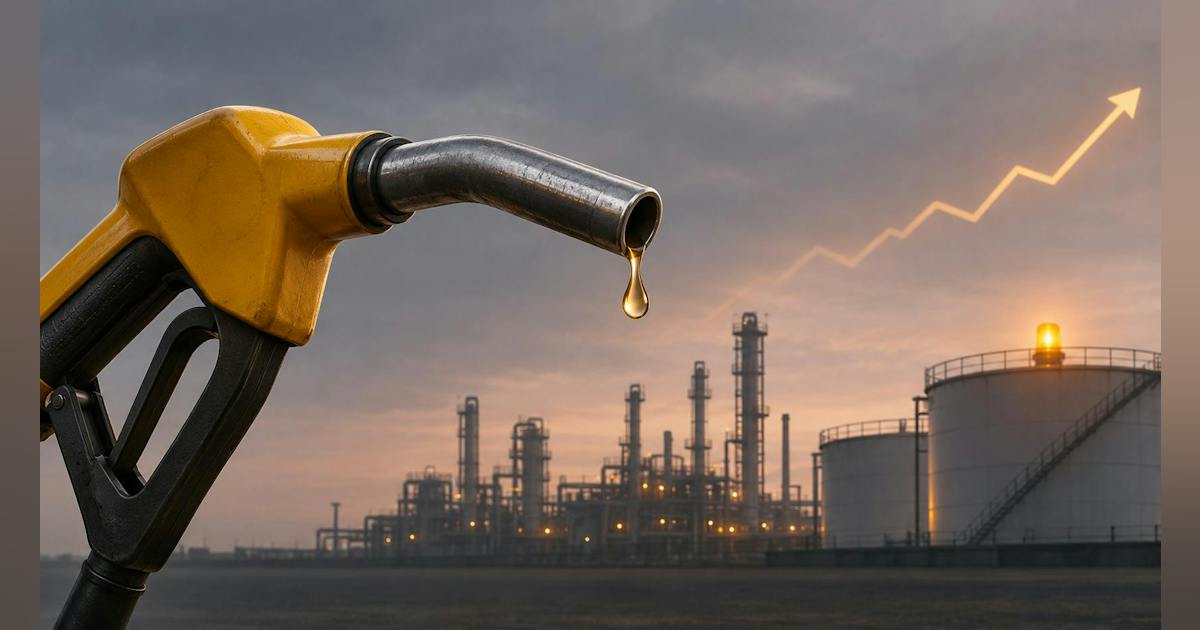
Major oil and gas companies are unlikely to increase capital spending budgets in 2027 because the structural supply-and-demand situation around global energy needs hasn’t changed, a senior Rystad analyst said Nov. 10.
Speaking on a capex-focused webinar hosted by Offshore, like Oil & Gas Journal a title owned by EndeavorB2B, Matthew Hale said it’s notable that operators didn’t meaningfully change their 2026 spending activity in response to the Iran war and ensuing production and distribution snarls. Hale, a senior vice-president of supply chain research at Rystad, said that speaks to the view that, as disruptive as it has been, the war hasn’t altered the underlying factors of the industry.
That, Hale added, could set up the oil-and-gas market to be in a surplus situation similar to its state in early 2026 before the Iran war.
“If we do see further normalization in the Middle East, you’re actually really opening up a pretty large surplus into 2027,” he said.
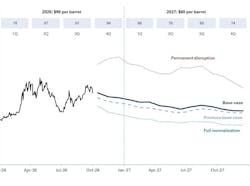
A full normalization to the pre-war state of affairs is unlikely, Hale said. The Rystad team sees it as “increasingly implausible” that 2027 will deliver an extreme price swing in either direction (see chart). That is likely to mean that shale operators will be the companies to watch when it comes to a possible production response because their business models are more elastic than those of their peers elsewhere.
That latter group includes offshore operators, which Rystad analysts are forecasting will significantly ramp up spending later this decade. See more at Offshore.com.