
Stay Ahead, Stay ONMINE

US waives Russia sanctions as Gulf oil shipments face renewed disruption

President Donald Trump signed an executive order Oct. 16 waiving key sanctions and tariffs under the Graham Act, including duties on Russian goods and penalties for countries that buy Russian oil and gas. The measures were due to take effect within days. Earlier Russia sanctions imposed under previous executive orders remain in place. US Secretary […]

President Donald Trump signed an executive order Oct. 16 waiving key sanctions and tariffs under the Graham Act, including duties on Russian goods and penalties for countries that buy Russian oil and gas. The measures were due to take effect within days. Earlier Russia sanctions imposed under previous executive orders remain in place.

US Secretary of State Marco Rubio said the administration would use up to 60 days to assess the economic effects. The order specifies no expiration date, and the waiver remains in effect pending further action by the administration.

Brent crude futures fell Oct. 19 from a 5-month high as traders weighed the prospect of more Russian supply against continued Middle East risks. December Brent futures traded around $108/bbl in morning dealings, down 1% to 2%.

Diesel deal

The waiver follows a separate diesel agreement. Trump said Russia would immediately supply more than 300,000 tonnes of diesel to the US and global markets, followed by 500,000 tonnes in November and 1 million tonnes after that. He also cited a further 3 million tonnes, depending on the condition of Russian refineries.

Delivery remains uncertain. Ukrainian strikes have damaged Russian refineries, while Moscow’s diesel export restrictions remain partly in place despite easing on Oct. 10.

Middle East risks

The potential increase in Russian fuel exports comes as shipping disruptions continue to constrain Middle Eastern oil supplies. According to Kpler data, Gulf crude flows fell to an average of about 8.5 million b/d last week, compared with more than 20 million b/d the preceding week.

Shipping security has also deteriorated. Kpler reported at least 10 confirmed incidents involving commercial vessels last week. Separately, Iran’s Islamic Revolutionary Guard Corps said a tanker struck a naval mine and exploded in the southern Strait of Hormuz on Oct. 18, according to Iranian media cited by Reuters.

Elevated tanker freight rates and insurance premiums continue to raise delivery costs, limiting the potential relief from additional Russian supplies.

Shape
Shape
Stay Ahead

Explore More Insights

Stay ahead with more perspectives on cutting-edge power, infrastructure, energy,  bitcoin and AI solutions. Explore these articles to uncover strategies and insights shaping the future of industries.

Shape

SolarWinds launches Avior AI agents to automate network operations

The first Avior offering is a network engineering agent that can automate alert management, configuration automation, compliance checks, and incident remediation. “We started there because [the network is] kind of our bread and butter,” Childress explains. “Many of our customers, a large portion of our customers, are on our network

Read More »

National Fuel plans ’27 spinoff of Appalachian natural gas group

@import url(‘https://fonts.googleapis.com/css2?family=Inter:wght@100..900&display=swap’); .ebm-page__main h1, .ebm-page__main h2, .ebm-page__main h3, .ebm-page__main h4, .ebm-page__main h5, .ebm-page__main h6 { font-family: Inter; } body { line-height: 150%; letter-spacing: 0.025em; } button, .ebm-button-wrapper { font-family: Inter; } .label-style { text-transform: uppercase; color: var(–color-grey); font-weight: 600; font-size: 0.75rem; } .caption-style { font-size: 0.75rem; color: color-mix(in srgb, currentColor 60%, transparent); } #onetrust-pc-sdk [id*=btn-handler], #onetrust-pc-sdk [class*=btn-handler] { background-color: #c19a06 !important; border-color: #c19a06 !important; } #onetrust-policy a, #onetrust-pc-sdk a, #ot-pc-content a { color: #c19a06 !important; } #onetrust-consent-sdk #onetrust-pc-sdk .ot-active-menu { border-color: #c19a06 !important; } #onetrust-consent-sdk #onetrust-accept-btn-handler, #onetrust-banner-sdk #onetrust-reject-all-handler, #onetrust-consent-sdk #onetrust-pc-btn-handler.cookie-setting-link { background-color: #c19a06 !important; border-color: #c19a06 !important; } #onetrust-consent-sdk .onetrust-pc-btn-handler { color: #c19a06 !important; border-color: #c19a06 !important; } The leaders of National Fuel Gas Co. will spin off the company’s Appalachian natural gas division, which today produces about 1.1 bcfd from about 1.2 million net acres in Pennsylvania. The planned separation of National Fuel’s two units—its fully regulated natural gas utility serves about 1.1 million in New York, Pennsylvania and Ohio—is expected to be completed in the second half of next year and give investors another avenue for betting on growth of Appalachian natural gas. IUG will be led by Justin Loweth, who has been leading NFG’s upstream Seneca Resources Co. subsidiary since May 2021 and its Midstream Co. unit since April 2022. Executives say IUG’s assets have about 5 trillion cu ft of proved natural gas reserves, which equates to more than 25 years of inventory. Since 2023, the company’s teams have been focusing their development efforts on what they call their Eastern development area, which focuses on Tioga County, and have become about 25% more efficient in that time. <!–> –> <!–> Oct. 19, 2026 –><!–> –> <!–> Sept. 16, 2026 ]–> <!–> –> July 31, 2026 President and CEO David Bauer said Oct. 14 that there has

Read More »

US waives Russia sanctions as Gulf oil shipments face renewed disruption

President Donald Trump signed an executive order Oct. 16 waiving key sanctions and tariffs under the Graham Act, including duties on Russian goods and penalties for countries that buy Russian oil and gas. The measures were due to take effect within days. Earlier Russia sanctions imposed under previous executive orders remain in place. US Secretary of State Marco Rubio said the administration would use up to 60 days to assess the economic effects. The order specifies no expiration date, and the waiver remains in effect pending further action by the administration. Brent crude futures fell Oct. 19 from a 5-month high as traders weighed the prospect of more Russian supply against continued Middle East risks. December Brent futures traded around $108/bbl in morning dealings, down 1% to 2%. Diesel deal The waiver follows a separate diesel agreement. Trump said Russia would immediately supply more than 300,000 tonnes of diesel to the US and global markets, followed by 500,000 tonnes in November and 1 million tonnes after that. He also cited a further 3 million tonnes, depending on the condition of Russian refineries. Delivery remains uncertain. Ukrainian strikes have damaged Russian refineries, while Moscow’s diesel export restrictions remain partly in place despite easing on Oct. 10. Middle East risks The potential increase in Russian fuel exports comes as shipping disruptions continue to constrain Middle Eastern oil supplies. According to Kpler data, Gulf crude flows fell to an average of about 8.5 million b/d last week, compared with more than 20 million b/d the preceding week. Shipping security has also deteriorated. Kpler reported at least 10 confirmed incidents involving commercial vessels last week. Separately, Iran’s Islamic Revolutionary Guard Corps said a tanker struck a naval mine and exploded in the southern Strait of Hormuz on Oct. 18, according to Iranian media cited

Read More »

Energy Department Advances Constitution Pipeline Project with $42 Million in Defense Production Act Funding

WASHINGTON—The U.S. Department of Energy (DOE) announced today that it will use up to $42 million in Defense Production Act (DPA) Title III funding to advance the development of a proposed 125-mile natural gas pipeline from Pennsylvania to New York.  Constitution Pipeline Company, LLC’s project will transport natural gas to markets across the Northeast that currently experience limited access to the low-cost reliable fuel. By leveraging DPA authorities, DOE is helping strengthen the security of the nation’s energy system and defense industrial base. The project will also dramatically lower electricity and home heating costs across the region. “Despite America having an abundant supply of low-cost natural gas, tens of millions of Americans have limited access to this reliable energy source due to a lack of pipeline infrastructure,” said U.S. Secretary of Energy Chris Wright. “President Trump promised to lower energy costs and reverse the energy emergency he inherited that was caused by 17 years of energy subtraction policies. That is why he promised to build the Constitution Pipeline – a project that will transform the lives and economic opportunities for Americans across New York and New England. It will also reduce the risk of blackouts during periods of peak electricity demand and make our nation more secure.” “For too long, families and businesses in New York and other blue states have paid the price for anti-energy policies that kneecap production, block critical infrastructure and drive up costs,” said Secretary of the Interior and Chairman of the National Energy Dominance Council Doug Burgum. “President Trump is reversing that failed approach, choosing abundance over government-imposed scarcity. This historic investment in New York will help deliver the reliable, secure energy Americans deserve while saving families across the Northeast billions of dollars.” This investment supports President Trump’s commitment to ensuring all Americans have access

Read More »

FERC proposes faster LNG approvals, changes pipeline air reviews

The US Federal Energy Regulatory Commission (FERC) Oct. 15 proposed rules allowing certain LNG plant activities to proceed without case-specific authorization orders and separately proposed changes to its review of operational air-quality effects from gas pipelines and other projects. The proposals would accelerate infrastructure development by streamlining authorizations and reducing duplicative environmental reviews. FERC unanimously proposed a blanket authorization program for eligible LNG plant activities modeled on the commission’s blanket certificate program for interstate natural gas pipelines, which has operated for about 40 years. Under the three-tier framework, LNG developers could gain authorization for major construction projects, including new liquefaction trains, storage tanks, and marine berths, following a 90-day notice-and-protest period. Eligible projects could extend beyond an existing plant’s footprint but permanently occupy no more than 25 acres of previously disturbed or developed land or waterways in industrially zoned or unzoned areas. Developers also would be required to use the same or upgraded versions of equipment previously evaluated and authorized at the terminal. Projects that increase authorized capacity while remaining within an existing footprint and equipment design limits could gain authorization after a 60-day notice period. Other activities would qualify for automatic authorization, subject to notification and reporting requirements, provided they would not increase authorized capacity, expand the plant footprint, or exceed equipment design limits. Unlike the existing pipeline blanket certificate program, the LNG proposal contains no dollar limits on eligible projects. FERC will accept comments for 60 days after publication in the Federal Register. Air permitting requirements FERC also issued a draft policy statement that would change how it evaluates operational air-quality effects from natural gas pipelines and other projects under the National Environmental Policy Act (NEPA). Under the proposal, FERC would stop requiring applicants to submit air-dispersion modeling and would no longer use the modeling in its NEPA

Read More »

Vår Energi discovers gas, condensate in Norwegian Sea Lakris prospect

Vår Energi ASA has discovered gas and condensate in the Lakris prospect in Gimsan basin on the Halten Terrace in the Norwegian Sea. Well 6407/5-3 S was drilled by the COSL Prospector semisubmersible drilling rig about 170 km northwest of Kristiansund in production license 1002 to a vertical depth of 4,225 m subsea. It was terminated in the lower Jurassic. Water depth at the site is 218 m. Preliminary calculations place the size of the discovery at 0.2-0.9 million standard cu m of recoverable oil equivalent (1.3-5.5 MMboe), the Norwegian Offshore Directorate reported. The objective of the well was to prove petroleum in Cretaceous reservoir rocks in the Nise formation, as well as in Lower Jurassic reservoir rocks in the Tilje formation. The well encountered gas and condensate in the upper Tilje formation in heterolithic reservoir rocks totaling 54 m, with moderate to poor reservoir quality. The gas-water contact was not encountered in the well. Hydrocarbon shows were proven in the lower Tilje formation. The well did not encounter a sandstone reservoir in the Nise formation, but elevated gas values were recorded in the interval. The Garn, Ile, and Tofte formations were also investigated, but the intervals were aquiferous and the reservoir quality was moderate to poor. The well was not formation-tested, but data and samples were collected. The well will now be permanently plugged. Vår Energy is operator of the license. Equinor serves as partner.

Read More »

Chord Energy names Lou as president, CEO

Chord Energy Corp., Houston, has appointed Michael Lou as president and chief executive officer (CEO), effective Oct. 19, 2026. Lou also has been appointed and elected to the company’s board of directors. Lou succeeds Danny Brown, who stepped down as president and CEO to take on the chief executive role at Expand Energy Corp. Lou holds has more than 25 years’ experience in the oil and gas industry, including 17 years in various leadership positions at Chord and its predecessor companies. Before his appointment as president and CEO, Lou served as Chord Energy’s executive vice-president, chief strategy officer, and chief commercial officer from March 2024 through October 2026. Formerly, he was executive vice-president and chief financial officer (CFO) from July 2022 to March 2024. Prior to the merger of Whiting Petroleum and Oasis Petroleum, he served in roles including CFO and executive vice-president for Oasis Petroleum and its subsidiaries and president and director of the general partner of Oasis Midstream Partners. Lou began his career in investment banking, where he spent 10 years holding positions of increasing responsibility at several global investment banks focused in the energy sector.

Read More »

Beyond Colossus: 5C Advances $575M Memphis AI Factory Expansion

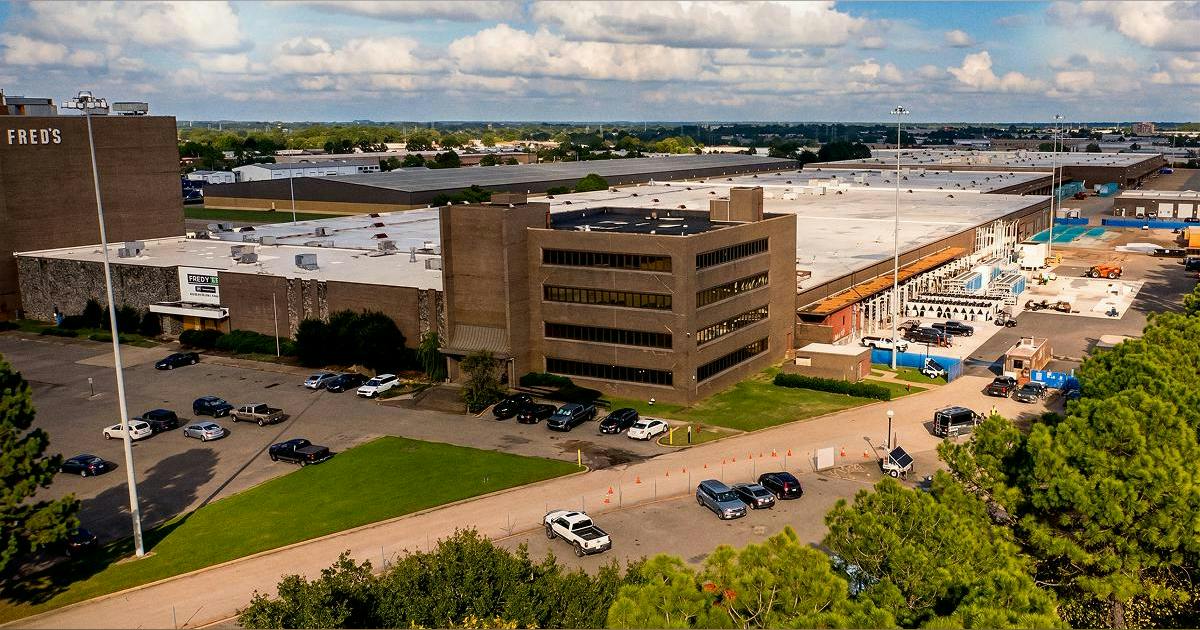
Memphis has emerged as a major center of AI infrastructure development, driven largely by the extraordinary scale of xAI’s Colossus supercomputing operations. But the city’s growing AI computing market extends beyond Elon Musk’s flagship project. At the former headquarters and distribution complex of discount retailer Fred’s, 5C Data Centers is developing another substantial AI computing facility, combining industrial adaptive reuse with a phased expansion strategy and plans for behind-the-meter power generation. On October 6, 2026, a $575 million commercial alteration permit application was filed for the fourth phase of 5C’s MEM01 data center at 4300 Getwell Road. The application covers approximately 504,000 square feet of the property’s 1.1 million-square-foot building, representing the largest construction phase yet proposed at the site. MEM01 is already operating. According to September reporting from The Daily Memphian, 5C had established operations in approximately 200,000 square feet of the former Fred’s property, leaving substantial additional space available for conversion. The latest permit application marks a significant escalation in the scope of the development. The expansion also introduces a major new element to 5C’s power strategy. On October 11, 5C Group Chief Revenue Officer Brad Nimri told The Daily Memphian that the company plans to increase available power at MEM01 from approximately 20 MW to 84 MW over the next six months, using fuel cell technology to supply the additional capacity rather than relying on a corresponding increase in electricity from Memphis Light, Gas and Water (MLGW). Like Colossus, which began with the conversion of a former Electrolux manufacturing facility, 5C’s development reflects the growing role of industrial adaptive reuse in AI infrastructure. The projects differ considerably in scale and their approaches to on-site power generation, but both illustrate the challenge of transforming existing industrial properties into high-density computing environments with substantial electrical requirements. As Memphis considers

Read More »

DCF Global: The Nordics’ AI Boom Meets the Power Test

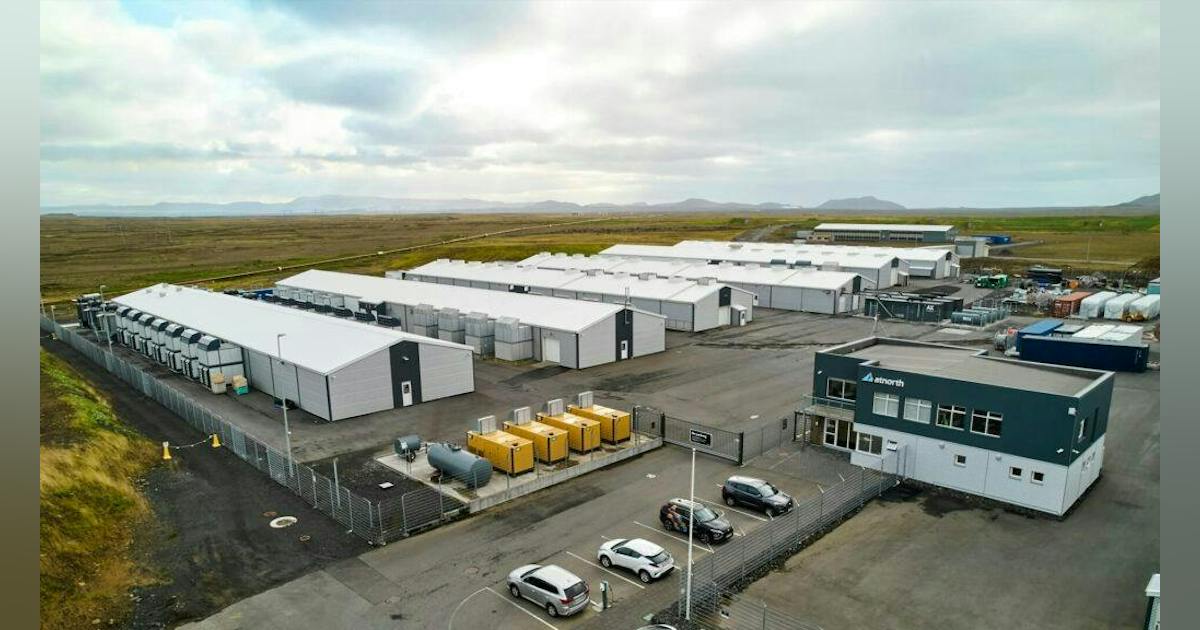
Sustainability Becomes an Infrastructure Requirement Sustainability has long been central to the Nordic data center proposition. Hydropower, nuclear generation, wind resources and relatively cool ambient temperatures provide advantages for operators pursuing lower-carbon operations and efficient facility design. However, the growing concentration of AI infrastructure investment is changing the terms of that discussion. Rather than evaluating sustainability primarily through electricity sourcing or annualized power usage effectiveness, developers increasingly face questions about their contribution to regional energy systems, electricity supply, environmental protection and local economic development. One area where the Nordics offer a particularly developed model is waste-heat reuse. District heating networks are widespread across northern Europe, creating opportunities to recover thermal energy from data centers and distribute it to homes, businesses and other facilities. The approach has a long history in the region, including the Danish and Swedish projects explored by Rich Miller in Data Center Frontier’s earlier coverage of using server heat to warm nearby homes. In Espoo, Finland, atNorth has begun supplying recovered heat from its FIN02 data center to a neighboring retail property operated by Kesko. The system became operational in November 2025, providing a tangible example of data center thermal energy being put to productive use. In Helsinki, AI infrastructure developer OnZero has reached an agreement with municipal energy company Helen to connect a planned AI data center to the district heating network. The project is designed to supply as much as 525,000 MWh of recovered heat annually once operational, with service targeted for 2027. Denmark offers another variation on the approach. atNorth and Selected Group are advancing a project in Ølgod that would use surplus heat from atNorth’s DEN02 campus to support greenhouse food production. In October, Selected Group reported approval of the local development plan. The first phase involves two 10-hectare greenhouses, with the initial

Read More »

AI datacenter capex will far exceed forecast revenue through 2030

Investors are pouring more into AI data center infrastructure than they can hope to recoup by 2030, according to Gartner. “Enterprise and consumer AI revenue will be insufficient to support profitable returns on all planned AI capital expenditures during this period,” said Gartner Senior Director Analyst Will Sommer. AI data center owners would need to generate $8.5 trillion in revenue through 2030 to cover announced capital spending, financing costs and expected investment returns, he said. “However, total enterprise and consumer AI revenue that can be attributed to AI data centers during this period is forecast to reach no more than $3.6 trillion.”

Read More »

OCP 2026: AI Infrastructure Moves From Scaling to Coordination

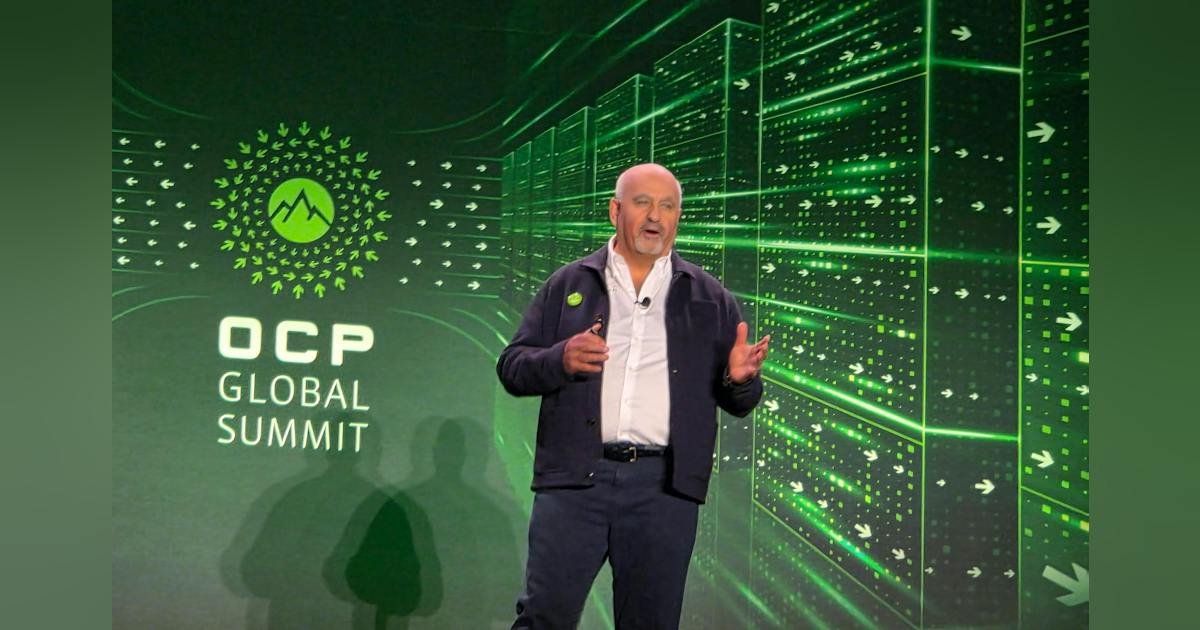
Google: Using AI to Engineer the AI Factory Google Vice President and Engineering Fellow Parthasarathy Ranganathan closed the keynote program by extending the discussion beyond infrastructure designed for AI toward infrastructure increasingly designed and operated with AI. The distinction was central to his presentation. For several years, hyperscalers have pursued progressively more sophisticated custom systems to meet the demands of artificial intelligence. Google’s own approach has included TPUs, custom CPUs, optical networking, power distribution, liquid cooling, and extensive hardware-software co-design. But Ranganathan argued that the next opportunity involves applying AI directly to the processes of systems engineering. Google has already been pursuing the concept of agile and fungible data centers, capable of accommodating changing generations of computing hardware without requiring fundamental redesigns of every supporting system. Its OCP contributions include Project Deschutes, an open cooling distribution unit architecture; Project Brazos, intended to bring liquid cooling capabilities into existing air-cooled facilities; and power distribution specifications supporting higher-voltage DC architectures. Ranganathan also highlighted collaborative work involving Google, Meta, Microsoft, and NVIDIA on specifications intended to improve coordination between AI data centers and utility systems. Those efforts address the physical infrastructure required to support AI. The next stage, he suggested, is to apply AI to the engineering processes themselves. Google is exploring AI-assisted hardware architecture, automated software vulnerability detection and repair, data center climate modeling, and infrastructure capacity planning. Among the examples Ranganathan discussed were agentic systems capable of evaluating computer architecture choices and accelerating engineering workflows, alongside AI-assisted tools for software maintenance and operational optimization. In data center design, the company is applying AI and climate modeling to decisions involving cooling capacity, extreme weather risk, and long-term infrastructure investment. The approach could enable more site-specific designs, reducing the need to rely on broad assumptions about operating conditions throughout a facility’s useful life.

Read More »

OPC Global Summit: News spans AI-optimized hardware, cooling equipment

Arm announces methodology for evaluating CPU performance Arm released a white paper, developed with partners, that proposes a use-case-driven methodology for measuring the CPU’s contribution to agentic AI systems. It defines five representative workload types—software engineering, enterprise operations, financial and scientific research, personal assistants, and robotics—and pairs component-level benchmarking with end-to-end task measurement built on re-playable agent trajectories. Arm also highlighted independent testing by Signal65 that found its AGI CPU could deliver up to twice the rack-level performance of AMD’s Epyc Turin generation server processors across select agentic AI workloads. The comparison emphasizes completed work under rack-level constraints rather than conventional CPU benchmarks alone. In the testing, an Arm AGI CPU averaged 1.7x better performance for tooling, 2.0x for agentic workflows and orchestration, and 2.2x for reasoning and planning in modeled per-rack performance versus an AMD Epyc Turin processor. Arm’s AGI CPU reduces sandbox creation latency by up to 45% versus AMD Epyc 9965, helping agents spin up isolated execution environments faster, according to Arm. Kioxia introduces SSDs for AI Kioxia unveiled its LD4 Series enterprise solid-state drives (SSD), designed to increase flash storage density in hyperscale data centers and high density 1U servers. The drives target read-intensive workloads, including data storage applications supporting artificial intelligence infrastructure.

Read More »

Virginia’s New Data Center Bargain: Power, Permits and the Right to Build

What Took Effect—and What Still Requires Legislation Spanberger laid out the administration’s rationale in announcing the framework: “In the years before I took office, data centers came to Virginia and the Commonwealth did not have a clear or coordinated plan to address their impacts on Virginians — on their electric bills, their water, their land, their air, or their quality of life. That changes today. I have said many times that Virginia should be leading the nation in setting the highest standards for this industry. And now, I believe we are doing just that.” The distinction between what Virginia has already implemented and what the administration intends to pursue is consequential. Executive Order 22 establishes immediate directives for state agencies, while significant portions of the broader Data Center Accountability Framework remain proposals for the 2027 General Assembly or future regulatory action. Among the immediate changes, executive-branch agencies are prohibited from entering into or enforcing new nondisclosure agreements that conceal material information about proposed commercial data centers, public incentives, resource demands or community impacts. Existing contractual commitments are preserved, with limited exceptions contemplated for extraordinary circumstances, including national security. The prohibition does not yet extend automatically to local governments. The order also excludes new data center projects with anticipated peak electrical demand of 25 MW or greater from the Virginia Business Ready Sites Program and similar discretionary state site-readiness and expedited-review assistance. A separate, potentially more consequential proposal would eliminate by-right development approval for data centers using more than 25 MW, requiring local approval even for projects with prior authorizations. That provision has not been enacted statewide and could introduce significant legal questions concerning established development rights. The administration is also accelerating environmental oversight. Within 120 days of the order, the Office of the Chief Energy Officer must publish an initial

Read More »

Microsoft will invest $80B in AI data centers in fiscal 2025

And Microsoft isn’t the only one that is ramping up its investments into AI-enabled data centers. Rival cloud service providers are all investing in either upgrading or opening new data centers to capture a larger chunk of business from developers and users of large language models (LLMs).  In a report published in October 2024, Bloomberg Intelligence estimated that demand for generative AI would push Microsoft, AWS, Google, Oracle, Meta, and Apple would between them devote $200 billion to capex in 2025, up from $110 billion in 2023. Microsoft is one of the biggest spenders, followed closely by Google and AWS, Bloomberg Intelligence said. Its estimate of Microsoft’s capital spending on AI, at $62.4 billion for calendar 2025, is lower than Smith’s claim that the company will invest $80 billion in the fiscal year to June 30, 2025. Both figures, though, are way higher than Microsoft’s 2020 capital expenditure of “just” $17.6 billion. The majority of the increased spending is tied to cloud services and the expansion of AI infrastructure needed to provide compute capacity for OpenAI workloads. Separately, last October Amazon CEO Andy Jassy said his company planned total capex spend of $75 billion in 2024 and even more in 2025, with much of it going to AWS, its cloud computing division.

Read More »

John Deere unveils more autonomous farm machines to address skill labor shortage

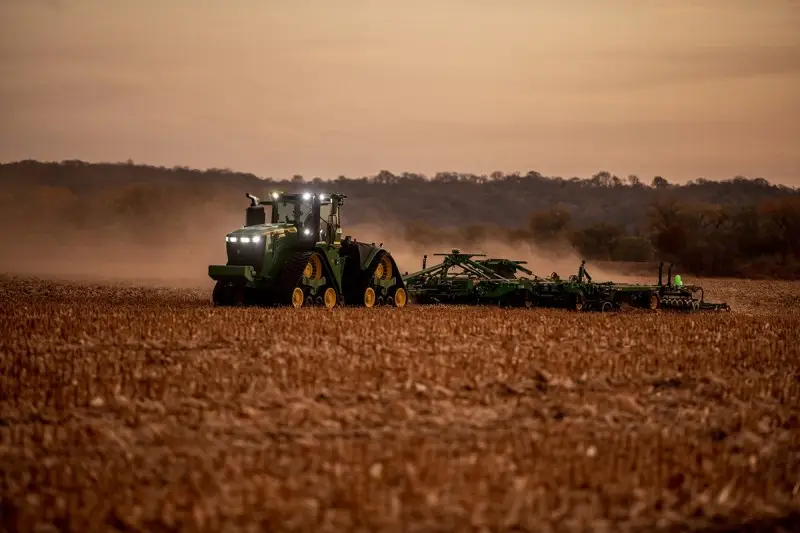
Join our daily and weekly newsletters for the latest updates and exclusive content on industry-leading AI coverage. Learn More Self-driving tractors might be the path to self-driving cars. John Deere has revealed a new line of autonomous machines and tech across agriculture, construction and commercial landscaping. The Moline, Illinois-based John Deere has been in business for 187 years, yet it’s been a regular as a non-tech company showing off technology at the big tech trade show in Las Vegas and is back at CES 2025 with more autonomous tractors and other vehicles. This is not something we usually cover, but John Deere has a lot of data that is interesting in the big picture of tech. The message from the company is that there aren’t enough skilled farm laborers to do the work that its customers need. It’s been a challenge for most of the last two decades, said Jahmy Hindman, CTO at John Deere, in a briefing. Much of the tech will come this fall and after that. He noted that the average farmer in the U.S. is over 58 and works 12 to 18 hours a day to grow food for us. And he said the American Farm Bureau Federation estimates there are roughly 2.4 million farm jobs that need to be filled annually; and the agricultural work force continues to shrink. (This is my hint to the anti-immigration crowd). John Deere’s autonomous 9RX Tractor. Farmers can oversee it using an app. While each of these industries experiences their own set of challenges, a commonality across all is skilled labor availability. In construction, about 80% percent of contractors struggle to find skilled labor. And in commercial landscaping, 86% of landscaping business owners can’t find labor to fill open positions, he said. “They have to figure out how to do

Read More »

2025 playbook for enterprise AI success, from agents to evals

Join our daily and weekly newsletters for the latest updates and exclusive content on industry-leading AI coverage. Learn More 2025 is poised to be a pivotal year for enterprise AI. The past year has seen rapid innovation, and this year will see the same. This has made it more critical than ever to revisit your AI strategy to stay competitive and create value for your customers. From scaling AI agents to optimizing costs, here are the five critical areas enterprises should prioritize for their AI strategy this year. 1. Agents: the next generation of automation AI agents are no longer theoretical. In 2025, they’re indispensable tools for enterprises looking to streamline operations and enhance customer interactions. Unlike traditional software, agents powered by large language models (LLMs) can make nuanced decisions, navigate complex multi-step tasks, and integrate seamlessly with tools and APIs. At the start of 2024, agents were not ready for prime time, making frustrating mistakes like hallucinating URLs. They started getting better as frontier large language models themselves improved. “Let me put it this way,” said Sam Witteveen, cofounder of Red Dragon, a company that develops agents for companies, and that recently reviewed the 48 agents it built last year. “Interestingly, the ones that we built at the start of the year, a lot of those worked way better at the end of the year just because the models got better.” Witteveen shared this in the video podcast we filmed to discuss these five big trends in detail. Models are getting better and hallucinating less, and they’re also being trained to do agentic tasks. Another feature that the model providers are researching is a way to use the LLM as a judge, and as models get cheaper (something we’ll cover below), companies can use three or more models to

Read More »

OpenAI’s red teaming innovations define new essentials for security leaders in the AI era

Join our daily and weekly newsletters for the latest updates and exclusive content on industry-leading AI coverage. Learn More OpenAI has taken a more aggressive approach to red teaming than its AI competitors, demonstrating its security teams’ advanced capabilities in two areas: multi-step reinforcement and external red teaming. OpenAI recently released two papers that set a new competitive standard for improving the quality, reliability and safety of AI models in these two techniques and more. The first paper, “OpenAI’s Approach to External Red Teaming for AI Models and Systems,” reports that specialized teams outside the company have proven effective in uncovering vulnerabilities that might otherwise have made it into a released model because in-house testing techniques may have missed them. In the second paper, “Diverse and Effective Red Teaming with Auto-Generated Rewards and Multi-Step Reinforcement Learning,” OpenAI introduces an automated framework that relies on iterative reinforcement learning to generate a broad spectrum of novel, wide-ranging attacks. Going all-in on red teaming pays practical, competitive dividends It’s encouraging to see competitive intensity in red teaming growing among AI companies. When Anthropic released its AI red team guidelines in June of last year, it joined AI providers including Google, Microsoft, Nvidia, OpenAI, and even the U.S.’s National Institute of Standards and Technology (NIST), which all had released red teaming frameworks. Investing heavily in red teaming yields tangible benefits for security leaders in any organization. OpenAI’s paper on external red teaming provides a detailed analysis of how the company strives to create specialized external teams that include cybersecurity and subject matter experts. The goal is to see if knowledgeable external teams can defeat models’ security perimeters and find gaps in their security, biases and controls that prompt-based testing couldn’t find. What makes OpenAI’s recent papers noteworthy is how well they define using human-in-the-middle

Read More »