BUFFALO, N.Y. — In the race to build AI infrastructure, the industry often focuses on GPUs, power availability, and the massive capital investments reshaping the digital infrastructure landscape.
But a walk through Motivair’s manufacturing facility in Buffalo, as provided on the eve of the Motivair-Schneider Electric Global Press Event’s tour of the nearby Terawulf Lake Mariner AI campus, offers a reminder that another critical component of the AI boom is being built one coolant distribution unit at a time.
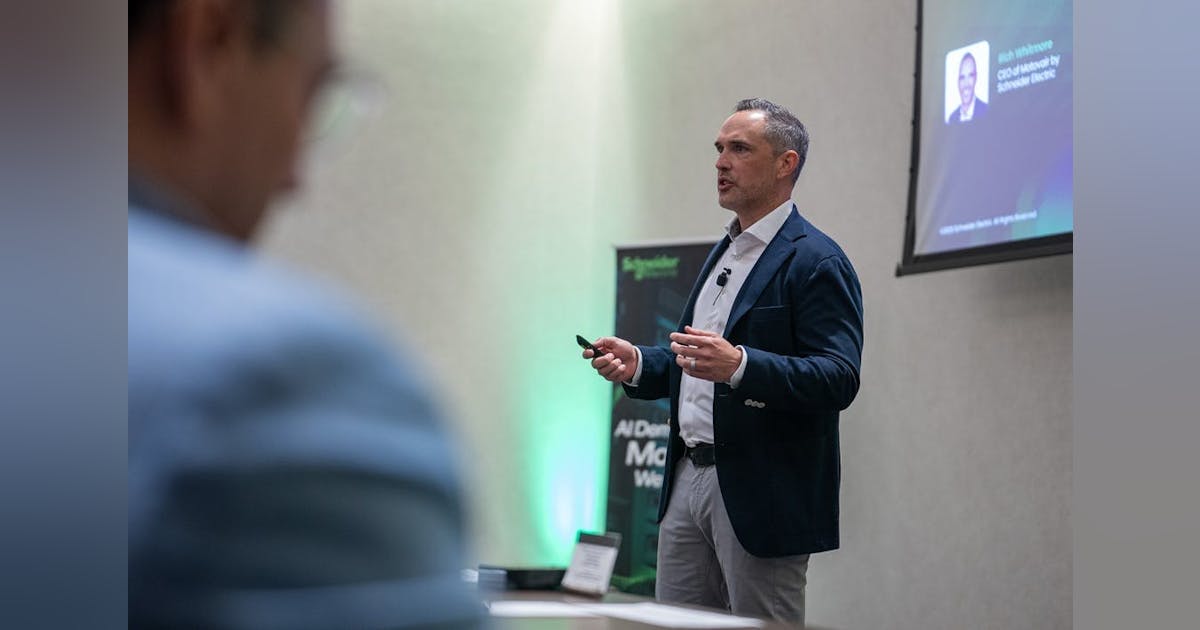
During a recent Data Center Frontier Show podcast recorded at Motivair’s Buffalo headquarters, CEO Rich Whitmore described a reality that is becoming bedrock across the industry: Liquid cooling is now very far from being an emerging technology. It is now a prerequisite for deploying the most advanced AI systems.
“You cannot deploy AI servers—at least the cutting-edge AI servers—without liquid cooling,” Whitmore said.
That observation may be obvious to infrastructure veterans. Yet it points to a larger shift now underway across the data center ecosystem. As AI workloads drive rack densities beyond the practical limits of air cooling, thermal infrastructure has moved from a supporting role to a primary design consideration.
For Whitmore and Motivair, that transition did not begin with ChatGPT.
From Supercomputing to Commercial AI
Long before AI became the defining growth story of the data center sector, Motivair was developing liquid cooling systems for high-performance computing and supercomputing environments.
Whitmore describes today’s AI market as less of a technological revolution than a commercialization of capabilities that have existed for years inside elite computing environments.
“We cut our teeth in high-performance computing and supercomputing,” Whitmore explained. “What we’re seeing today as we go into the AI era is really a commercialization of traditional supercomputing.”
That experience has positioned Motivair differently than many newer entrants rushing into the liquid cooling market.
Rather than reacting to current demand, the company develops its cooling technologies against future silicon roadmaps. Product decisions—from capacity levels to physical form factors—are driven by where processors are headed rather than where they are today.
The implication is significant. Cooling vendors must often have products production-ready six to eighteen months before the chips they are designed to support reach market availability.
“We have to be developing product 6, 12, 18 months in advance,” Whitmore said. “Our cooling technology has to be ready when those chips launch.”
The Industrialization of Liquid Cooling
That forward-looking approach helps explain one of Motivair’s most recent product introductions.
The company’s new MCDU-70 platform delivers approximately 2.5 megawatts of cooling capacity, a design point Whitmore says was intentionally aligned with emerging AI infrastructure architectures.
The decision was not simply about increasing cooling capacity.
Instead, it reflects a growing emphasis on standardization and repeatability at a time when AI infrastructure is being deployed at unprecedented speed.
A 2.5 MW cooling block aligns naturally with increasingly common 2.5 MW electrical lineups within modern AI data centers. Staying within those parameters allows operators to leverage commercially available power infrastructure rather than moving into highly customized electrical equipment that can slow deployment timelines.
The lesson mirrors one increasingly heard throughout the AI infrastructure ecosystem: scale is important, but standardized scale is often more valuable than bespoke scale.
That philosophy is also evident in Motivair’s manufacturing strategy.
Since becoming part of Schneider Electric in 2025, Motivair has expanded production capabilities beyond Buffalo to facilities near Venice, Italy, and in Bangalore, India. Products are now industrialized for global manufacturing while maintaining identical specifications across regions.
The objective is straightforward: ensure hyperscale and AI customers can access the same cooling platforms regardless of deployment geography.
“The industry needs the same exact product shipping to different geographies,” Whitmore said.