Stay Ahead, Stay ONMINE

King Charles visits offshore turbine monopile factory

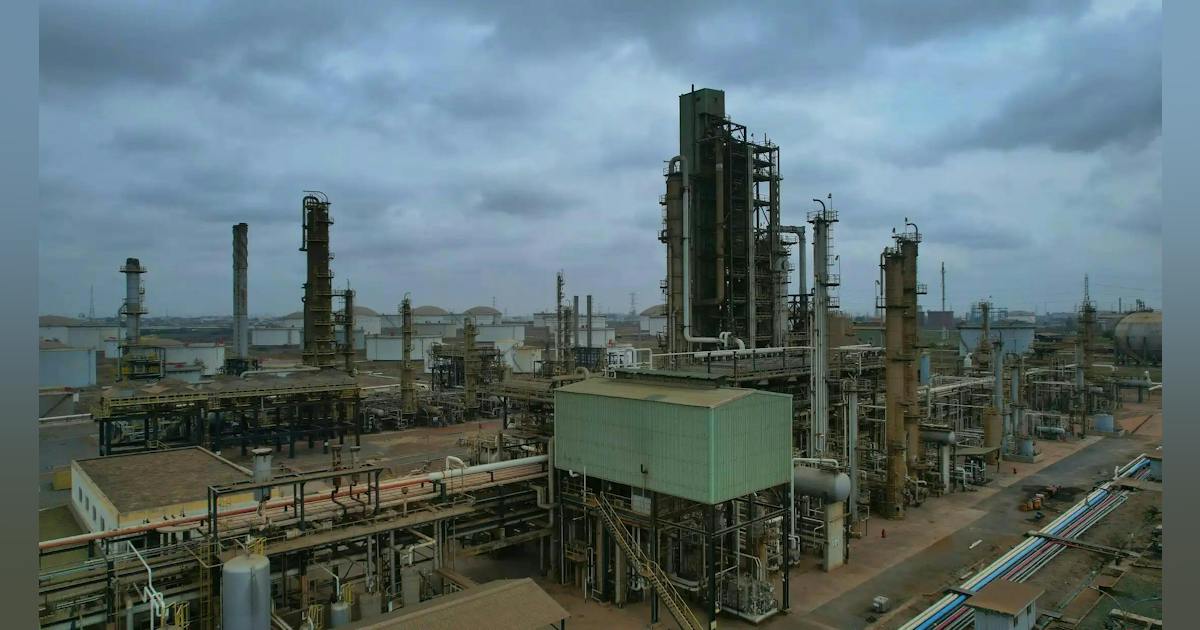
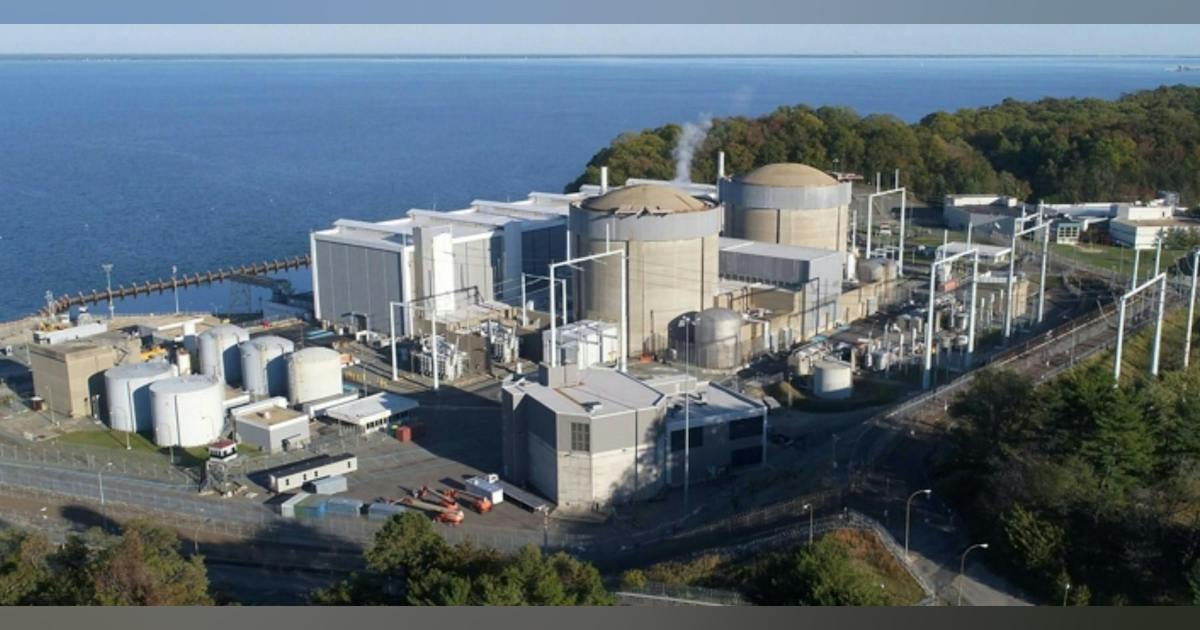
King Charles III visited SeAH Wind’s monopile factory in Teesside as part of a royal visit to Teesside. Construction of the £950m factory on the banks of the river Tees is nearly completed, and is expected to begin operations building monopiles for offshore wind turbines later this year. As part of National Apprenticeship Week, the […]

King Charles III visited SeAH Wind’s monopile factory in Teesside as part of a royal visit to Teesside.

Construction of the £950m factory on the banks of the river Tees is nearly completed, and is expected to begin operations building monopiles for offshore wind turbines later this year.

As part of National Apprenticeship Week, the King met many people training for roles in the wind turbine manufacturing sector, with a focus on welding and the heavy engineering skills required for monopile construction.

He unveiled a plaque commemorating his visit in front of staff at the factory.

Tees Valley Mayor Ben Houchen said: “It’s a great honour and a privilege to welcome His Majesty through our airport to our mighty region.

It marked nine years since the King’s last visit to the region, and to the site, which was then home to the disused Redcar steelworks. The steelworks closed in 2015 leading to the loss of 2,000 jobs.

Lord Houchen chairs public body the South Tees Development Corporation (STDC), which has been responsible for decontaminating the site, known as Teesworks, and clearing it ready for redevelopment. Teesworks hopes to become a centre-point for the UK’s green energy sector.

In November, the UK government committed to support Net Zero Teesside – a gas-fired power station also at Teesworks, with carbon capture and storage to be added. Construction has begun on the power station.

“We’ve made huge strides across Teesside, Darlington and Hartlepool since his last visit.

Steelworks site revival

“We hit a new low when the steelworks shut, but from the work we’ve done to revive our former steelworks as a powerhouse for thousands of good well-paid jobs, to the huge efforts we’re taking to turn around our airport and help it grow and thrive through more flights, it’s wonderful to show our King how far we’ve come.

“It does not go unnoticed the attention His Majesty has paid to our region and I am forever grateful for his support.

“We’ve laid the groundwork and come a long way – and I sincerely hope we can welcome the King and Queen back soon to show them just how much further we can go.”

Teesworks Ltd is the company vehicle responsible for marketing the site. It was a 50-50 joint venture between STDC and two local businessmen, Chris Musgrave and Martin Corney. The businessmen were later given 90% equity in the company for free, leading to accusations of corruption.

A government review into the deal published in January 2024 found no evidence of corruption or illegality, but raised concerns about governance from the public sector, and the lack of liabilities taken on by the private partners.

Teesworks Ltd CEO Martin Corney said: “We were thrilled that the King was able to visit Teesworks and see for himself the incredible progress which has been made in transforming the site into an internationally significant clean energy hub.

“Things have changed an awful lot since the King was last here and not just in terms of the site itself – speaking to the apprentices on site, the King was able to hear at firsthand how Teesworks and developments like SeAH Wind are creating brighter futures for the people of this area.

“With the King’s keen interest in the environment, it was great for him to see how the SeAH Wind factory is close to completion and to becoming a major centre for producing monopiles for offshore wind farms.”

Recommended for you

Shape
Shape
Stay Ahead

Explore More Insights

Stay ahead with more perspectives on cutting-edge power, infrastructure, energy,  bitcoin and AI solutions. Explore these articles to uncover strategies and insights shaping the future of industries.

Shape

SonicWall reports two major security holes under active exploit

Repeats a June attack chain What makes this issue especially significant is the timing and the pattern, he pointed out. “This is essentially a rerun of what happened with the same appliance line just weeks ago,” he said, citing the July disclosure of a “nearly identical” SSRF-plus-command-injection chain in SMA1000

Read More »

Arista warns customers ahead of next week’s security disclosures

Arista Networks has taken the unusual step of warning customers that next week, it will release multiple security advisories affecting Arista EOS and VeloCloud. AI-driven changes to its vulnerability detection processes have resulted in a higher-than-usual volume of security updates, the company says, and the advance notification is aimed at

Read More »

Palo Alto Networks buys Console to boost agentic security

“We built Console around a simple idea: people should be able to express an operational goal, and intelligent software should handle the complexity required to achieve it,” said Console CEO and co-founder Andrei Serban in a statement. “Our customers have already proven that agents can dramatically slash overhead and transform

Read More »

President Trump’s Energy Dominance Agenda is Delivering for American Energy Workers

WASHINGTON—This Labor Day, the U.S. Department of Energy (DOE) is celebrating the hardworking men and women who power America with the release of the 2026 U.S. Energy and Employment Report (USEER). The annual report highlights strong job growth across critical energy sectors at the heart of President Trump’s Energy Dominance agenda. America’s most reliable energy sectors are adding jobs and powering industries across the country. These critical sectors deliver the affordable, reliable, and secure energy that American families, businesses, and industries depend on. After years of decline under the previous administration, America’s coal and nuclear power workforces are growing again under President Trump’s leadership. “Energy is the sector that enables every other sector of our economy, and America’s energy workers make it all possible,” said U.S. Secretary of Energy Chris Wright. “These hardworking men and women keep our lights on, our factories running, and our economy growing. President Trump’s Energy Dominance agenda is putting them first and delivering the affordable, reliable, and secure energy America needs.” Energy careers are also delivering bigger paychecks for American workers. The median energy-sector salary reached $63,000—24% higher than the U.S. median salary. America’s growing energy needs are creating the jobs of the future. The 2026 USEER’s new Future Outlook chapter highlights rising demand for skilled energy workers and growing competition for talent across energy and other expanding industries. These trends are opening new pathways to high-paying, skilled careers for American workers. As energy demand grows, America’s energy workforce will power the next generation of American industry, innovation, and economic growth. Highlights from the report include:  •    The median energy-sector salary was $63,000, 24% higher than the national median salary of $51,000. •    Natural gas transmission and distribution added 12,500 workers, growing employment by 5%. •    Nuclear power added 2,300 workers, growing employment by 4%. •    Coal power generation added 2,800 workers, growing

Read More »

Hydrocarbons and Geothermal Energy Office Issues Request for Information to Advance Private Investment in Innovative American Energy Technologies

WASHINGTON — The U.S. Department of Energy’s (DOE) Hydrocarbons and Geothermal Energy Office (HGEO), in collaboration with the Office of Technology Commercialization, today announced a Request for Information (RFI) seeking stakeholder input on opportunities to better connect private capital and public-private partnership programs with coal, oil and gas, and geothermal energy technologies.  The RFI supports President Trump’s American Energy Dominance agenda by strengthening connections among American energy innovators, industry and private capital to accelerate commercialization, lower energy costs, strengthen reliability and energy security, and power American prosperity. This effort builds on the recently announced Small Business Investment Company-Energy (SBIC-E) Initiative, announced by U.S. Energy Secretary Chris Wright and SBA Administrator Kelly Loeffler to mobilize private capital for American energy technologies and businesses.  “President Trump has made American energy innovation and dominance a priority, and connecting promising technologies with the right technical expertise, industry partners and sources of capital is critical to delivering on that vision,” said DOE Acting Assistant Secretary for the Hydrocarbons and Geothermal Energy Office Curt Coccodrilli. “Through this Request for Information, we would like to hear directly from investors, innovators and industry about the opportunities and challenges they see in commercializing coal, oil and gas, and geothermal energy technologies.” “Too often, promising American technologies face barriers between development and commercial deployment,” said Anthony Pugliese, DOE Chief Commercialization Officer and Director of the Office of Technology Commercialization. “We want to better understand where those barriers exist and how DOE can work with the private sector to create stronger pathways to market, helping more American energy technologies scale, compete, and succeed.”  DOE is soliciting feedback from investors, industry, academia, research laboratories, government agencies and other stakeholders to better understand investor interest, barriers and opportunities related to the development and commercialization of subsurface energy technologies.   Areas of interest include, but are not

Read More »

Energy Department Announces Geothermal Center of Excellence to Advance Geothermal Technology Innovation and Development

WASHINGTON — The U.S. Department of Energy’s (DOE) Hydrocarbons and Geothermal Energy Office today established a Geothermal Center of Excellence (CoE) to advance President Trump and Secretary Wright’s commitment to delivering affordable, reliable, and secure energy.  The Center will unite expertise and world-class capabilities from across DOE’s National Laboratories to accelerate the discovery and development of gigawatt-scale geothermal energy, resource discovery, and commercial development.  The National Laboratory of the Rockies (NLR) will lead the consortium, with support from the National Energy Technology Laboratory (NETL).  “America has vast geothermal resources beneath our feet that can provide reliable, around-the-clock energy while strengthening our energy dominance,” said DOE Under Secretary for Energy Kyle Haustveit. “Under President Trump’s leadership, the Geothermal Center of Excellence will leverage the world-class scientific and engineering expertise of our national laboratories in partnership with industry to unlock gigawatt-scale power generation, expand American energy production, and deliver more affordable, reliable, and secure energy to the American people.” DOE formally launched the Center at NLR’s campus in Golden, Colorado, bringing together DOE leadership, elected officials, NLR and NETL leadership, laboratory staff, and industry representatives to advance the Center’s vision and priorities.  “The Geothermal Center of Excellence marks an important step in our work to accelerate gigawatt-scale geothermal energy on the U.S. grid,” said DOE Acting Assistant Secretary for the Hydrocarbons and Geothermal Energy Office Curt Coccodrilli. “By driving innovation and enhancing lab-industry collaboration, the Center will help us achieve our goals to enhance reliable baseload power, strengthen grid reliability, and improve long-term energy security.” The Center will also serve as industry’s main entry point to DOE’s National Laboratories. An Industry Advisory Board will provide objective insight into industry-relevant geothermal research needs, accelerate industry-lab partnerships, and advise on Center priorities.  For more information, contact geo.centerofexcellence@nlr.gov.

Read More »

San Matías Pipeline secures $900 million for Vaca Muerta-to-LNG gas pipeline

The remaining $400 million will be contributed by the consortium’s shareholders: Pan American Energy, YPF, Pampa Energía, Harbour Energy, and Golar LNG. The 472-km, 36-in. OD San Matías Pipeline, which will originate at Tratayén, one of Vaca Muerta’s main gas hubs, is designed to transport 27 million cu m/d (MMcmd) of natural gas, aligned with the gas requirements of the two FLNG units. Hilli Episeyo will have LNG production capacity of 2.45 million tonnes/year (tpy) and will require about 11.5 MMcmd of feed gas. Esperanza, previously known as MKII, will add another 3.5 million tpy and require close to 16 MMcmd of feed gas. Hilli Episeyo is expected to begin operations in 2027, followed by Esperanza in 2028. The project also will include a compressor station with about 46,000 hp of installed capacity to maintain required pressure and flow across the system. Pipeline construction has been awarded to the SICIM-Víctor Contreras consortium, while OPS will be responsible for the Allen compressor station. IEB Construcciones was selected to manage and coordinate the project’s different construction fronts. In August, the first 36-in. line pipe manufactured in India began arriving at the Port of San Antonio Este. Construction is scheduled to begin in August 2026, with completion targeted for mid-2028. The project was admitted to Argentina’s Large Investment Incentive Regime (RIGI) in June and has environmental impact approvals from Neuquén and Río Negro provinces.

Read More »

Petrobras readies for two more FPSOs to sail away to Búzios field

Petróleo Brasileiro SA (Petrobras) is closer to adding production from Búzios oil field offshore Brazil, with the P-80 and P-82 floating production, storage, and offloading (FPSO) units entering the final phase of module integration ahead of their departure from a Singapore shipyard and planned startup in 2027. The units are expected to sail to Brazil in the coming weeks to operate in Santos basin pre-salt. P-80 (Búzios 9) will be the first to leave the Seatrium’s Tuas Boulevard Yard. The P-80 process modules were manufactured in Brazil at the Seatrium BrasFELS shipyard in Angra dos Reis. The P-82 modules were manufactured at the Seatrium Aracruz shipyard in Espírito Santo. Construction work for the FPSOs also took place in China, Singapore, and Indonesia. Subsequently, the modules were transported to Singapore for final integration. Each platform has capacity to produce 225,000 bo/d and process 12 million cu m/d. Together, P-80 and P-82 are expected to add 450,000 b/d, an approximate 34% increase to the installed production capacity at the field when operational. Each vessel also has water injection capacity of about 250,000 b/d. P-80 and P-82 each have oil storage capacity of about 2.5 million bbl. Petrobras President Magda Chambriard said the units “make up a new cycle of six units with high production capacity, started with the FPSO Almirante Tamandaré, which operates in Búzios above the project capacity, with record production of 270,000 bo/d.” Subsequent to the P-80 and P-82, the operator expects to complete P-83, P-84, and P-85, which will operate in fields Búzios, Atapu, and Sépia, respectively.  Búzios, which lies in 1,900-2,200 m of water, will produce from eight FPSOs with the addition of P-80 and P-82. The field has already surpassed 1.2 million b/d of oil produciton. 

Read More »

Matador CFO: Hormuz resolution won’t change ‘grower’ mindset

@import url(‘https://fonts.googleapis.com/css2?family=Inter:wght@100..900&display=swap’); .ebm-page__main h1, .ebm-page__main h2, .ebm-page__main h3, .ebm-page__main h4, .ebm-page__main h5, .ebm-page__main h6 { font-family: Inter; } body { line-height: 150%; letter-spacing: 0.025em; } button, .ebm-button-wrapper { font-family: Inter; } .label-style { text-transform: uppercase; color: var(–color-grey); font-weight: 600; font-size: 0.75rem; } .caption-style { font-size: 0.75rem; opacity: .6; } #onetrust-pc-sdk [id*=btn-handler], #onetrust-pc-sdk [class*=btn-handler] { background-color: #c19a06 !important; border-color: #c19a06 !important; } #onetrust-policy a, #onetrust-pc-sdk a, #ot-pc-content a { color: #c19a06 !important; } #onetrust-consent-sdk #onetrust-pc-sdk .ot-active-menu { border-color: #c19a06 !important; } #onetrust-consent-sdk #onetrust-accept-btn-handler, #onetrust-banner-sdk #onetrust-reject-all-handler, #onetrust-consent-sdk #onetrust-pc-btn-handler.cookie-setting-link { background-color: #c19a06 !important; border-color: #c19a06 !important; } #onetrust-consent-sdk .onetrust-pc-btn-handler { color: #c19a06 !important; border-color: #c19a06 !important; } Matador Resources Co. isn’t planning for a substantive strategic change should the Iran war be concluded and commodity flows through the Strait of Hormuz climb back to their historical volume, the company’s chief financial officer told investors this week. Chris Calvert said the Dallas-based company’s leaders had been planning for 2026 production growth of 3% before the United States and Israel attacked Iran in late February. At the prevailing oil prices then, Matador would’ve generated about $500 million in free cash flow, Calvert added Aug. 27 at the Midwest Ideas investor conference in Chicago. That approach didn’t change much when the war drove oil prices up about 50% this spring, Calvert said. Matador teams didn’t rush out to add rigs but instead focused on “more ancillary work” that helped maximize production from existing assets and new wells that had been in the company’s plans. The same mentality is driving work today as the price of a barrel of West Texas Intermediate appears to have stabilized between $80 and $85. “Even when the Strait of Hormuz is settled and pricing falls – […] maybe it’s in the 70s, maybe it’s in the 60s–we still see ourselves as

Read More »

Dell’s $95B AI backlog shows the infrastructure crunch is far from over

“AI requires modern, disaggregated architectures that keep data accessible and in motion across compute, storage, and networking,” Clarke noted. It is much more than assembling and delivering components; AI deployments require significant engineering, design, and deployment expertise. Some customer engagements, in fact, require upwards of 50 unique designs as enterprises optimize for workload performance, power, cooling and the data center environment, he claimed. Enterprises want new servers with more cores, more dynamic random-access memory (DRAM), and more storage. However, the constraints remain the same: “DRAM, DRAM, DRAM, followed by NAND, NAND, NAND [flash memory],” Clarke said. There are “spotty” CPU and disk drive shortages, and constraints all the way down the supply chain, from microcontrollers to drives to transistors. Large enterprises and multinational corporations across the globe “would prefer to have products now if we had the supply,” he said. “We are supply constrained in the sense of what we can build in any given quarter.”

Read More »

VMware by Broadcom: Product, service and support news

Customer concerns loom as VMware Explore event approaches Aug. 19, 2024: This year’s VMware Explore marks the first time for the flagship customer event since Broadcom finalized its acquisition of VMware last November. Enterprise customers have questions about VMware’s future direction, licensing changes, and product roadmap following Broadcom’s takeover. Customers want to continue to see innovation across the VMware portfolio, says one analyst. They also want to see Broadcom focus on integration, interface design, and an easier adoption path.  Broadcom distrust drives sales for VMware competition Aug. 14, 2024: Concerns about the new direction VMware is taking are driving some enterprise customers to consider alternative platforms from vendors such as Scale Computing, Nutanix and Oxide Computer. Scale Computing said in its most recent quarterly earnings announcement that sales have taken off and its new customers have doubled over the past year, thanks in part to Broadcom’s changes to VMware sales operations. Nutanix hunts disgruntled VMware customers July 01, 2024: Nutanix began aggressively courting VMware customers who might be open to jumping ship in the wake of VMware’s purchase by Broadcom and some of the unpopular moves that followed. In addition, Nutanix recently signed key partnerships with some unlikely on-and-off competitors: Dell, Cisco and HPE.  Broadcom tosses VMware users a bone, extends vSphere 7 support six months July 25, 2024: Broadcom has announced that VMware vSphere 7.x users will get six additional months of support for the product. VMware vSphere 7, which was launched in 2020, was scheduled to go out of support in April 2025 but will now be maintained until October 2025. Broadcom bolsters VMware Edge Compute Stack June 26, 2024: A slew of updates in VMware ECS 3.5 are aimed at helping customers more easily manage edge devices, applications, and infrastructure across multiple locations. Updates include zero-touch orchestration capabilities, pull-based architecture, and edge

Read More »

AMD Helios Takes AI Infrastructure Fight to Rack Scale

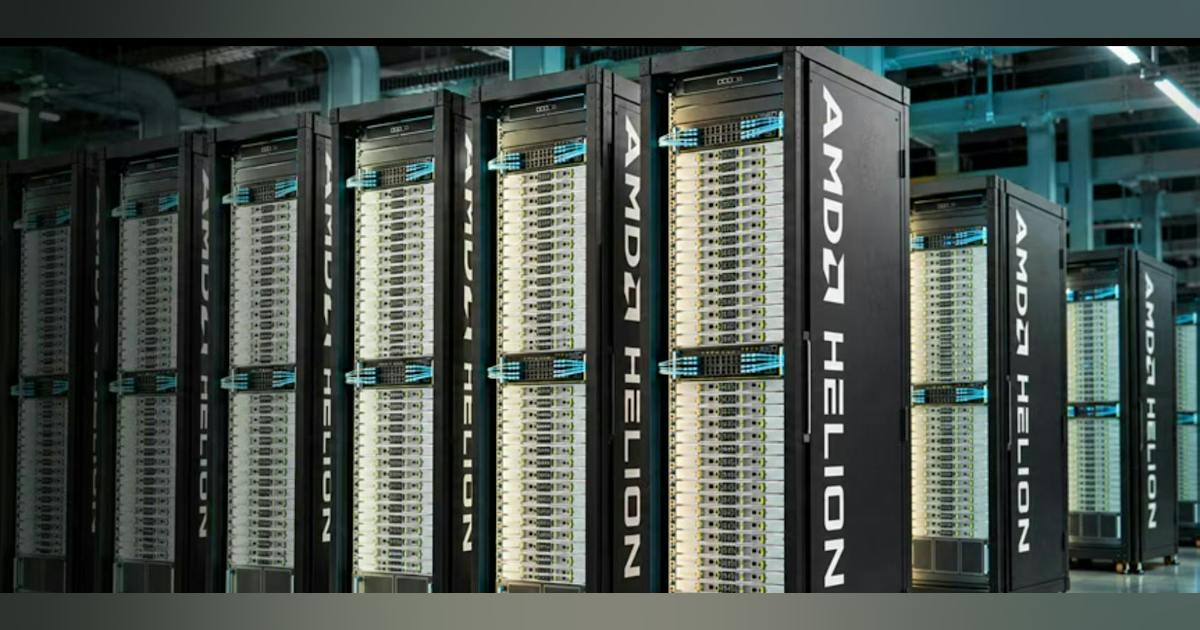
AMD is escalating its challenge to Nvidia with Helios, a rack-scale AI system that puts the company squarely into the race to define how the next generation of AI factories are built. Unveiled in production form at AMD’s Advancing AI 2026 event in San Francisco, Helios combines 72 Instinct MI455X GPUs with sixth-generation EPYC “Venice” CPUs, Pensando networking and AMD’s ROCm software stack. The significance goes beyond another generation of faster accelerators. Like Nvidia’s Vera Rubin platform, Helios treats the rack as an integrated compute system in which GPUs, CPUs, memory, networking, power delivery and cooling increasingly have to be engineered together. For data center operators, that means the competitive battle between the two chip companies is moving directly into infrastructure design. AMD said Helios is now in production, with deployments beginning during the second half of 2026. The Rack Becomes the System Helios is built around AMD’s Instinct MI455X, a liquid-cooled accelerator based on the company’s CDNA 5 architecture and equipped with HBM4 memory. A complete Helios rack delivers 72 GPUs along with EPYC host CPUs and Pensando networking for front-end, scale-up and scale-out traffic. AMD is positioning the platform for both large-scale training and increasingly important inference workloads. AMD says Helios can deliver up to 30% more inference tokens per dollar than a competing system. The company also claims the MI455X provides more peak AI compute and substantially greater memory capacity than Nvidia’s Rubin GPU. Those numbers are AMD benchmarks rather than independent comparisons. But the larger architecture may matter more than the percentages. AI infrastructure is rapidly moving beyond the model of servers being installed as largely independent pieces of IT equipment. Accelerators have to exchange enormous volumes of data with each other while CPUs orchestrate workloads and networking connects increasingly large clusters across rows, halls and

Read More »

Moses Lake Moves From Bitcoin to AI and HPC

Moses Lake and the Quincy Effect Moses Lake should not be understood as an isolated rural data center project. It sits within the larger Grant County infrastructure ecosystem that helped make nearby Quincy one of the defining hyperscale markets of the cloud era. Keel has called Moses Lake “adjacent to one of the most proven data center markets in the United States,” noting that hyperscale infrastructure has operated around Quincy for nearly two decades. In its Q1 remarks, management argued that increasingly constrained regional power leaves operators seeking incremental Pacific Northwest capacity with fewer options. The Grant County Economic Development Council’s data center inventory includes Microsoft, NTT Data, Sabey, Vantage, Intuit and other operators. The organization counts more than 1.5 million square feet of data center operations in the county and points to a diverse fiber network and Grant County PUD’s Columbia River hydroelectric resources as core advantages. That existing cluster changes the equation for an 18-MW project. The headline AI developments of 2026 are increasingly measured in hundreds of megawatts or gigawatts. But another market exists underneath those megacampus announcements: operators that need tens of megawatts in the right geography on a timeline measured in quarters rather than many years. An 18-MW facility with power, fiber, equipment and construction underway can therefore be strategically more relevant than its relatively modest capacity suggests. Keel had previously secured an option for another 10 MW near Moses Lake, but management said during its second-quarter call that it has relinquished that option and is now focused exclusively on the existing 18 MW. The decision further distinguishes Moses Lake from the industry’s race to advertise ever-larger pipelines. This project is about getting capacity online. A Second Life for Crypto Power That may ultimately be the larger Moses Lake story. Bitcoin miners assembled portfolios around

Read More »

ISE Expo 2026: DCF Takes Stage with JLL, TIA

AI Infrastructure’s New Calculus: Speed, Quality and the Race to Revenue NASHVILLE — The defining question in data center development has become brutally simple: How quickly can a site get to revenue? Power availability sits at the center of that calculation. But as AI pushes development into new geographies and compresses construction schedules, an increasingly complicated set of infrastructure dependencies sits behind the megawatts — equipment, suppliers, construction capacity, fiber, optical connectivity, workforce and the quality systems needed to make all of it work reliably. That tension framed a Data Center Frontier-led fireside discussion at EndeavorB2B’s ISE Expo 2026 between Sean Farney, Vice President of Data Center Strategy at JLL, and Dave Stehlin, CEO of the Telecommunications Industry Association (TIA). The conversation began with a new data center quality initiative. It quickly expanded into something larger: an examination of what happens when time to revenue becomes the organizing principle for an entire infrastructure industry. “There is absolutely, positively no room for pause right now,” Farney said. DCE 9000 Meets the AI Buildout For TIA, the answer begins with a problem Google brought to the association last year. According to Stehlin, Google was seeing recurring quality and delivery problems among operational technology suppliers — the companies providing equipment such as generators, cooling systems and other physical infrastructure required to make a data center operate. TIA responded by developing DCE 9000, or Data Center Excellence 9000, a third-party-certifiable quality management standard for the data center infrastructure supply chain. Stehlin said more than 70 companies are now participating in the effort, ranging from hyperscalers and data center operators to major infrastructure manufacturers. The first draft is expected in September. That is an unusually compressed development cycle for an industry standard. “Typically standards take five years to get implemented,” Stehlin said. “In nine months, we’re

Read More »

The Phantom Data Center Effect: When Perception Precedes Project Reality

Moving Beyond Speculation The answer is not simply earlier marketing campaigns or more aggressive public relations programs. Effective engagement requires understanding local concerns, motivations and political dynamics—and recognizing when community opposition reflects a durable constraint rather than a communications problem. We need to realize when no means no, and not interpret it as “try harder.” Phantom perception also can’t be handled by any one operator in any one market; this must be a collective, such as a crowd-sourced data platform, market by market. What our industry needs are clearer frameworks for evaluating digital infrastructure against these additional community-readiness criteria, because speculation is increasingly filling information gaps before formal projects reach the public process. Organizations such as OIX have begun working toward that objective. Its Digital Infrastructure Framework is modeled on traditional master planning and is intended to help communities evaluate what infrastructure they have, what they need and what they want as they plan for future technology requirements. The framework includes assessment criteria spanning investment readiness, policy, risk, sustainability and resilience. Greater transparency can narrow the gap between perception and reality. But greater transparency will not eliminate speculation, and unfortunately, it also won’t eliminate fear. Large infrastructure projects have always attracted public interest and scrutiny, and data centers are unlikely to become invisible again as AI demand accelerates. The question is how the industry responds to that visibility. The Next Stage of Data Center Development Community reaction to perceived data center development represents another potential source of site-selection intelligence. If communities begin reacting to a project before a developer has formally advanced one, that response can offer an early indication of whether a market is receptive to large-scale digital infrastructure or already approaching its political limit. This gives operators and investors another axis to measure: not just megawatts, fiber routes,

Read More »

Microsoft will invest $80B in AI data centers in fiscal 2025

And Microsoft isn’t the only one that is ramping up its investments into AI-enabled data centers. Rival cloud service providers are all investing in either upgrading or opening new data centers to capture a larger chunk of business from developers and users of large language models (LLMs).  In a report published in October 2024, Bloomberg Intelligence estimated that demand for generative AI would push Microsoft, AWS, Google, Oracle, Meta, and Apple would between them devote $200 billion to capex in 2025, up from $110 billion in 2023. Microsoft is one of the biggest spenders, followed closely by Google and AWS, Bloomberg Intelligence said. Its estimate of Microsoft’s capital spending on AI, at $62.4 billion for calendar 2025, is lower than Smith’s claim that the company will invest $80 billion in the fiscal year to June 30, 2025. Both figures, though, are way higher than Microsoft’s 2020 capital expenditure of “just” $17.6 billion. The majority of the increased spending is tied to cloud services and the expansion of AI infrastructure needed to provide compute capacity for OpenAI workloads. Separately, last October Amazon CEO Andy Jassy said his company planned total capex spend of $75 billion in 2024 and even more in 2025, with much of it going to AWS, its cloud computing division.

Read More »

John Deere unveils more autonomous farm machines to address skill labor shortage

Join our daily and weekly newsletters for the latest updates and exclusive content on industry-leading AI coverage. Learn More Self-driving tractors might be the path to self-driving cars. John Deere has revealed a new line of autonomous machines and tech across agriculture, construction and commercial landscaping. The Moline, Illinois-based John Deere has been in business for 187 years, yet it’s been a regular as a non-tech company showing off technology at the big tech trade show in Las Vegas and is back at CES 2025 with more autonomous tractors and other vehicles. This is not something we usually cover, but John Deere has a lot of data that is interesting in the big picture of tech. The message from the company is that there aren’t enough skilled farm laborers to do the work that its customers need. It’s been a challenge for most of the last two decades, said Jahmy Hindman, CTO at John Deere, in a briefing. Much of the tech will come this fall and after that. He noted that the average farmer in the U.S. is over 58 and works 12 to 18 hours a day to grow food for us. And he said the American Farm Bureau Federation estimates there are roughly 2.4 million farm jobs that need to be filled annually; and the agricultural work force continues to shrink. (This is my hint to the anti-immigration crowd). John Deere’s autonomous 9RX Tractor. Farmers can oversee it using an app. While each of these industries experiences their own set of challenges, a commonality across all is skilled labor availability. In construction, about 80% percent of contractors struggle to find skilled labor. And in commercial landscaping, 86% of landscaping business owners can’t find labor to fill open positions, he said. “They have to figure out how to do

Read More »

2025 playbook for enterprise AI success, from agents to evals

Join our daily and weekly newsletters for the latest updates and exclusive content on industry-leading AI coverage. Learn More 2025 is poised to be a pivotal year for enterprise AI. The past year has seen rapid innovation, and this year will see the same. This has made it more critical than ever to revisit your AI strategy to stay competitive and create value for your customers. From scaling AI agents to optimizing costs, here are the five critical areas enterprises should prioritize for their AI strategy this year. 1. Agents: the next generation of automation AI agents are no longer theoretical. In 2025, they’re indispensable tools for enterprises looking to streamline operations and enhance customer interactions. Unlike traditional software, agents powered by large language models (LLMs) can make nuanced decisions, navigate complex multi-step tasks, and integrate seamlessly with tools and APIs. At the start of 2024, agents were not ready for prime time, making frustrating mistakes like hallucinating URLs. They started getting better as frontier large language models themselves improved. “Let me put it this way,” said Sam Witteveen, cofounder of Red Dragon, a company that develops agents for companies, and that recently reviewed the 48 agents it built last year. “Interestingly, the ones that we built at the start of the year, a lot of those worked way better at the end of the year just because the models got better.” Witteveen shared this in the video podcast we filmed to discuss these five big trends in detail. Models are getting better and hallucinating less, and they’re also being trained to do agentic tasks. Another feature that the model providers are researching is a way to use the LLM as a judge, and as models get cheaper (something we’ll cover below), companies can use three or more models to

Read More »

OpenAI’s red teaming innovations define new essentials for security leaders in the AI era

Join our daily and weekly newsletters for the latest updates and exclusive content on industry-leading AI coverage. Learn More OpenAI has taken a more aggressive approach to red teaming than its AI competitors, demonstrating its security teams’ advanced capabilities in two areas: multi-step reinforcement and external red teaming. OpenAI recently released two papers that set a new competitive standard for improving the quality, reliability and safety of AI models in these two techniques and more. The first paper, “OpenAI’s Approach to External Red Teaming for AI Models and Systems,” reports that specialized teams outside the company have proven effective in uncovering vulnerabilities that might otherwise have made it into a released model because in-house testing techniques may have missed them. In the second paper, “Diverse and Effective Red Teaming with Auto-Generated Rewards and Multi-Step Reinforcement Learning,” OpenAI introduces an automated framework that relies on iterative reinforcement learning to generate a broad spectrum of novel, wide-ranging attacks. Going all-in on red teaming pays practical, competitive dividends It’s encouraging to see competitive intensity in red teaming growing among AI companies. When Anthropic released its AI red team guidelines in June of last year, it joined AI providers including Google, Microsoft, Nvidia, OpenAI, and even the U.S.’s National Institute of Standards and Technology (NIST), which all had released red teaming frameworks. Investing heavily in red teaming yields tangible benefits for security leaders in any organization. OpenAI’s paper on external red teaming provides a detailed analysis of how the company strives to create specialized external teams that include cybersecurity and subject matter experts. The goal is to see if knowledgeable external teams can defeat models’ security perimeters and find gaps in their security, biases and controls that prompt-based testing couldn’t find. What makes OpenAI’s recent papers noteworthy is how well they define using human-in-the-middle

Read More »