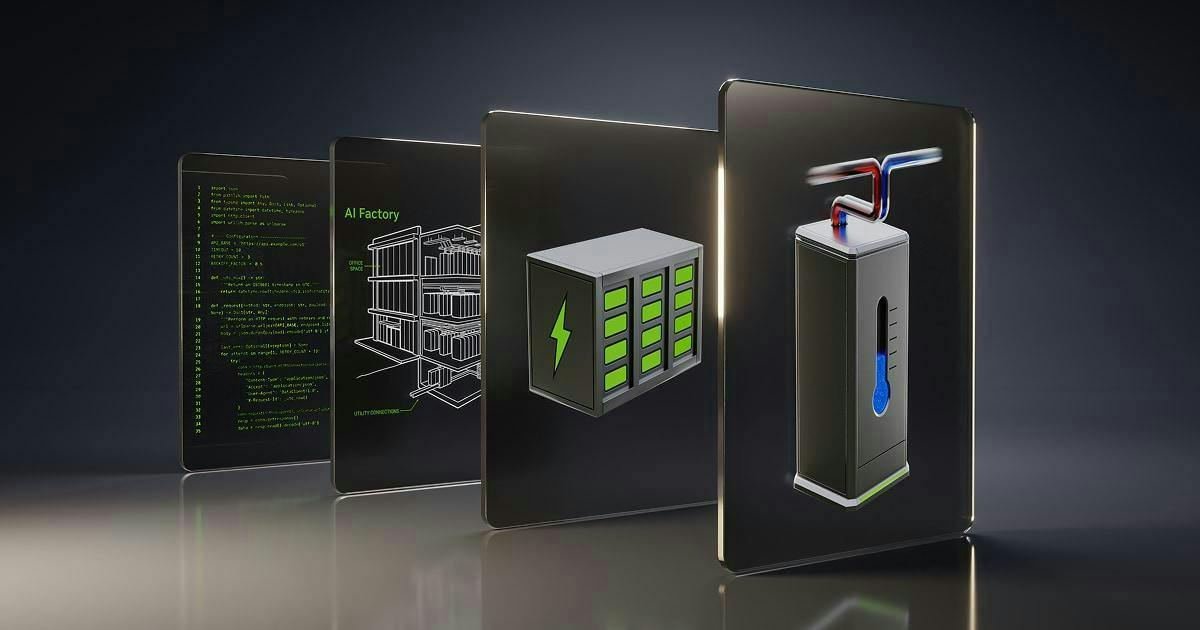
NVIDIA is extending its influence over AI infrastructure beyond the GPU, server rack and network, introducing qualification requirements for the power and cooling systems that increasingly determine the scale and performance of AI data centers.
The company’s new NVIDIA DSX Ready program, announced September 21, establishes requirements for specific infrastructure products intended for use with NVIDIA’s DSX AI factory reference designs. Its first two categories—battery energy storage systems (BESS) and coolant distribution units (CDUs)—address two of the most pressing engineering challenges in AI infrastructure: managing rapidly changing electrical demand and removing heat from increasingly dense computing systems.
The initial qualified suppliers are Hitachi Energy, LG Energy Solution and Tesla for battery storage, and LG Electronics, LiquidStack and Vertiv for liquid cooling.
While the announcement might initially resemble another NVIDIA partner program, its technical details suggest something more consequential. The company is establishing performance criteria for the electrical and mechanical equipment supporting its computing platforms, connecting those requirements to an expanding ecosystem of qualified suppliers.
Subsequent partner announcements offer a clearer view of what that means in practice. They describe battery systems designed to respond to AI load fluctuations, coolant distribution equipment operating at multi-megawatt capacities, and integrated cooling architectures intended to make more of a data center’s available power usable for computing.
The initiative also coincides with the arrival of Chris Malone, formerly a data center infrastructure executive at OpenAI, Meta and Google, as NVIDIA’s vice president of the DSX Platform.
Together, the developments point toward a closer relationship between computing architecture and facility engineering, with NVIDIA seeking to influence not only the processors deployed in AI factories but the infrastructure requirements that support their operation.
From Reference Design to Infrastructure Qualification
DSX Ready is an extension of the broader NVIDIA DSX AI Factory Platform, introduced in May 2026.
As Data Center Frontier reported in September, NVIDIA had already been extending DSX into site development, electrical systems and thermal management through partnerships with Lancium, Cloverleaf, Eaton and Trane. DSX Ready adds a product-level qualification mechanism to that broader infrastructure strategy.
DSX combines reference designs, digital twins and operational software to help developers coordinate computing, networking, power, cooling and facility infrastructure. Using NVIDIA Omniverse technologies, the platform is intended to model interactions between physical and digital systems and support more integrated approaches to AI factory design and operation.
The emphasis reflects the changing economics of large-scale AI infrastructure. To wit: An AI factory’s productive capacity is constrained not simply by the number of GPUs installed, but by the power available to operate them, the ability to remove the heat they generate, and the reliability of the supporting infrastructure.
NVIDIA increasingly describes this relationship in terms of computing output per unit of power. Within a fixed electrical envelope, improvements in facility efficiency can potentially make additional capacity available for revenue-producing AI workloads.
DSX Ready connects that broader architecture to identifiable products. Rather than providing only reference designs that engineers must translate into equipment specifications, the program establishes category-specific requirements against which suppliers can qualify particular offerings.
This does not mean NVIDIA is certifying complete facilities. Qualification applies to defined products and technical boundaries, while developers remain responsible for site-level design, integration and commissioning.
Nevertheless, the program introduces a new consideration into infrastructure procurement: whether a battery system or CDU has demonstrated compliance with the performance requirements of an NVIDIA AI factory reference architecture.
For suppliers seeking business in large AI deployments, that qualification could become an increasingly relevant credential.
Why NVIDIA Is Looking Beyond Battery Capacity
Of the two initial categories, battery energy storage offers perhaps the clearest example of how AI computing requirements are changing facility infrastructure.
Data center power architectures have historically emphasized utility reliability, uninterruptible power supplies and standby generation. Large battery energy storage systems are now being considered for additional functions, including grid support, energy management and the management of dynamic electrical loads. AI computing makes those capabilities more relevant.
The shift was already evident in DCF’s reporting from Data Centre West 2026, where Tesla’s Sean Jones described AI training loads falling from full demand to approximately 30% in less than a second. Such abrupt changes illustrate why power quality and fast-response energy storage are becoming central to AI facility planning.
At sufficient scale, those fluctuations can affect power conversion equipment, onsite generation and the facility’s relationship with the utility grid. Battery storage can potentially absorb or supply power quickly enough to help manage those variations. But the ability to do so depends as much on power electronics and control behavior as on the amount of energy stored.
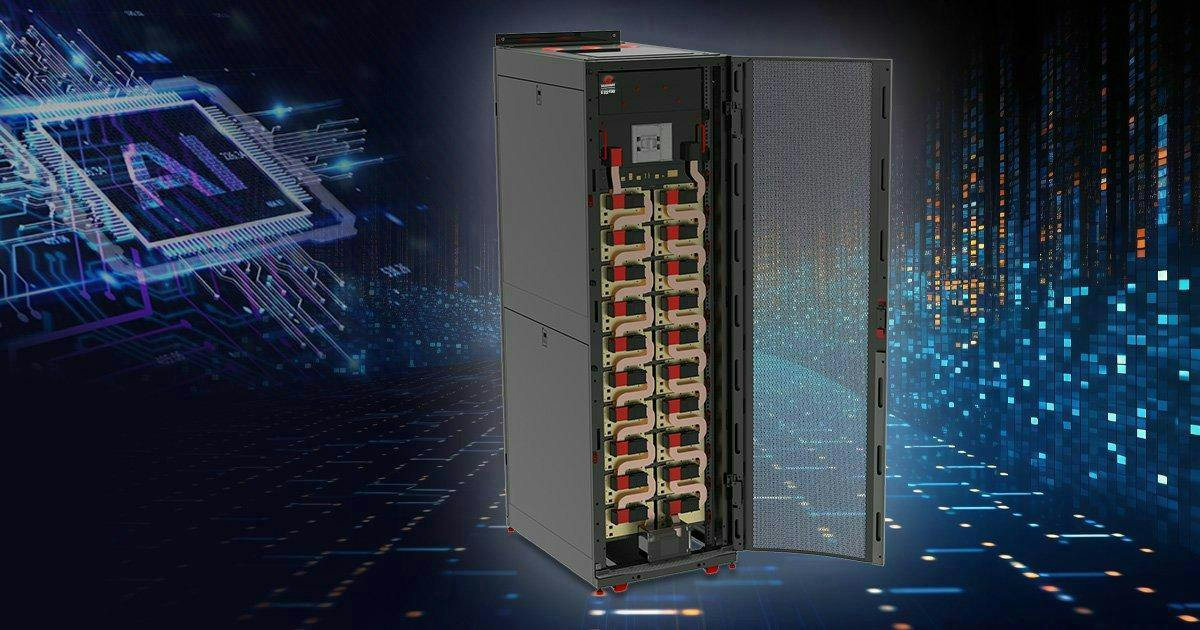
That distinction is central to NVIDIA’s BESS qualification guidelines. The company has established twelve tests covering electrical stability, dynamic response, operating transitions and control-system performance. The requirements go considerably beyond conventional measures of battery capacity and discharge duration.
They include telemetry verification, voltage and frequency regulation, current-limit behavior, AI workload buffering, demand-response dispatch, voltage ride-through, grid-to-island transitions, generator coordination, black-start capability, energy management and control-system transparency.
One of the more revealing requirements is the AI buffering test. NVIDIA specifies that a BESS must demonstrate its ability to follow representative AI workload power ramps under both strong-grid and weak-grid conditions. The test requires steady-state tracking error of no more than 2% of the commanded ramp magnitude, without sustained oscillations or unacceptable current-limiting behavior.
The qualification also requires electromagnetic transient modeling to evaluate control stability under particularly challenging grid conditions, including scenarios involving low short-circuit ratios, changing electrical impedance and disturbances associated with partially islanded systems.
Another test evaluates whether the system can manage competing demands over a simulated 24-hour operating period, balancing AI load buffering, demand response and reserves for electrical disturbances. The BESS must demonstrate that its state of charge remains controlled while performing those different functions. Simply increasing battery capacity is not sufficient to satisfy the requirement; the energy management system must show how it maintains reserves and prioritizes competing demands.
These are not simply tests of how much energy a battery can deliver. They address whether the power conversion system can behave predictably as part of a complex electrical network serving dynamic computing workloads. That engineering challenge was also explored in a recent Data Center Frontier Show interview with ON.energy’s Asser Elsamahy, who described using medium-voltage battery systems and dual-inverter architectures to decouple rapidly changing AI loads from the electrical profile presented to the grid.
ON.energy’s double-conversion architecture differs from the parallel BESS configurations addressed by NVIDIA’s qualification program. Nevertheless, both approaches reflect the growing importance of controlling the interaction between dynamic computing loads and the wider power system.
Importantly, NVIDIA defines the BESS qualification boundary at the AC terminals, including the power conversion system. Battery chemistry and sizing are outside the scope, as are campus transformers, switchgear, generators and other site-level integration elements.
NVIDIA characterizes its BESS requirements as addressing a gap in existing standards governing power conversion system behavior. The company is not attempting to replace established electrical safety, fire protection or interconnection requirements.
Instead, its qualification focuses on how battery power conversion systems respond to the particular operating conditions associated with large AI computing loads—an area in which conventional equipment specifications may not fully capture the demands of the application.
Passing qualification therefore does not demonstrate that an entire data center will operate stably under every electrical condition. What it does establish is a more rigorous basis for evaluating battery system behavior against the requirements NVIDIA considers important for AI factories.
Hitachi Energy, LG Energy Solution and Tesla Enter the Qualified BESS Ecosystem
The three initial BESS suppliers bring different capabilities and market positions to the program.
Hitachi Energy’s qualified offering emphasizes the integration of energy storage, power conversion, automation and controls. The company identifies dynamic load management, power stability and coordination with grid requirements as important capabilities for AI infrastructure. Its broader experience in utility systems and power quality is particularly relevant as data center developers seek larger utility connections and increasingly consider onsite energy resources.
Marco Berardi, head of Grid & Power Quality Solutions and Service at Hitachi Energy, said AI factory customers need electrical systems that can be deployed and expanded quickly while maintaining reliability and resilience. The company’s qualified solution incorporates Hitachi Energy power converters and power plant control capabilities, connecting the battery system’s electrical performance to the wider operational requirements of AI facilities.
LG Energy Solution’s qualified AC-coupled battery system uses modular 2.5 MW / 5.1 MWh storage blocks. The company identifies grid-forming capability, fast response, voltage ride-through and AI load smoothing among the system’s features.
LG also points to its expanding North American manufacturing footprint, including plans for more than 50 GWh of lithium iron phosphate battery cell production capacity by the end of 2026. The manufacturing capacity is not dedicated exclusively to data centers, but the announcement illustrates how suppliers are positioning established energy storage technologies for the growing AI infrastructure market.
Chang Beom Kang, head of LG Energy Solution’s ESS Battery Division, described the DSX Ready qualification as validation of the company’s BESS technology and its suitability for emerging AI power applications.
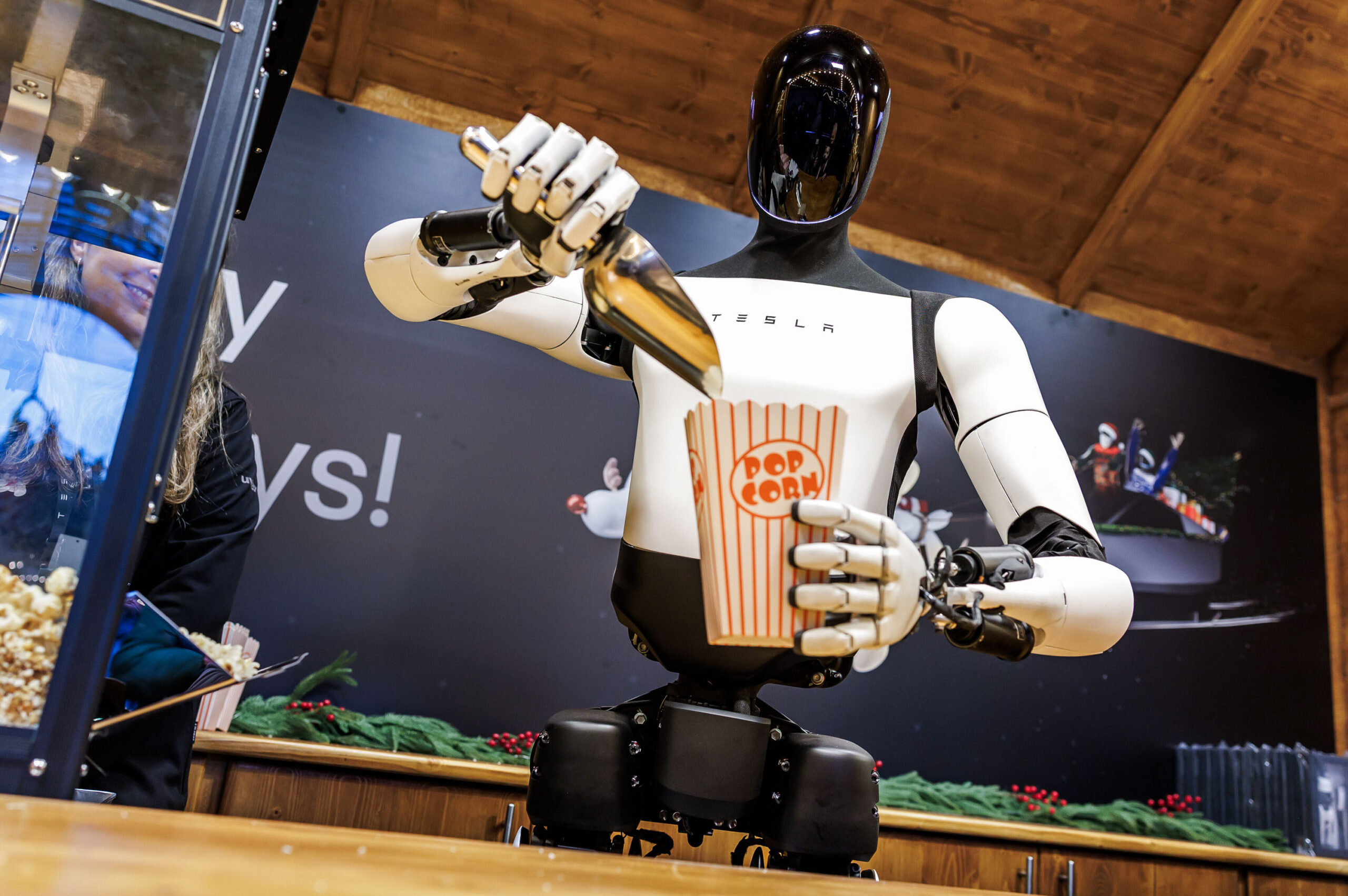
Tesla rounds out the inaugural group of qualified battery suppliers. Its participation places a major utility-scale energy storage provider alongside established electrical infrastructure manufacturers in NVIDIA’s qualification ecosystem.
Tesla’s Megapack technology is already associated with large-scale storage installations supporting utilities, renewable energy projects and commercial power applications. However, NVIDIA’s initial announcement does not identify the precise Tesla product configuration qualified under DSX Ready.
Even so, the inclusion of all three companies highlights a potentially significant market development: battery systems are being evaluated as active elements of AI factory electrical architecture, not merely as sources of stored energy. For developers considering hundreds of megawatts of computing capacity, that distinction could become increasingly important.
Liquid Cooling Becomes Part of the AI Factory Specification
On the thermal side, DSX Ready begins with coolant distribution units, the equipment that helps manage liquid coolant circulation and heat transfer between computing systems and facility cooling infrastructure.
CDUs have become increasingly important as high-density AI servers place greater demands on traditional air cooling. Direct-to-chip liquid cooling requires coordination among server hardware, coolant flow rates, temperature requirements, pumps, heat exchangers, piping and the facility’s broader heat rejection systems. As rack densities increase, an improperly matched cooling system can constrain computing performance regardless of the available electrical capacity.
NVIDIA’s CDU qualification program establishes functional requirements for products intended to support its reference designs. Unlike the BESS process, which requires suppliers to provide test evidence for NVIDIA review and approval, the CDU process uses a self-qualification suite to determine whether an offering meets the applicable requirements. The three initial suppliers illustrate the range of megawatt-scale liquid cooling equipment entering the market.
Vertiv announced that its 2.3 MW CoolChip CDU had qualified as NVIDIA DSX Ready, identifying the product as the first CDU qualified specifically under the program. Designed for high-density liquid cooling applications, the system can support deployment at the end of a row or around the perimeter of a data hall.
“The scale of AI deployment is forcing a more integrated approach to data center infrastructure,” said Scott Armul, Vertiv’s chief product and technology officer. Armul argued that computing, electrical power and cooling decisions can no longer be considered independently, because constraints in any one of those systems can limit an entire facility’s productive capacity.
LG Electronics qualified its 2.6 MW CDU, extending a liquid cooling portfolio that includes 600 kW and 1 MW systems with earlier NVIDIA infrastructure qualifications. The 2.6 MW system met the additional requirements for DSX Ready status. The company is pursuing a broader “Chip-to-Chiller” strategy connecting liquid cooling equipment with the chillers and other thermal infrastructure needed to support large data center environments.
A subsequent September 28 announcement identified LG Electronics as an NVIDIA Preferred Partner for Power and Cooling Solutions and outlined plans to pursue qualification for a 4 MW CDU by the end of 2026. The involvement of LG Electronics alongside LG Energy Solution also means separate companies within the LG group have qualified offerings in both of DSX Ready’s inaugural infrastructure categories.
LiquidStack, meanwhile, brings a different scale of cooling architecture through its GigaModular CDU platform.
The GigaModular system, which has also received DSX Ready qualification, supports scalable cooling capacity up to 14 MW. Its modular approach is intended to help operators expand centralized liquid cooling capacity as computing deployments grow.
The platform incorporates centralized controls and modular capacity expansion options designed for large AI factory and hyperscale environments.
The range of these qualified products is significant. Rather than prescribing a single cooling system size or deployment model, NVIDIA’s initial program encompasses equipment supporting different approaches to distributing cooling capacity across AI facilities.
Their qualification does not establish that the products are interchangeable, nor does it eliminate the need to match equipment to actual rack loads, facility systems and operating conditions. It does, however, create a common qualification framework connecting those products to NVIDIA’s AI factory requirements.
Trane Pushes DSX From Components Into 250 MW Cooling Architectures
A subsequent announcement from Trane Technologies provides a broader illustration of how NVIDIA’s reference design strategy is influencing facility-level engineering. On September 28, Trane introduced two 250 MW AI factory thermal management reference designs based on the DSX platform.
The designs incorporate technology from LiquidStack and Stellar Energy, two companies acquired by Trane, and are intended to provide high-efficiency cooling with zero operational water consumption for cooling, as described by the company.
Both include LiquidStack’s qualified GigaModular CDU platform, connecting a DSX Ready component to a larger cooling plant architecture.
The first design, Reference Design #506, combines direct-to-chip cooling with Trane Ascend ACR air-cooled chillers featuring integrated free cooling. Trane projects that the configuration could improve cooling efficiency by up to 25% and make as much as 22 MW of additional electrical capacity available for computing. The company also estimates an improvement in annualized partial power usage effectiveness from 1.201 to 1.083.
The second architecture, Reference Design #507, incorporates factory-built Stellar Energy modular cooling plants with water-cooled chillers, dry fluid coolers and separate temperature loops. Trane projects a reduction in chiller power requirements of up to 16%, potentially making another 8 MW available for AI workloads.
For a temperate climate such as Chicago, the company estimates that integrated waterside economizers could provide full free cooling during more than 98% of annual operating hours.
The second design uses closed-loop dry cooling for heat rejection, allowing Trane to characterize the architecture as achieving zero operational water usage effectiveness. That should not be confused with eliminating water requirements throughout the full construction, manufacturing or operating lifecycle of an AI data center.
These performance figures represent Trane’s design projections, not independently verified results from operating facilities. Actual performance would depend on climate, system configuration and the conditions under which the equipment operates.
Nevertheless, the announcements provide a concrete example of the larger objective behind DSX: coordinating computing and facility infrastructure to increase useful AI output within a limited power envelope.
The importance of reclaiming electrical capacity should not be underestimated. At a large AI campus, the energy consumed by chillers, pumps and other mechanical systems directly affects the power available for computing, particularly where utility service cannot be expanded quickly.
Reducing the electrical overhead of cooling can therefore be more than an operating-cost improvement. Under the right conditions, it can expand the productive computing capacity of a facility without requiring a corresponding increase in utility supply.
For developers confronting long interconnection timelines and significant power constraints, that possibility helps explain the emphasis on integrated thermal design.
What Qualification Means for Procurement—and What It Doesn’t
DSX Ready introduces a potentially important new consideration for data center equipment selection. Infrastructure manufacturers have long qualified products against industry standards, safety requirements and customer-specific engineering specifications. NVIDIA is adding another layer: qualification against the functional requirements of its own AI factory reference architecture.
If DSX-based designs become widely adopted, these qualifications could influence which products developers and engineering firms evaluate during procurement. Suppliers may increasingly use DSX Ready status to demonstrate that particular offerings have been tested against the operating requirements of NVIDIA-based computing environments.
But the program’s limitations are just as important as its potential influence. NVIDIA’s own documentation makes clear that BESS qualification does not establish site-level stability. A qualified battery system must still be integrated with the facility’s electrical distribution, utility interconnection, protection systems and onsite generation. Likewise, a qualified CDU must operate within a properly engineered cooling system, with appropriate capacity, temperature control, redundancy and heat rejection.
The qualifications do not replace established safety standards, professional engineering, commissioning or regulatory compliance. Nor is there evidence that DSX Ready has become a mandatory procurement requirement across the AI data center industry. Its commercial significance will ultimately depend on how widely NVIDIA’s reference designs are adopted and whether hyperscalers, developers and engineering firms begin incorporating the qualification into their equipment specifications.
For now, the program establishes something more specific: a defined means of demonstrating that selected infrastructure products meet NVIDIA’s stated requirements for AI factory applications.
That could be meaningful even without becoming an industry-wide standard. As AI infrastructure becomes more complex and capital-intensive, suppliers able to demonstrate tested compatibility with a widely used computing architecture may gain an advantage in engineering evaluations.
At the same time, operators will have to determine whether qualification actually reduces project risk, simplifies integration or shortens procurement and deployment timelines. Those questions are ultimately settled in the design process and the field, not by the qualification label alone.
NVIDIA Adds Hyperscale Experience to DSX Leadership
The program’s launch also comes amid changes in the leadership of NVIDIA’s infrastructure initiatives.
Chris Malone, formerly head of data centers at OpenAI, joined NVIDIA in September as vice president of the DSX Platform, according to reporting by The Information.
Malone previously worked on data center infrastructure at Meta and Google, bringing experience from several organizations responsible for some of the world’s largest computing environments.
His appointment adds significant hyperscale expertise to NVIDIA’s DSX initiative at a time when the company is working to translate AI factory reference architectures into deployable facilities.
That experience could prove significant as NVIDIA works with developers, operators and equipment suppliers to translate reference architectures into deployable facilities.
The company’s September announcement also stated that additional qualification categories across infrastructure and software would be introduced over time, suggesting that batteries and CDUs represent the beginning rather than the full extent of the initiative.
Who Defines the AI Factory?
The wider implications of DSX Ready extend beyond the six initial suppliers.
AI factories are increasingly being designed around the relationships among computing hardware, electrical infrastructure, thermal capacity and operational controls. Those relationships have become more consequential as individual accelerator platforms increase in density and large computing campuses encounter tighter limits on utility service, heat rejection and deployment schedules.
Historically, the requirements governing facility equipment have emerged through a combination of engineering practices, industry standards, equipment manufacturers and operator specifications. That convergence has been taking shape across the infrastructure industry. In an earlier DCF examination of Schneider Electric’s AI data center strategy, executives described the growing importance of digital twins, power quality, energy storage and integrated thermal systems in the next generation of facility architectures.
NVIDIA is now introducing another influential set of requirements, developed around the needs of its AI computing architecture. Whether those requirements become a widely adopted procurement reference remains to be seen. Developers retain responsibility for designing reliable, compliant facilities, and the broader infrastructure industry includes many technology platforms and engineering approaches beyond NVIDIA.
But DSX Ready demonstrates how the influence of AI computing vendors can extend into the physical systems supporting the data center. By qualifying battery storage and liquid cooling equipment, NVIDIA is beginning to connect the performance expectations of its computing platforms with the behavior of infrastructure products available for deployment.
For operators, the potential benefit is a clearer path from computing requirements to equipment selection and integration. For suppliers, it creates a new qualification framework that may become increasingly relevant to participation in large AI projects. And for the broader industry, it raises a fundamental question about the next phase of AI infrastructure development.
As data centers become increasingly specialized factories for AI computing, how much of the surrounding electrical and mechanical infrastructure will ultimately be shaped by the requirements of the computing platforms themselves? With DSX Ready, NVIDIA is taking another step toward answering that question.