Stay Ahead, Stay ONMINE

Rompetrol targets 2028 startup for two refinery solar projects

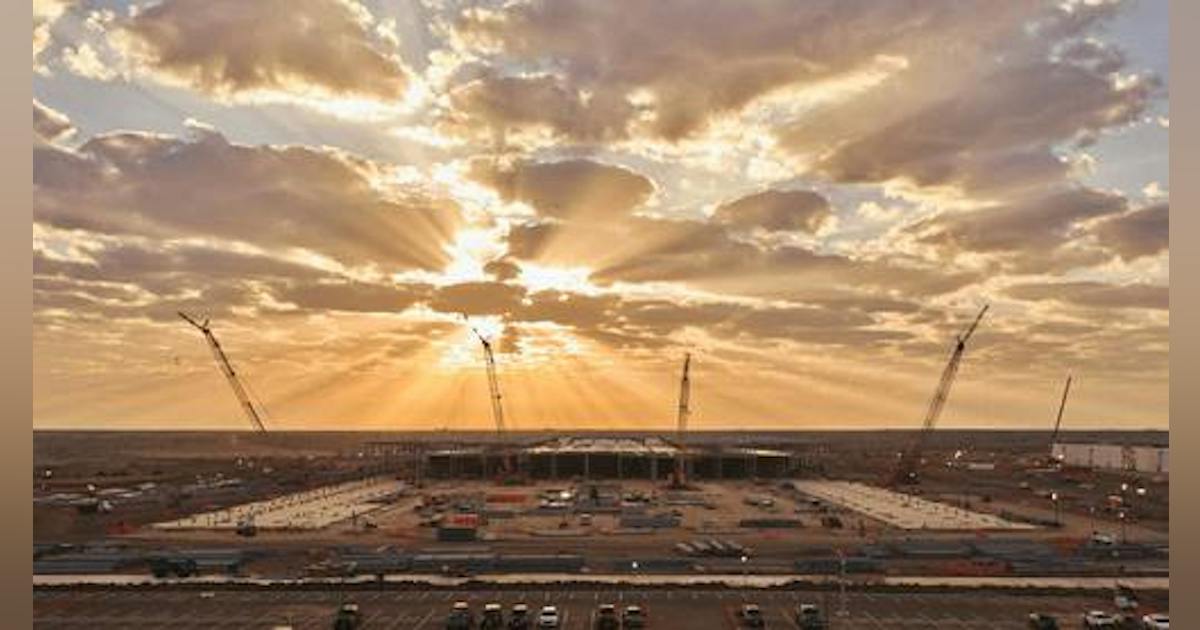
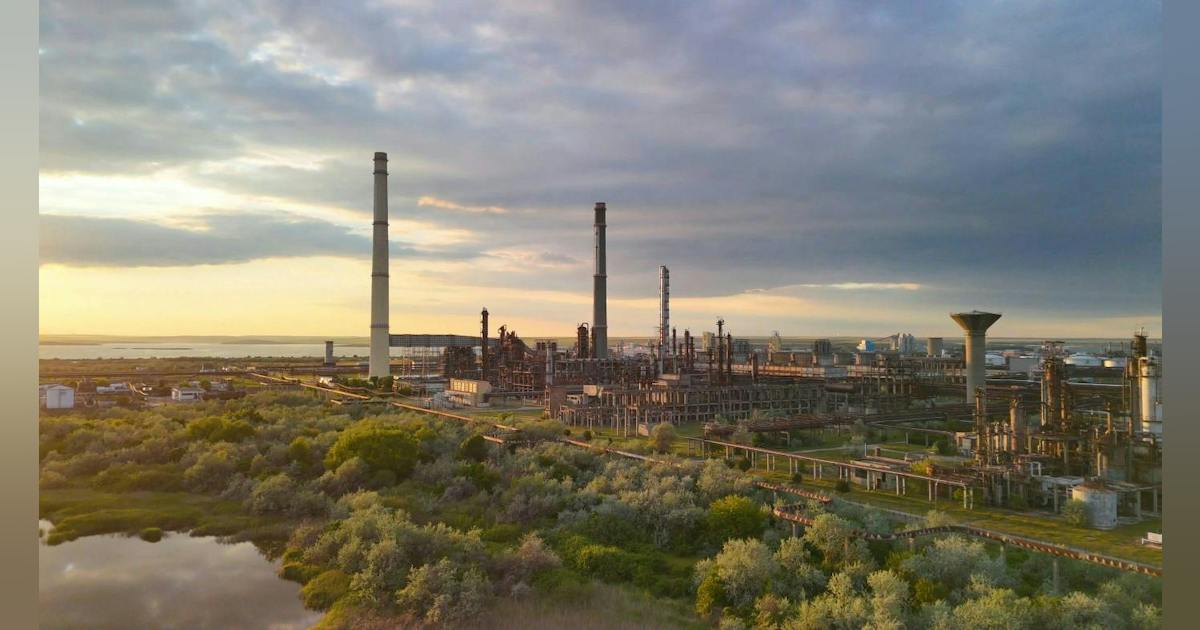
Rompetrol Rafinare SA—jointly owned by Kazakhstan’s state-owned JSC NC KazMunayGas (KMG) subsidiary KMG International NV (54.63%) and Romania’s Ministry of Economy, Energy & Business Environment (44.7%)—is advancing a project involving installation of a 9.4-Mw photovoltaic plant at its 5-million tonne/year (tpy) Petromidia refinery in Năvodari, Constanța County, on Romania’s Black Sea coast. Designed to generate […]

Rompetrol Rafinare SA—jointly owned by Kazakhstan’s state-owned JSC NC KazMunayGas (KMG) subsidiary KMG International NV (54.63%) and Romania’s Ministry of Economy, Energy & Business Environment (44.7%)—is advancing a project involving installation of a 9.4-Mw photovoltaic plant at its 5-million tonne/year (tpy) Petromidia refinery in Năvodari, Constanța County, on Romania’s Black Sea coast.

Designed to generate more than 9,800 Mw-hr/year of electricity for direct use by the refinery, the project aims to reduce greenhouse gas (GHG) emissions at the site by about 6,024 tpy, Rompetrol Rafinare said in a release Oct. 8.

Budgeted at an overall investment of about $9.2 million—including about $2.9 million in nonrefundable modernization fund support and a $6.3-million company contribution—the project is targeted for completion by Dec. 31, 2028, under the funding call deadline.

Petromidia’s solar project will complement the site’s 80-Mw cogeneration plant—operated by Kazakh-Romanian Energy Investment Fund (KREIF) subsidiary Rompetrol Energy SA—which entered commercial operation at the end of 2025 and supplies the refinery’s electricity and process steam requirements.

Rompetrol reported a 98.11% capacity utilization rate at Petromidia in first-half 2026. The refinery also recorded an 86.54% white-product yield and a 92-point Energy Intensity Index during the first 6 months of 2026, according to the Oct. 8 announcement.

Vega project adds battery storage

Announcement of the proposed project at Petromidia follows Rompetrol Rafinare’s Aug. 21 confirmation of a separate solar-and-storage project at its Vega Ploieşti niche refinery—specialized in the production of solvents, hexane, and the only Romanian-produced bitumen—in Ploiesti, Prahova County, Romania, about 60 km from Bucharest.

The planned Vega installation will combine 4.8 Mw of photovoltaic capacity with a 9-Mw-hr energy storage system. It is expected to produce more than 6,200 Mw-hr/year, equivalent to about two-thirds of the refinery’s budgeted 2025 electricity use.

The battery-based storage component of the project is intended to help align solar generation with the refinery’s operating requirements, according to the operator.

Rompetrol Rafinare said it expects the project—once online—to reduce GHG emissions at Vega by more than 3,800 tpy.

The operator estimated an overall cost of the Vega solar-and-storage project at about $6 million, including contributions of about $1.6 million from the modernization fund and $4.5 million from the company.

Like Petromidia, Vega’s on-site renewable energy generation project is scheduled for implementation by Dec. 31, 2028.

Approval of the two projects advance plans previously disclosed in the company’s 2025 annual report, dated Mar. 25, 2026. At that time, feasibility studies for photovoltaic installations at Petromidia and Vega were complete, while internal approvals remained in progress.


Shape
Shape
Stay Ahead

Explore More Insights

Stay ahead with more perspectives on cutting-edge power, infrastructure, energy,  bitcoin and AI solutions. Explore these articles to uncover strategies and insights shaping the future of industries.

Shape

Dell gives AI agents a broader view of enterprise data

The Unified Semantic Layer establishes a common business vocabulary across structured and unstructured data. Dell also plans to incorporate Nvidia’s open-source Auto-Ontology technology, which can help construct knowledge graphs from enterprise data. The Enterprise Knowledge Graph goes a step further by mapping relationships between data, including metadata, lineage, query history

Read More »

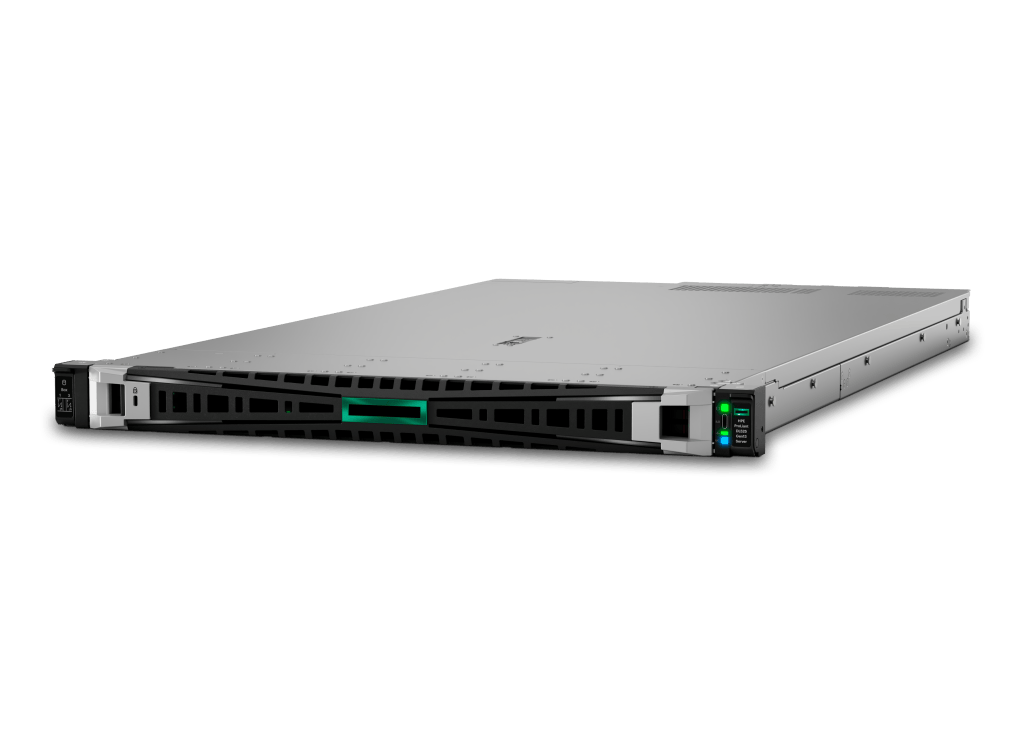
HPE supercharges ProLiant servers with AMD’s EPYC 9006 processors

One important attribute is that HPE iLO 8 delivers auto-SED (Self-Encrypting Drive) server capabilities, automatically protecting data at rest from the moment the server is first powered on, according to Aaron Lamond, product marketing manager, HPE Compute. “No external key manager, additional configuration, or manual activation is required. Encryption stops

Read More »

Rompetrol targets 2028 startup for two refinery solar projects

Rompetrol Rafinare SA—jointly owned by Kazakhstan’s state-owned JSC NC KazMunayGas (KMG) subsidiary KMG International NV (54.63%) and Romania’s Ministry of Economy, Energy & Business Environment (44.7%)—is advancing a project involving installation of a 9.4-Mw photovoltaic plant at its 5-million tonne/year (tpy) Petromidia refinery in Năvodari, Constanța County, on Romania’s Black Sea coast. Designed to generate more than 9,800 Mw-hr/year of electricity for direct use by the refinery, the project aims to reduce greenhouse gas (GHG) emissions at the site by about 6,024 tpy, Rompetrol Rafinare said in a release Oct. 8. Budgeted at an overall investment of about $9.2 million—including about $2.9 million in nonrefundable modernization fund support and a $6.3-million company contribution—the project is targeted for completion by Dec. 31, 2028, under the funding call deadline. Petromidia’s solar project will complement the site’s 80-Mw cogeneration plant—operated by Kazakh-Romanian Energy Investment Fund (KREIF) subsidiary Rompetrol Energy SA—which entered commercial operation at the end of 2025 and supplies the refinery’s electricity and process steam requirements. Rompetrol reported a 98.11% capacity utilization rate at Petromidia in first-half 2026. The refinery also recorded an 86.54% white-product yield and a 92-point Energy Intensity Index during the first 6 months of 2026, according to the Oct. 8 announcement. Vega project adds battery storage Announcement of the proposed project at Petromidia follows Rompetrol Rafinare’s Aug. 21 confirmation of a separate solar-and-storage project at its Vega Ploieşti niche refinery—specialized in the production of solvents, hexane, and the only Romanian-produced bitumen—in Ploiesti, Prahova County, Romania, about 60 km from Bucharest. The planned Vega installation will combine 4.8 Mw of photovoltaic capacity with a 9-Mw-hr energy storage system. It is expected to produce more than 6,200 Mw-hr/year, equivalent to about two-thirds of the refinery’s budgeted 2025 electricity use. The battery-based storage component of the project is intended to help

Read More »

Equinor discovers gas at Gullfaks South

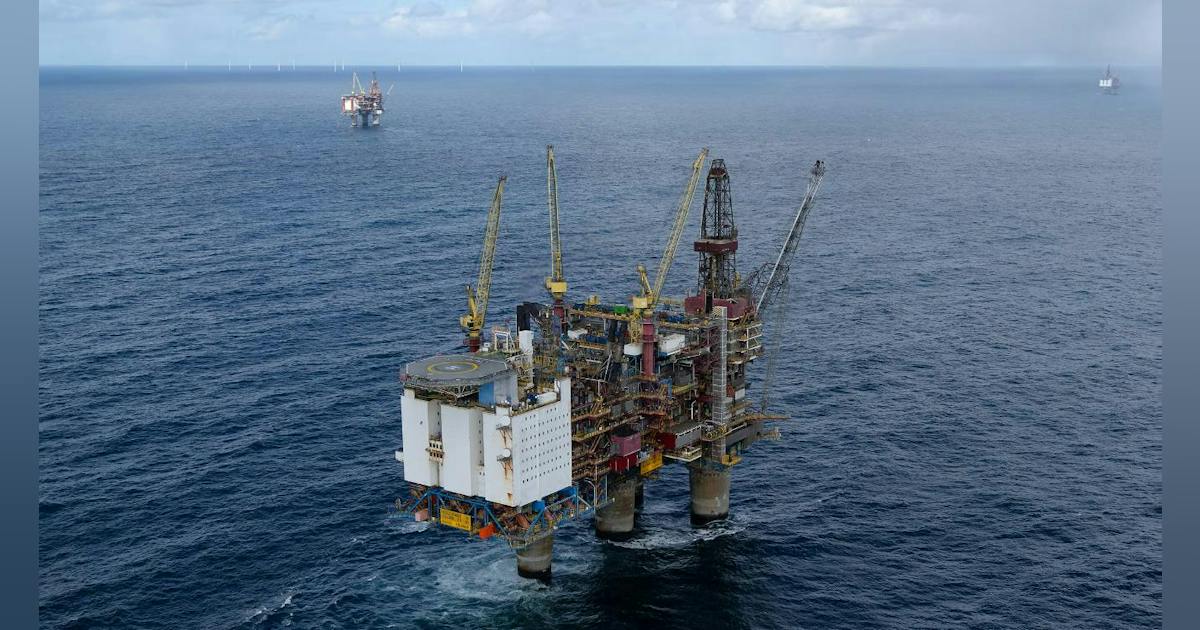
@import url(‘https://fonts.googleapis.com/css2?family=Inter:wght@100..900&display=swap’); .ebm-page__main h1, .ebm-page__main h2, .ebm-page__main h3, .ebm-page__main h4, .ebm-page__main h5, .ebm-page__main h6 { font-family: Inter; } body { line-height: 150%; letter-spacing: 0.025em; } button, .ebm-button-wrapper { font-family: Inter; } .label-style { text-transform: uppercase; color: var(–color-grey); font-weight: 600; font-size: 0.75rem; } .caption-style { font-size: 0.75rem; color: color-mix(in srgb, currentColor 60%, transparent); } #onetrust-pc-sdk [id*=btn-handler], #onetrust-pc-sdk [class*=btn-handler] { background-color: #c19a06 !important; border-color: #c19a06 !important; } #onetrust-policy a, #onetrust-pc-sdk a, #ot-pc-content a { color: #c19a06 !important; } #onetrust-consent-sdk #onetrust-pc-sdk .ot-active-menu { border-color: #c19a06 !important; } #onetrust-consent-sdk #onetrust-accept-btn-handler, #onetrust-banner-sdk #onetrust-reject-all-handler, #onetrust-consent-sdk #onetrust-pc-btn-handler.cookie-setting-link { background-color: #c19a06 !important; border-color: #c19a06 !important; } #onetrust-consent-sdk .onetrust-pc-btn-handler { color: #c19a06 !important; border-color: #c19a06 !important; } Equinor Energy AS discovered gas at Gullfaks South field, 190 km northwest of Bergen, in the North Sea. Exploration well 34/10-D-4 BH was drilled by the Askeladden rig as a sidetrack in connection with the drilling of a production well. The discovery is within the production license for Gullfaks. Between 0.5 million and 1.6 million std cu m of recoverable oil equivalents have been discovered (3.3-10.3 MMboe). Gullfaks South is part of Gullfaks field in the Tampen area in the northern part of the North Sea in 130-220 m of water. Equinor is the operator (51%) with partners Petoro AS (30%) and OMV Norge AS (19%).

Read More »

Crescent Energy to acquire Eagle Ford assets from Devon for $4.2 billion

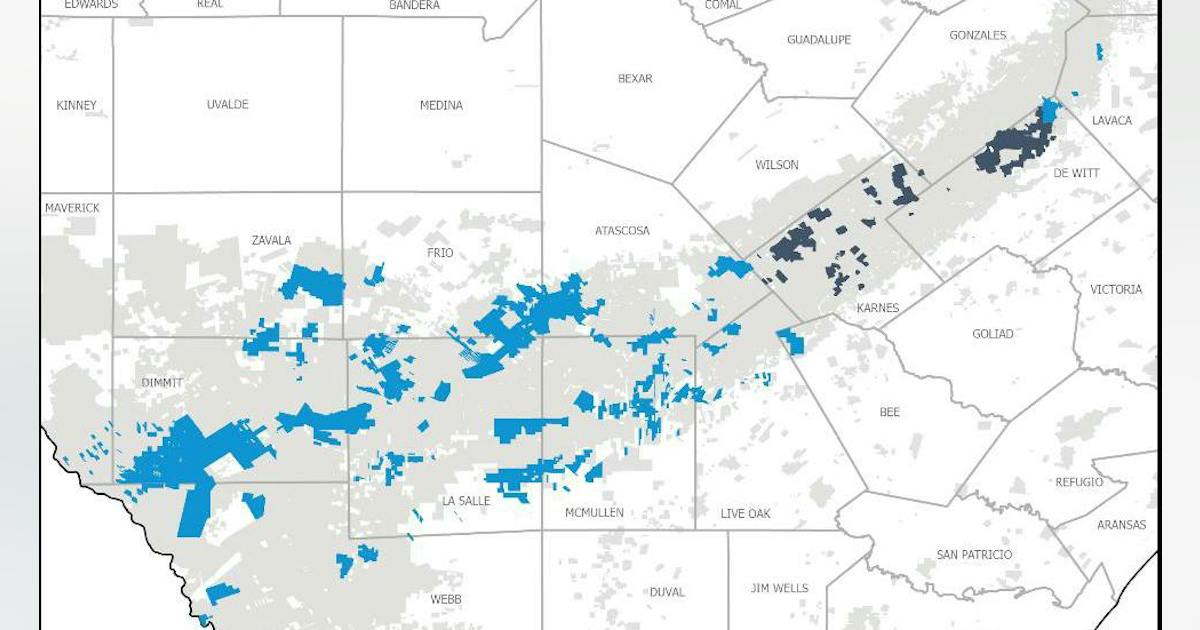
The acquisition continues a rapid buildout of Crescent’s Eagle Ford position, where the company has completed nine acquisitions since June 2023. Following closing, Crescent expects total production of about 400,000 boe/d, including roughly 170,000 b/d of oil. Management said the value proposition centers on operational improvements rather than a material increase in activity levels. Operations upside Asked whether Crescent planned to maintain Devon’s current 2-3-rig development program, Rockecharlie said the company expects to keep activity at roughly the same pace. By folding the assets into the company, he said, “we see significant capital allocation flexibility,” he said. “We think we’re going to deliver effectively the same production with less capital, just more capital efficiency, which is greater free cash flow for investors.” Crescent expects to realize about $140 million in annual synergies, fully captured by the end of 2027, across drilling and completions, lease operating expenses, and marketing. Management said most of those gains are expected to come from drilling and completion efficiencies, including longer laterals and improved surface designs. “Across our five most recent acquisitions, we’ve increased average lateral length by more than 25% versus previous operators, driving a step change in cost structure, increasing returns, and lowering breakevens,” Rynd said.  “Most of this is pretty simple and pretty straightforward… increasing lateral lengths and taking advantage of scale,” said chief operating officer Joey Hall. Calling the acreage a familiar operating area, Hall added: “This is our backyard. We understand these assets. We’ve had line of sight into them for over 10 years.” Hall expanded on the opportunity presented. “Going from an average of 6,500 ft to 11,500 ft, that’s a step change in cost structure. We’ve been doing this across our acreage, so we’re confident we can execute on it and [we’re] looking forward to hitting that target.” Rockecharlie

Read More »

Oil jumps 5% as Hormuz tanker attacks escalate, US Gulf hurricane shuts in production

Oil prices surged about 5% on Thursday, Oct. 8, as renewed attacks on commercial vessels in the Middle East and hurricane-related production shutdowns in the US Gulf of Mexico raised concerns about near-term crude supply. Oil prices rose sharply in early Thursday trading, with Brent crude climbing 5% to above $105/bbl and US West Texas Intermediate (WTI) also posting strong gains. Both benchmarks later eased a bit from their session highs. The advance reflected growing supply risks in two major producing regions. In the Middle East, renewed attacks on commercial vessels have disrupted a recovery in tanker traffic through the Strait of Hormuz. Meanwhile, offshore operators in the US Gulf of Mexico have shut in production and evacuated personnel ahead of Hurricane Isaias. Shipping disruptions intensify Security conditions in the Persian Gulf have deteriorated in recent days, with attacks reported near Qatar, Oman, and the Strait of Hormuz, renewing concerns about the reliability of the shipping corridor. According to the Financial Times, oil flows through the strait had recovered to nearly 90% of prewar levels in late September before declining again as attacks intensified. Transit volumes subsequently fell to about 11 million b/d, with flows estimated at roughly 4 million b/d on Tuesday, Oct. 6. The renewed disruptions threaten to reverse recent improvements in regional crude exports and prolong uncertainty over Middle Eastern oil supplies. Uncertainty surrounding the US-Iran conflict has added to market concerns. Axios reported that the Pentagon had ordered preparations for potential large-scale military operations against Iran. However, President Donald Trump said Thursday that the US would not resume military strikes against Iran before the Nov. 3 midterm elections, as diplomatic discussions continued. US Gulf production curtailed ahead of hurricane In the US, offshore producers have curtailed operations as Hurricane Isaias approaches the northern Gulf Coast. According

Read More »

LNG market tightens into winter as Europe pulls US cargoes, China reopens contract talks

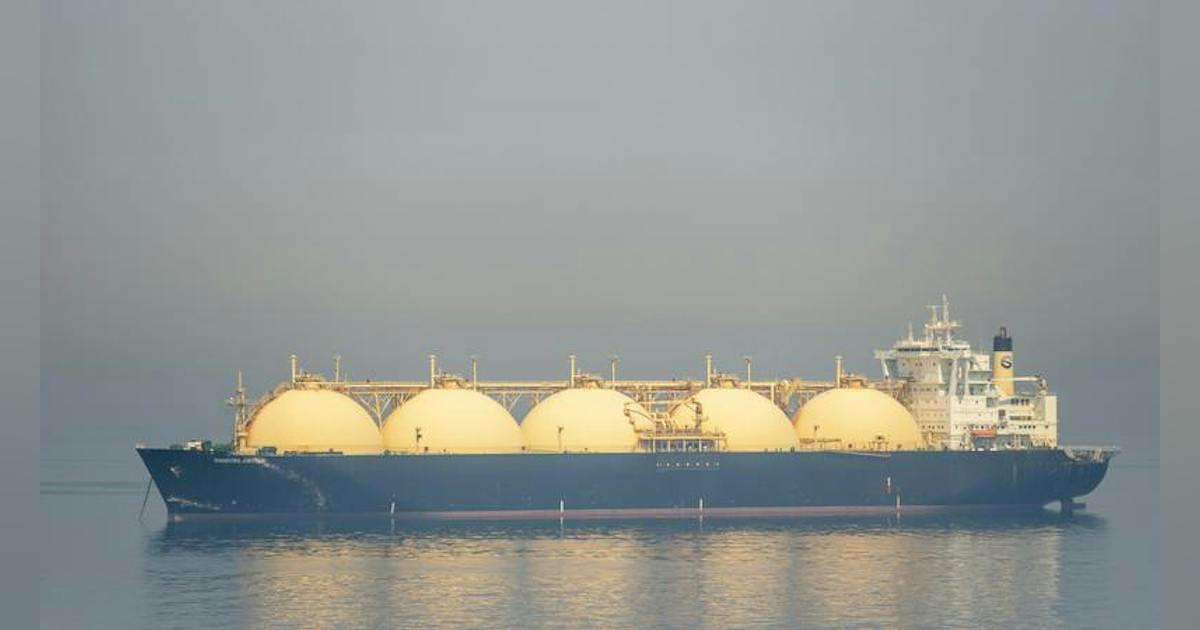
Global LNG markets are entering winter with limited supply cushion, even as a growing carrier fleet and shorter Atlantic voyages keep shipping rates subdued. Meanwhile China is showing signs of returning to long-term US contracting. New liquefaction capacity and higher utilization outside Qatar and the UAE have offset about 60% of Middle East LNG supply losses since March, according to a recent analysis from Morgan Stanley. Weaker demand outside Europe and European storage withdrawals have helped offset the remaining supply loss, but left inventories unusually low heading into winter. EU storage was about 70% full in late September, compared with 82% a year earlier and a 10-year average of 87%. Morgan Stanley raised its fourth-quarter JKM forecast to $27.50/MMbtu from $25/MMbtu, citing a slower Qatari restart and continued winter upside risk. Europe is drawing more flexible US supply. About 57% of US LNG exports were headed to Europe in September, up from 53% in August, while US feedgas rose about 6% month over month as Freeport recovered from an outage. Strong European demand is supporting vessel demand, but shorter US-Europe voyages and rapid fleet growth are more than offsetting that pressure. Atlantic spot rates for modern two-stroke LNG carriers stood at about $25,750/day on Oct. 6, while Pacific rates were about $39,000/day, according to Spark Commodities data. About 55 new LNG carriers were delivered in the first 7 months of 2026, with more expected by yearend. Morgan Stanley similarly noted that Asia LNG carrier rates had fallen about 80% from early-March highs and returned near pre-conflict levels, although route costs remain above levels immediately before the conflict. Meantime, the investment bank expects more than 30 million tpy of non-Middle East capacity to start by end-2027, before additional volumes from Qatar’s North Field expansion. China contracting returns China is adding another

Read More »

EIA: US crude oil inventories down 3.2 million bbl

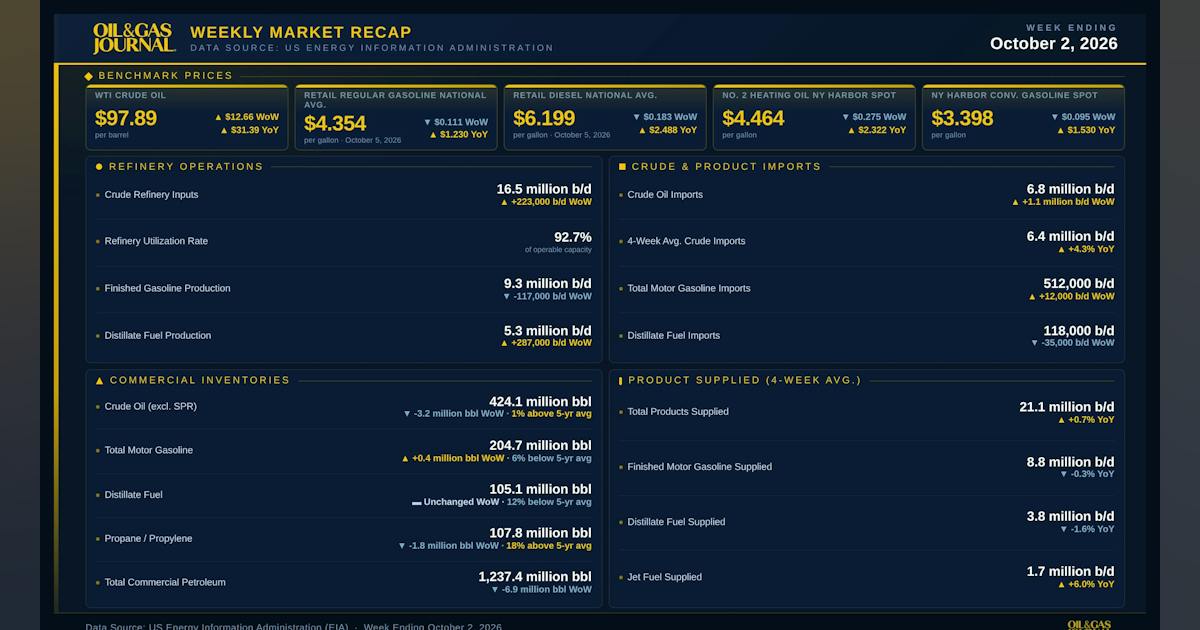
US crude oil inventories for the week ended Oct. 2, excluding the Strategic Petroleum Reserve, decreased by 3.2 million bbl from the previous week, according to data from the US Energy Information Administration (EIA). At 424.1 million bbl, US crude oil inventories are 1% above the 5-year average for this time of year, the EIA report indicated. Gasoline inventories increased 0.4 million bbl, 6% below the 5-year average. Propane-propylene inventories decreased 1.8 million bbl, 18% above the 5-year average. Total commercial petroleum inventories decreased by 6.9 million bbl for the week. Distillate inventories remained unchanged, 12% below the 5-year average. US crude oil refinery inputs averaged 16.5 million b/d for the week ended Oct. 2, which was 223,000 b/d more than the previous week’s average. Refineries operated at 92.7% of capacity. Gasoline output averaged 9.3 million b/d, and distillate production increased to 5.3 million b/d. Crude oil imports increased 1.1 million b/d to 6.8 million b/d. The 4-week average of 6.4 million b/d is 4.3% above the year-ago level. Gasoline imports averaged 512,000 b/d; distillate imports averaged 118,000 b/d. Over the past four weeks, total product supplied averaged 21.1 million b/d, up 0.7% year over year. The 4-week average for gasoline product supplied dereased 0.3% year over year to 8.8 million b/d, while the 4-week average for distillate product supplied decreased 1.6% to 3.8 million b/d. The 4-week average for jet fuel product supplied increased 6.0% year over year.

Read More »

NVIDIA’s DSX Ready Brings Power and Cooling Into the AI Factory Blueprint

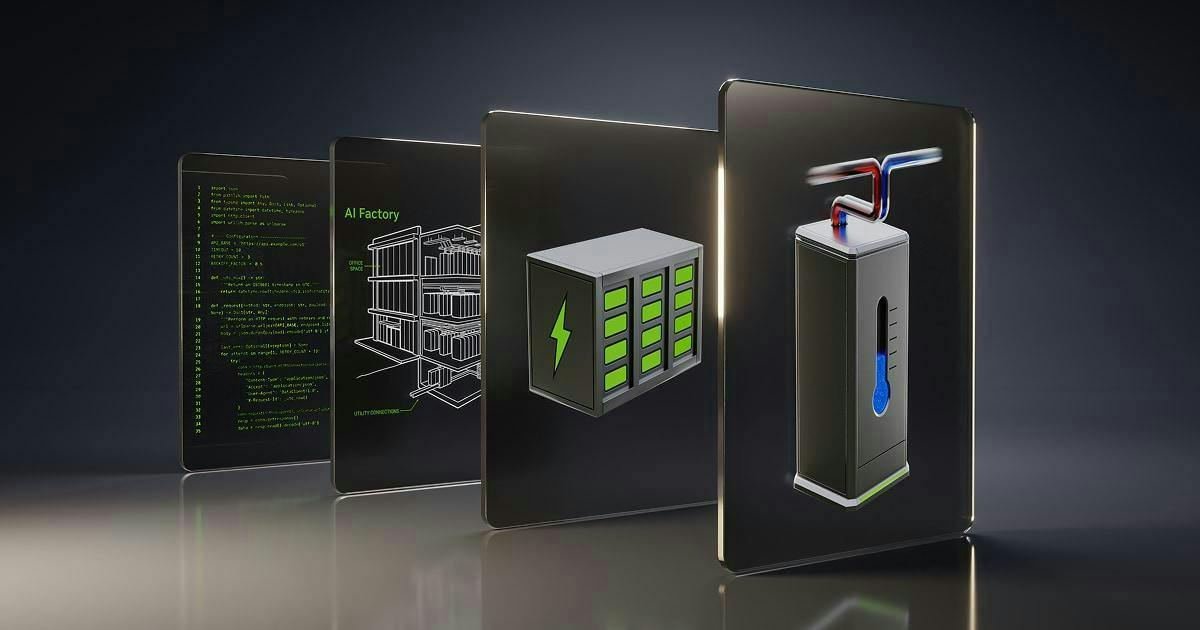
NVIDIA is extending its influence over AI infrastructure beyond the GPU, server rack and network, introducing qualification requirements for the power and cooling systems that increasingly determine the scale and performance of AI data centers. The company’s new NVIDIA DSX Ready program, announced September 21, establishes requirements for specific infrastructure products intended for use with NVIDIA’s DSX AI factory reference designs. Its first two categories—battery energy storage systems (BESS) and coolant distribution units (CDUs)—address two of the most pressing engineering challenges in AI infrastructure: managing rapidly changing electrical demand and removing heat from increasingly dense computing systems. The initial qualified suppliers are Hitachi Energy, LG Energy Solution and Tesla for battery storage, and LG Electronics, LiquidStack and Vertiv for liquid cooling. While the announcement might initially resemble another NVIDIA partner program, its technical details suggest something more consequential. The company is establishing performance criteria for the electrical and mechanical equipment supporting its computing platforms, connecting those requirements to an expanding ecosystem of qualified suppliers. Subsequent partner announcements offer a clearer view of what that means in practice. They describe battery systems designed to respond to AI load fluctuations, coolant distribution equipment operating at multi-megawatt capacities, and integrated cooling architectures intended to make more of a data center’s available power usable for computing. The initiative also coincides with the arrival of Chris Malone, formerly a data center infrastructure executive at OpenAI, Meta and Google, as NVIDIA’s vice president of the DSX Platform. Together, the developments point toward a closer relationship between computing architecture and facility engineering, with NVIDIA seeking to influence not only the processors deployed in AI factories but the infrastructure requirements that support their operation. From Reference Design to Infrastructure Qualification DSX Ready is an extension of the broader NVIDIA DSX AI Factory Platform, introduced in May 2026. As

Read More »

Brookfield’s AREP Deal Extends the AI Infrastructure Stack to Powered Land

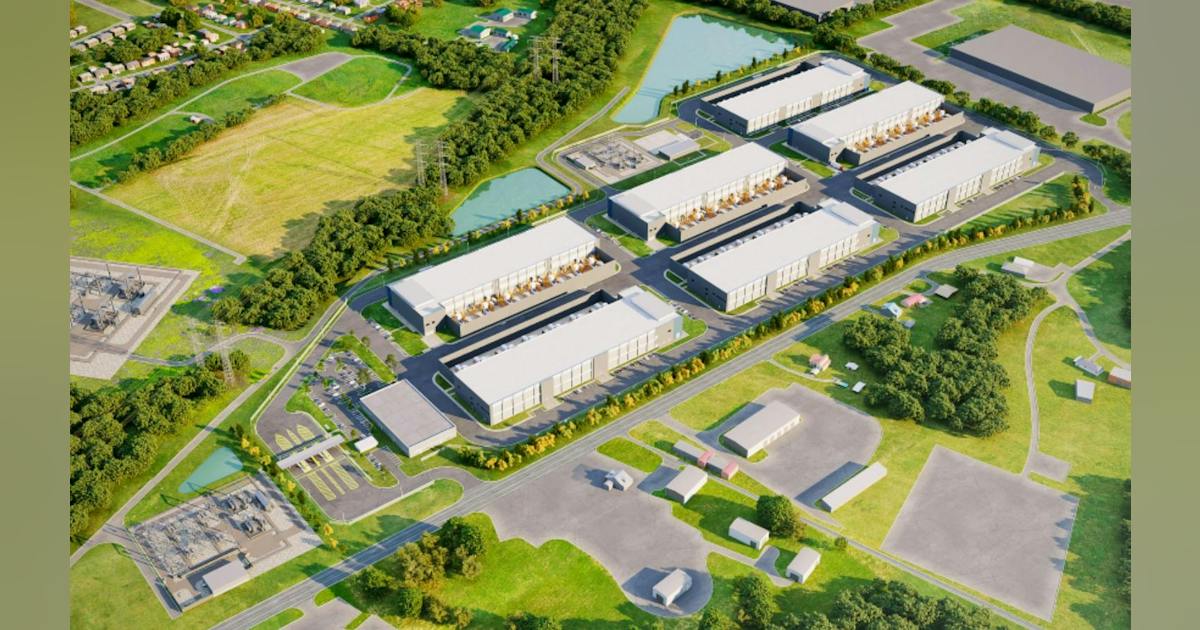
The transaction goes beyond Brookfield investing in another portfolio of buildings. It is investing in a developer whose principal product increasingly begins before the building, with land, entitlements, substations, transmission access and utility capacity. PowerHouse Has Become a Gigawatt-Scale Development Platform PowerHouse was founded with a strong Northern Virginia orientation, but its development map now stretches well beyond Data Center Alley as its current portfolio includes projects in Virginia, Texas, Pennsylvania, North Carolina, Nevada, Indiana, Illinois and Kentucky. The company lists 515 MW across its Northern VA Ashburn properties, another 900 MW at its PH 95 development in Spotsylvania, 1.35 GW in Carlisle, Pennsylvania, 1.8 GW at Joliet, Illinois, and substantial campuses across multiple Texas and Indiana locations. The various projects do a good job of illustrating how the definition of a hyperscale development site is changing. At PowerHouse Arcola in Loudoun County, Virginia, PowerHouse announced a long-term hyperscale lease earlier this year. The 37-acre campus includes two planned data center buildings totaling approximately 615,000 square feet and is designed for up to 120 MW of utility capacity. PowerHouse emphasizes not only the buildings but the campus’s on-site substation, fiber access, power security and support for high-density GPU and liquid-cooled deployments. In Texas, it might be that everything really is bigger, and PowerHouse’s Grand Prairie development covers approximately 810 acres and 8.5 million developable square feet. Its project page cites maximum utility power of 1.8 GW and a development schedule extending through 2029 and beyond. The Texas development plans also include a proposed Circle T campus in Westlake outside Fort Worth, which calls for as many as four roughly 300,000-square-foot facilities totaling approximately 300 MW. According to reporting on local filings, PowerHouse has funded a 350-MW Oncor substation intended to serve the campus and the town’s pump station. The company’s development in

Read More »

AI Is Turning Energy Storage Into Active Power Infrastructure

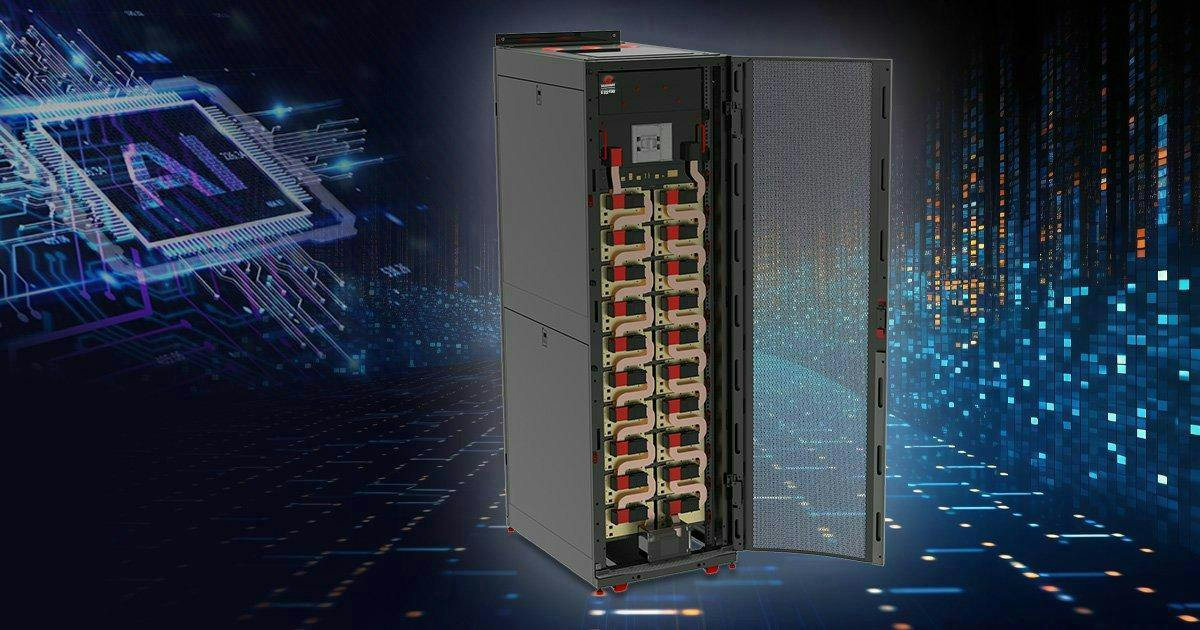
AI Turns the Power Problem Into a Transient Problem At the heart of the issue is the changing behavior of the IT load. In a conventional data center, DeLattre said, large numbers of independent loads create a relatively predictable electrical profile. AI clusters introduce much greater synchronization. As GPUs begin processing a common workload, large numbers of accelerators can increase their power consumption simultaneously. Instead of asking the electrical infrastructure to serve a relatively smooth load, the facility can experience fast power pulses moving through the system. Hybrid supercapacitors are intended to act as a buffer between that dynamic compute load and the infrastructure supplying it. During an upward transient, storage provides some of the incremental power demanded by the IT load. When demand falls, the storage system recharges. The objective is not to create additional energy. It is to keep every upstream component — from the UPS to generators and ultimately the utility connection — from having to respond directly to every rapid change taking place inside the AI cluster. From the perspective of the upstream power source, DeLattre said, the goal is to make a highly dynamic AI load appear significantly smoother. That distinction between energy and power is central to Musashi’s argument for hybrid supercapacitors. A conventional supercapacitor, also known as an electric double-layer capacitor, can deliver very high power almost instantly but stores relatively little energy. A lithium-ion battery can store considerably more energy, but DeLattre argues that it is less suited to being aggressively charged and discharged tens or hundreds of thousands of times. Musashi’s hybrid technology uses a capacitor architecture with a lithium-doped graphite electrode intended to increase energy density while preserving the fast response and high cycling capability associated with capacitors. DeLattre reduces the distinction to a simple formulation. “Batteries are very good

Read More »

AI Infrastructure’s Next Phase: Capital, Power and the Right to Build

Capital Is Becoming Infrastructure Samsung’s $1 billion commitment to Helix Digital Infrastructure offered one of the clearest examples yet of how the capital structure surrounding AI data centers is changing. Helix was formed by KKR as an AI infrastructure platform with more than $10 billion already committed by founding investors including KKR, the Kuwait Investment Authority, NVIDIA and Vistra. Samsung’s new commitment pushes that capital base still higher. But the composition of the partnership may be more significant than another billion dollars being added to the AI infrastructure ledger. Helix is intended to invest across hyperscale data centers, power generation and transmission, fiber and other connectivity infrastructure. Samsung, meanwhile, brings capabilities extending across advanced technology, construction, energy storage and cooling. This is not simply capital chasing data center returns. It increasingly resembles an attempt to assemble the data center, energy and technology supply chain inside a single investment ecosystem. That distinction is important, because one of the defining problems of the current buildout is that capital by itself does not produce capacity. Billions of dollars can be committed long before transformers arrive, transmission is constructed, generation is secured or a campus is commissioned. The increasingly valuable infrastructure platform is therefore the one capable of controlling more of those dependencies. Lambda demonstrated another side of that evolution last week with the closing of a $1.008 billion delayed-draw term loan supporting three committed customer deployments across multiple data centers. The financing received investment-grade ratings from Morningstar DBRS and Moody’s and carries a 6.78% fixed interest rate. More importantly, it is secured by both the GPU infrastructure being financed and contracted cash flows from two investment-grade customers. Capital is drawn as infrastructure reaches commissioning milestones rather than simply being handed to Lambda upfront. That begins to make AI compute look less like speculative

Read More »

Micro data center company rolls out stackable data center for edge and AI

Stack runs on Zella Sense, a monitoring, control, and automation layer built into every Zella DC cabinet. It tracks power, cooling, servers, and suspicious activity, while monitoring things like temperature, humidity, smoke, motion, water, and doors through sensors. The system runs over SNMP, Modbus, and a full API, with email alerting and local, LDAP, RADIUS, or TACACS+ authentication. That means an edge location can be remotely monitored without requiring local staff. It also comes with access control and fire protection. Zella Stack is an indoor-only offering. Zella DC sells Zella Outback as its standalone, ruggedized outdoor micro data center, and the company says an outdoor version of Stack is planned for the second half of 2027.

Read More »

Data Center Jobs: Engineering, Construction, Commissioning, Sales, Field Service and Facility Tech Jobs Available in Major Data Center Hotspots

Each month Data Center Frontier, in partnership with Pkaza, posts some of the hottest data center career opportunities in the market. Here’s a look at some of the latest data center jobs posted on the Data Center Frontier jobs board, powered by Pkaza Critical Facilities Recruiting. Looking for Data Center Candidates? Check out Pkaza’s Active Candidate / Featured Candidate Hotlist  Lead Mechanical Engineer – Data Center DesignNew York, NY/Remote This position is also available in: Denver, CO; Indianapolis, IN; Cedar Rapids, IA; Austin, TX; White Plains, NY; Dallas, TX; Richmond, VA; Ashburn, VA; Charlotte, NC; Atlanta, GA; Phoenix, AZ; Salt Lake City, UT; Kansas City, MO; Chicago, IL; Los Angeles, CA or San Jose, CA. Our client is a leading engineering design and commissioning company that is a subject matter expert in the data center space. They will provide design coordination and construction administration, consulting and management support for the data center / mission critical facilities space with the mindset to provide reliability, energy efficiency, and sustainable design expertise when providing these consulting services for enterprise, colocation and hyperscale companies. This career-growth minded opportunity offers exciting projects with leading-edge technology and innovation as well as competitive salaries and benefits. Electrical Commissioning Agent – Data Centers Austin, TX (limited travel) Non-Traveling CxA positions available in: Indianapolis, IN; Cedar Rapids, IA; Phoenix, AZ and Columbus, OH. Traveling CxA based near any major airport, otherwise traveling to: New York, NY; White Plains, NY; Dallas, TX; Richmond, VA; Montvale, NJ; Charlotte, NC; Salt Lake City, UT; Kansas City, MO; Chesterton, IN or Chicago, IL. ***Also looking for a Lead EE and ME CxA Agents and CxA PMs. *** This opportunity is with a leading EPC company of data center design / build / commissioning solutions. This company provides a complete life cycle of solutions that are custom-fit

Read More »

Microsoft will invest $80B in AI data centers in fiscal 2025

And Microsoft isn’t the only one that is ramping up its investments into AI-enabled data centers. Rival cloud service providers are all investing in either upgrading or opening new data centers to capture a larger chunk of business from developers and users of large language models (LLMs).  In a report published in October 2024, Bloomberg Intelligence estimated that demand for generative AI would push Microsoft, AWS, Google, Oracle, Meta, and Apple would between them devote $200 billion to capex in 2025, up from $110 billion in 2023. Microsoft is one of the biggest spenders, followed closely by Google and AWS, Bloomberg Intelligence said. Its estimate of Microsoft’s capital spending on AI, at $62.4 billion for calendar 2025, is lower than Smith’s claim that the company will invest $80 billion in the fiscal year to June 30, 2025. Both figures, though, are way higher than Microsoft’s 2020 capital expenditure of “just” $17.6 billion. The majority of the increased spending is tied to cloud services and the expansion of AI infrastructure needed to provide compute capacity for OpenAI workloads. Separately, last October Amazon CEO Andy Jassy said his company planned total capex spend of $75 billion in 2024 and even more in 2025, with much of it going to AWS, its cloud computing division.

Read More »

John Deere unveils more autonomous farm machines to address skill labor shortage

Join our daily and weekly newsletters for the latest updates and exclusive content on industry-leading AI coverage. Learn More Self-driving tractors might be the path to self-driving cars. John Deere has revealed a new line of autonomous machines and tech across agriculture, construction and commercial landscaping. The Moline, Illinois-based John Deere has been in business for 187 years, yet it’s been a regular as a non-tech company showing off technology at the big tech trade show in Las Vegas and is back at CES 2025 with more autonomous tractors and other vehicles. This is not something we usually cover, but John Deere has a lot of data that is interesting in the big picture of tech. The message from the company is that there aren’t enough skilled farm laborers to do the work that its customers need. It’s been a challenge for most of the last two decades, said Jahmy Hindman, CTO at John Deere, in a briefing. Much of the tech will come this fall and after that. He noted that the average farmer in the U.S. is over 58 and works 12 to 18 hours a day to grow food for us. And he said the American Farm Bureau Federation estimates there are roughly 2.4 million farm jobs that need to be filled annually; and the agricultural work force continues to shrink. (This is my hint to the anti-immigration crowd). John Deere’s autonomous 9RX Tractor. Farmers can oversee it using an app. While each of these industries experiences their own set of challenges, a commonality across all is skilled labor availability. In construction, about 80% percent of contractors struggle to find skilled labor. And in commercial landscaping, 86% of landscaping business owners can’t find labor to fill open positions, he said. “They have to figure out how to do

Read More »

2025 playbook for enterprise AI success, from agents to evals

Join our daily and weekly newsletters for the latest updates and exclusive content on industry-leading AI coverage. Learn More 2025 is poised to be a pivotal year for enterprise AI. The past year has seen rapid innovation, and this year will see the same. This has made it more critical than ever to revisit your AI strategy to stay competitive and create value for your customers. From scaling AI agents to optimizing costs, here are the five critical areas enterprises should prioritize for their AI strategy this year. 1. Agents: the next generation of automation AI agents are no longer theoretical. In 2025, they’re indispensable tools for enterprises looking to streamline operations and enhance customer interactions. Unlike traditional software, agents powered by large language models (LLMs) can make nuanced decisions, navigate complex multi-step tasks, and integrate seamlessly with tools and APIs. At the start of 2024, agents were not ready for prime time, making frustrating mistakes like hallucinating URLs. They started getting better as frontier large language models themselves improved. “Let me put it this way,” said Sam Witteveen, cofounder of Red Dragon, a company that develops agents for companies, and that recently reviewed the 48 agents it built last year. “Interestingly, the ones that we built at the start of the year, a lot of those worked way better at the end of the year just because the models got better.” Witteveen shared this in the video podcast we filmed to discuss these five big trends in detail. Models are getting better and hallucinating less, and they’re also being trained to do agentic tasks. Another feature that the model providers are researching is a way to use the LLM as a judge, and as models get cheaper (something we’ll cover below), companies can use three or more models to

Read More »

OpenAI’s red teaming innovations define new essentials for security leaders in the AI era

Join our daily and weekly newsletters for the latest updates and exclusive content on industry-leading AI coverage. Learn More OpenAI has taken a more aggressive approach to red teaming than its AI competitors, demonstrating its security teams’ advanced capabilities in two areas: multi-step reinforcement and external red teaming. OpenAI recently released two papers that set a new competitive standard for improving the quality, reliability and safety of AI models in these two techniques and more. The first paper, “OpenAI’s Approach to External Red Teaming for AI Models and Systems,” reports that specialized teams outside the company have proven effective in uncovering vulnerabilities that might otherwise have made it into a released model because in-house testing techniques may have missed them. In the second paper, “Diverse and Effective Red Teaming with Auto-Generated Rewards and Multi-Step Reinforcement Learning,” OpenAI introduces an automated framework that relies on iterative reinforcement learning to generate a broad spectrum of novel, wide-ranging attacks. Going all-in on red teaming pays practical, competitive dividends It’s encouraging to see competitive intensity in red teaming growing among AI companies. When Anthropic released its AI red team guidelines in June of last year, it joined AI providers including Google, Microsoft, Nvidia, OpenAI, and even the U.S.’s National Institute of Standards and Technology (NIST), which all had released red teaming frameworks. Investing heavily in red teaming yields tangible benefits for security leaders in any organization. OpenAI’s paper on external red teaming provides a detailed analysis of how the company strives to create specialized external teams that include cybersecurity and subject matter experts. The goal is to see if knowledgeable external teams can defeat models’ security perimeters and find gaps in their security, biases and controls that prompt-based testing couldn’t find. What makes OpenAI’s recent papers noteworthy is how well they define using human-in-the-middle

Read More »